Showing posts with label alternative energy. Show all posts

Thursday, November 17, 2022

Nova Scotia Hydrogen Boom or Bust

The transition from fossil fuel generation of electricity for Nova Scotia has to be planned and executed with an eye to developments in other parts of the world that may be able to serve energy markets with greener solutions than LNG or hydrogen produced in Atlantic Canada.


Green Energy for the Grid


Joan Baxter reports that the Nova Scotia government is going all-in on “green hydrogen,” but a leading analyst says hydrogen is “starting to look like an economic bubble.” Leigh Collins, reporting for Hydrogen Insight on the speech of Bloomberg New Energy Finance founder Michael Liebreichto to hundreds of hydrogen professionals. 


He [Liebreich] then read out recent “hyperbolic” quotes from both German Chancellor Olaf Scholz — who said that hydrogen will create a “huge boom” and replace the natural gas used today for industry, heating and fuels — and UK energy secretary Jacob Rees-Mogg, who described H2 [hydrogen] as a “silver bullet” that can use excess wind power to produce green hydrogen that will heat Britain’s homes.


The view that hydrogen is a silver bullet or a Swiss Army knife capable of decarbonising everything from heating to transport to heavy industry and power generation is “dangerous,” Liebreich said. “This leads us into bubbles.” (Baxter, 2022)


Joan Baxter reports, in The Guardian, that the EverWind project in Point Tupper, Nova Scotia, involves two phases. The EverWind website claims it will use local wind power supply for carbon neutral fuel production. But asked where those supplies would come from, company founder and CEO, Trent Vichie answered in mixed messages.


NSPC spokesperson Jacqueline Foster said five new wind projects will go into operation in Nova Scotia by 2025. At that point, she said wind energy will account for about 30% of the province’s electricity supply.


Vichie said EverWind’s supply would not come from any of those projects. Other wind developments “didn’t make the cut”, and some suppliers “didn’t bother to bid” on the province’s recent call for proposals. “So there are projects that are ready that aren’t being built,” he said.


But even by 2030, NSPC’s deadline to eliminate coal, the utility still expects only 80% of its supply to come from renewables. In 2025, hydrogen and ammonia produced with NSPC grid power would rely on an electricity mix that includes coal and 30% wind energy.


EverWind environmental affairs advisor Ken Summers said the Point Tupper operation will be “powered off the grid” in the “immediate term and for quite a while”. He noted that environmental assessments for wind projects are a long process, so the project would not be powered initially by wind farms.


The hydrogen from the EverWind plant won’t be “really 100% green until it’s all renewable power”, he added. (Baxter, 2022)


A recent briefing in The Economist, advises that India, one of the world’s most polluting countries. is investing heavily in clean tech. Prime Minister Modi has declared it a “national mission” to develop “green hydrogen”, a clean fuel made using renewables which could help decarbonise industries that remain stubborn polluters the world over.


India’s entire generation capacity, both clean and dirty, is currently only 400gw. So Mr Modi wants to build a whole second grid’s-worth of green power in just eight years. To reach that goal, India will need to invest some $500bn in clean energy and improvements to the grid, according to an estimate by Bloomberg New Energy Finance (bnef), a research firm. (Will India Become a Green Superpower?, 2022)


Vijay Vaitheeswaran, global energy and climate innovation editor, for The Economist, reports the global hydrogen race is hotting up, and 2023 looks to be a make-or-break year.


Environmentalists love that “green” hydrogen can be made with renewable energy in electrolysers—devices that use electricity to split water into oxygen and hydrogen. This has sparked a global rush to manufacture them, with around 600 proposed projects, about half of them in Europe….

Just how durable this latest wave of enthusiasm for hydrogen will prove to be should become clear in 2023. A global recession could slash funding for novel technologies as companies cut capital expenditure and investors grow risk-averse. Supply-chain disruptions could also spoil things. They have already forced itm Power, a pioneering British firm, to roll back plans to scale up its production of electrolysers. And as countries respond to the energy shock they may prioritise security of supply, from dirty sources such as coal, over new technologies that can help tackle climate change. The biggest force pushing hydrogen forward will be government money in America


One telltale sign will be how many of those electrolyser projects actually go ahead. Andy Marsh, chief executive of America’s Plug Power, a pace-setter in the industry, predicts that global electrolyser sales will shoot up from almost zero a few years ago to $15bn in 2023. Bernd Heid of McKinsey, a consultancy, believes the first gigawatt-scale green-hydrogen project will get the go-ahead next year. Bloombergnef (bnef), a research firm, reckons electrolyser shipments will rise from 1gw now to 2.4-3.8gw in 2023, mostly in Asia.


But there is much enthusiasm about green hydrogen in Europe too. “Europe has been pregnant with a lot of projects but will finally give birth in 2023,” says Daryl Wilson of the Hydrogen Council, an industry body. (Vaitheeswaran, 2022)


The climate emergency has accelerated projects that use “clean hydrogen” to transition electrical generation from fossil fuels. Nova Scotia may risk investment in “stranded assets” as legitimately “green” hydrogen from India may be the best choice for Europe and the planet.


References

Baxter, J. (2022, October 19). Analyst: “green hydrogen” is a bunch of hot air. Halifax Examiner. Retrieved October 19, 2022, from https://www.halifaxexaminer.ca/province-house/analyst-green-hydrogen-is-a-bunch-of-hot-air/ 

Baxter, J. (2022, October 26). Nova Scotia touted its huge 'green' energy plant. Turns out it's powered by coal. The Guardian. Retrieved October 28, 2022, from https://www.theguardian.com/world/2022/oct/26/nova-scotia-green-energy-plant-coal-powered 


Vaitheeswaran, V. (2022, November 14). Hydrogen hype is rising again—will this time be different? The Economist. Retrieved November 17, 2022, from https://www.economist.com/the-world-ahead/2022/11/14/hydrogen-hype-is-rising-again-will-this-time-be-different?utm_campaign=a.23worldahead_fy2223_q3_conversion-cb-dr_prospecting_global-global_auction_na&utm_medium=social-media.content.pd&utm_source=faceboo 

Will India become a green superpower? (2022, October 20). The Economist. Retrieved November 5, 2022, from https://www.economist.com/briefing/2022/10/20/will-india-become-a-green-superpower 


Saturday, October 15, 2022

Climate change is rapid change with the Freeland doctrine.

Chrystia Freeland, Canada’s minister of finance and deputy prime minister, and Danielle Smith,  premier of Alberta, may have to accommodate rapid change in energy politics in the opinion of Max Fawcett writing in the National Observer.


Oil and gas in decline


That future is being rapidly rewritten, not just by Russia’s invasion of Ukraine and the impact it’s having on energy prices but also OPEC’s recent decision to cut oil production against the wishes of the United States and other energy importers. “In its support of Russia’s request for production cuts, OPEC casts itself in a role that will hasten its own demise,” said Amy Myers Jaffe, a professor in the Climate Policy Lab at Tufts University’s Fletcher School. “Anyone who can move away from oil will — national governments, businesses, cities, consumers. OPEC’s actions are simply a nail in a coffin that was already being built.”(Fawcett, 2022)


Global responsibility and long term prosperity in Canada may be coming together through widespread adoption of alternative energy options even in Alberta.


References


Fawcett, M. (2022, October 14). The 'Freeland doctrine' will be grist for Danielle Smith. National Observer. Retrieved October 15, 2022, from https://www.nationalobserver.com/2022/10/14/opinion/freeland-doctrine-will-be-grist-danielle-smith

Sunday, January 30, 2022

Energy Democracy Action for Nova Scotia

In the online discussion of the role of residential solar power in the transition to reduce GHG emissions in energy generation in Nova Scotia the idea of organizing around the concept of Energy Democracy has been suggested.


Consider Energy Democracy
 

The International Energy Democracy alliance hopes different groups over the world can be connected in the fight for energy democracy. They have created an open knowledge platform (Energy-democracy.net) maintained by the International Energy Democracy Alliance.


Over 300 groups and persons from across the world exchange via the energy democracy mailing list key developments and materials to advance the struggle for a just transition towards energy democracy. The website and mailing list are open spaces in which we welcome your contributions and participation. Let us know your stories on (fights for) energy democracy and relevant resources.1


Image source: https://energy-democracy.net/ 

The Climate Justice Alliance addresses the question of “What is Energy Democracy?” 


Energy Democracy represents a shift from the corporate, centralized fossil fuel economy to one that is governed by communities, is designed on the principle of no harm to the environment, supports local economies, and contributes to the health and well-being for all peoples. CJA is committed to the goal of maintaining global temperatures at a 1.5 Celsius increase above pre-industrial levels. At the same time, we are committed to the principles that protect workers, communities, the rights of nature, and the rights of future generations.2


Scientists, economists, and scholars in public policy and community development report on the challenges and opportunities of operationalizing Energy Democracy in Vermont.


The transition away from fossil fuels toward more renewable-based energy systems is underway taking shape differently in different communities, states, and countries throughout the world (Brown et al., 2015; Princen et al., 2015). Although there is a common tendency to view the renewable transition in technical and economic terms, current energy system changes involve much more than a technical substitution from fossil fuels to renewable electricity generation; this transition also involves social, institutional, and cultural innovations (Stephens et al., 2015). Energy democracy is an emergent social movement focused on advancing renewable energy transitions by resisting the dominant energy agenda while reclaiming and democratically restructuring energy regimes (Burke and Stephens, 2017; Van Veelen and Van Der Horst, 2018). By integrating technological change with the potential for socioeconomic and political change, the movement links social justice and equity with all kinds of innovation in energy (both social and technical innovations). The energy democracy movement seeks to create opportunities for destabilizing power relations (Angel, 2016a), reversing histories of dispossession, marginalization (Duda, 2015; Farrell, 2016) and social and environmental injustices (EDANY, 2016), and replacing monopolized fossil fuel energy systems with democratic and renewable structures (Kunze, 2014). Above all, energy democracy offers a set of visionary organizing principles that provide guidance for democratically restructuring the energy and electricity sectors through the processes of shifting from fossil fuel-based systems to renewable energy systems (Sweeney, 2014; Angel, 2016b).3


Review and analysis of energy innovations in the state of Vermont provides valuable insights on operationalizing energy democracy principles and policies as part of the renewable energy transition. Vermont is one of the smallest states in the United States with a total population of only 626,560 people. It has integrated social and technical innovation in its efforts to move toward the climate-justified goal of achieving 90% renewable energy by 2050. The unique innovative environment in Vermont with respect to energy transitions and energy democracy may be a model that fits well with the demographics and tradition of cooperation in Nova Scotia.


References

1

(n.d.). ENERGY DEMOCRACY. Retrieved January 30, 2022, from https://energy-democracy.net/ 

2

(n.d.). Energy Democracy - Climate Justice Alliance. Retrieved January 30, 2022, from https://climatejusticealliance.org/workgroup/energy-democracy/ 

3

(2018, October 3). Operationalizing Energy Democracy: Challenges and Opportunities .... Retrieved January 30, 2022, from https://www.frontiersin.org/articles/10.3389/fcomm.2018.00043/full 


Monday, April 5, 2021

Where the GHG comes from


The Economist offers a brief on Joe Biden’s climate-friendly energy revolution and what it will take to fight rising temperatures.
https://www.economist.com/img/b/800/420/90/sites/default/files/images/print-edition/20210220_FBC760.png   


Despite having played a key role in the negotiations which produced the Paris agreement in 2015—an agreement that it is rejoining on February 19th—America has to date offered no comprehensive outline of the goals and strategies it will use to tackle greenhouse-gas emissions which, in 2019, were equivalent to 5.3bn tonnes of carbon dioxide.


Those emissions declined in 2020 by a staggering 9%, according to estimates from Bloombergnef, a data provider. But as the economy recovers they will bounce back quickly1.

 The United States  benefit from wide plains and long coasts for wind power, ample sunshine for solar farms across the South, rich forests to act as carbon sinks, expanses of land for producing new energy crops and well-understood reservoirs where emissions might be stored. It has magnificent human resources, too, and a history of rising to challenges, even if it sometimes needs a wake-up call to do so.


References

1(2021, February 20). Decarbonising America - Joe Biden's climate-friendly energy .... Retrieved April 5, 2021, from https://www.economist.com/briefing/2021/02/20/joe-bidens-climate-friendly-energy-revolution
 

Wednesday, January 8, 2020

Green Solutions in this new decade

Hadrian Mertins-Kirkwood asks what does a Green New Deal look like?
Four pieces of the Green New Deal

The climate crisis requires rapid replacement of fossil fuels by cleaner energy sources.The inequality crisis requires massive redistribution of income and wealth and political power. The New Deal requires genuine reconciliation with Indigenous people. It requires good jobs, vibrant communities and widespread social and economic wellbeing.
 The details matter, of course, and there are many questions that GND advocates have yet to think through or agree on. For example, how can we produce enough electricity to rapidly replace all fossil fuels if we preclude new, large-scale hydro and nuclear projects in our communities? Where will we mine the environmentally-harmful resources necessary to produce lower-emission technologies? Will new, green jobs be good, unionized jobs that are accessible in the places where jobs are needed most?1

We hope the 2020s will be the decade where we get serious about the climate and inequality solutions.

References
1(2020, January 6). The 2020s will be the decade of the Green New Deal - Behind .... Retrieved January 8, 2020, from http://behindthenumbers.ca/2020/01/06/the-2020s-will-be-the-decade-of-the-green-new-deal/

Thursday, December 6, 2018

Common Ground on Carbon

The political turmoil in North America around climate change and measures to attempt to reduce the level of CO2 in the atmosphere may lead you to the mistaken conclusion that there is no common ground on carbon.
Carbon based energy

The book Carbon by Kate Ervine declares that carbon is the political challenge of our time.
Carbon by Kate Ervine

While critical to supporting life on Earth, too much carbon threatens to destroy life as we know it, with rising sea levels, crippling droughts, and catastrophic floods sounding the alarm on a future now upon us.

This article outlines four areas of common ground in concern over carbon
  1. Capitalism and Entrepreneurs in Alternative Energy
  2. Support for re-election of politicians
  3. Recognition of  the aversion of some to government intervention in their lives
  4. The Insurance Industry is making ‘Significant Contributions’ in climate change


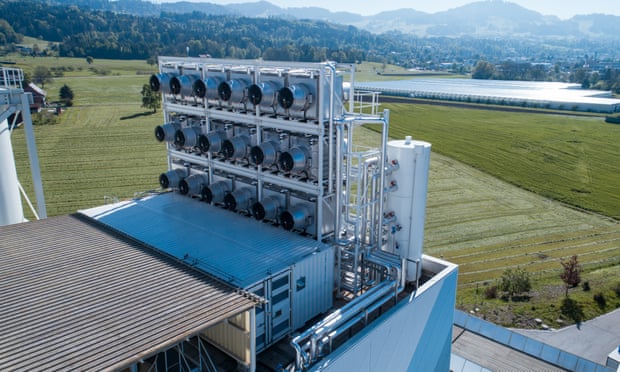
Some entrepreneurs are turning carbon dioxide into fuels.
https://i.guim.co.uk/img/media/5893d36bcd3c9b8178e76611f8706508fd091973/0_0_4921_2953/master/4921.jpg?width=620&quality=85&auto=format&fit=max&s=5ea5478563fbf41e58d67a43f5970ff8
Mark Harris of The Guardian writes:
“Technologies to capture CO2 from the air, like Climeworks’ units, have the potential for the sort of steep price declines that we’ve seen from solar, wind, and batteries, which are also factory manufactured products,” says Matt Lucas of the Center for Carbon Removal, a non-profit dedicated to curtailing climate change
Getting people to the polls will help make politicians care about climate change.
https://11bup83sxdss1xze1i3lpol4-wpengine.netdna-ssl.com/wp-content/uploads/2016/04/Voting.jpg

D.R. Tucker writes about the strategy of veteran political consultant, Nathaniel Stinnett to identify, register and motivate climate-concerned citizens to make their voices heard every Election Day.

“Then, in early 2014, my research revealed some really surprising data: namely, that there are actually tens of millions of Americans who deeply care about the environment as one of their top political priorities…but these people are awful voters, so they never show up in likely voter polls and they’re never targeted by political campaigns. This made me realize that the environmental movement may not have a ‘persuasion’ problem; instead, we may just have a ‘turnout’ problem. And that’s good news because getting an already-persuaded environmentalist to vote is far easier (and cheaper) than persuading a non-environmentalist to begin caring about the environment.”


Faculty at Harris School of Public Policy in Chicago have asked “What Would Milton Friedman Do About Climate Change?
https://upload.wikimedia.org/wikipedia/commons/thumb/2/20/Portrait_of_Milton_Friedman.jpg/220px-Portrait_of_Milton_Friedman.jpg

Jeff McMahon writes for Forbes Magazine that Steve Cicala, an assistant professor in the Harris School, argued that the market for energy operates without accounting for its full costs — without compensating people throughout the world who experience damages caused by the emission of greenhouse gases during the production of energy. But when a third party not participating in that exchange suffers costs without compensation, the market has produced a negative externality. (This situation for a market has not been supported by Friedman)


"It is theft," Cicala said. "That's a loaded term, but if anyone can come up with a better term for taking something from people without their consent and without compensating them, I'm happy to use that term."

The free market solution to this problem would be the creation of another market, Cicala and Greenstone said—a market in carbon.


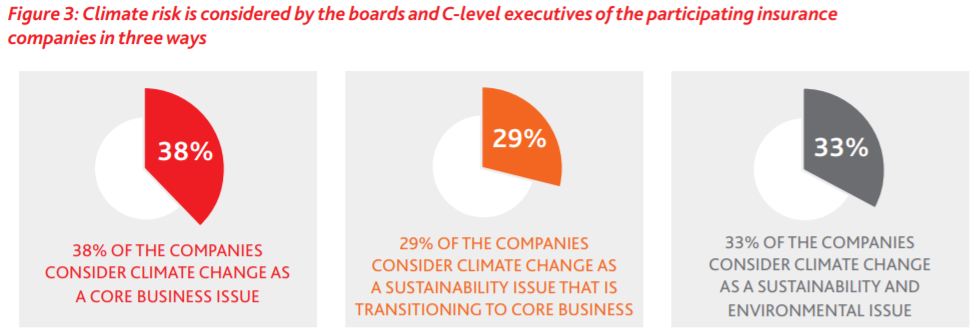
Don Jergler writes in the Insurance Journal that the Industry is making 'Significant Contributions' to battle climate change.
https://www.insurancejournal.com/app/uploads/2018/01/Geneva-Association-Survey-Graphic.png
The Geneva Association is putting forward three recommendations to accelerate the contributions of the industry to address climate change:
  1. Third-party stakeholders such as governments, policymakers, standard-setting bodies and regulators across sectors should work in a more coordinated fashion to address barriers that hinder insurers from scaling up their contribution to climate adaptation and mitigation.
  2. The insurance industry should continue to institutionalize climate change as a core business issue, expand its contributions towards building financial resilience to climate risks and support the transition to a low-carbon economy by collaborating with governments and other stakeholders.
  3. Governments and the industry should explore ways to support climate resilient and decarbonized critical infrastructure through the industry’s risk management, underwriting and investment functions.


Kate Ervine, at the end of her launch of her book "Carbon" commented on finding common ground in the struggle against increasing CO2 levels.


Entrepreneurs who are going to be successful in alternative energy, politicians who benefit from the support of concerned citizens who are urged to “turnout” at the polls, “Chicago school” economists of capitalism who want a carbon market to correct a negative externality in the energy market, and insurance companies who need to reduce the payout for catastrophic hurricanes, fires, coastal erosion, drought, and floods have common ground from which to work to reduce our addiction to a carbon based economy.

References

(n.d.). Kate Ervine (Author of Carbon) - Goodreads. Retrieved December 5, 2018, from https://www.goodreads.com/author/show/9842182.Kate_Ervine

(2017, September 14). The entrepreneurs turning carbon dioxide into fuels | Guardian .... Retrieved December 5, 2018, from https://www.theguardian.com/sustainable-business/2017/sep/14/entrepreneurs-turn-carbon-dioxide-into-fuels-artificial-photosynthesis

(2016, April 8). Step one to make politicians care about climate change: VOTE .... Retrieved December 5, 2018, from https://citizensclimatelobby.org/step-one-to-make-politicians-care-about-climate-change-vote/

(2014, October 12). What Would Milton Friedman Do About Climate Change? Tax Carbon. Retrieved December 5, 2018, from https://www.forbes.com/sites/jeffmcmahon/2014/10/12/what-would-milton-friedman-do-about-climate-change-tax-carbon/

(2018, January 25). Insurance Industry Making 'Significant Contributions' in Climate .... Retrieved December 5, 2018, from https://www.insurancejournal.com/news/national/2018/01/25/478540.htm