Showing posts with label Carbon. Show all posts

Monday, July 26, 2021

Engineering the Green Transition

Recent articles in the engineering media point to the unique resources and responsibilities that engineering can bring to planning and building our infrastructure in a time of climate change.
Building for Climate Change


David Fork and Ross Koningstein, two Google engineers writing in the IEEE Spectrum claim that engineers can disrupt Climate Change and decarbonization, carbon capture, and solar-radiation management will provide work for decades to come.

Our opening battles in the war on climate change need engineers to work on the many existing technologies that can massively scale up. As already illustrated with wind, solar, and batteries, such scale-ups often bring dramatic drops in costs. Other industrial sectors require technological revolutions to reduce emissions. If you experiment with your own mix of climate-mitigation techniques using the En-ROADS interactive climate tool, you’ll see how many options you have to max out to change our current trajectory and achieve 350 ppm CO2 levels and a global temperature rise of no more than 1.5 °C.1 

The authors have compiled a set of engineering calculations that are important for engineering our response to climate change.

Goals and initial calculations (more detail in the article)[1]

1

We need to remove about 2000 gigatonnes of CO2 from the atmosphere

2

Humans use about 1 zettajoule of energy per year

3

To supply 1 zettajoule (ZJ) of energy per year with photovoltaic solar panels, we’d need to cover 1.6 percent of the planet’s land surface

4

To supply 1 ZJ of energy per year with nuclear power, we’d have to build three 1-gigawatt plants per day for 30 years

5

A 50-pound bag of concrete mix will cost about 42 cents more if the emissions from cement manufacturing are captured and stored

6

Removing 2,000 gigatonnes (Gt) of CO2 would account for roughly 2.8 percent of global GDP for 80 years

 Table of Engineering Considerations

Engineers Canada asks why is climate change important for engineers? Climate change is a significant and lasting change in weather patterns over periods ranging from decades to millions of years. It includes changes to temperature, precipitation and other climate parameters and changes in the frequency and severity of extreme weather events such as hurricanes, tornadoes and flash storms. In northern Canada climate effects on permafrost, ice-cover and snow loads are already apparent.

Much of Canada’s infrastructure has been in place for many years with designs based on existing climate patterns. With the effects of a changing climate, these designs need to be revisited to improve safety and protection for Canadians. Engineers, under their professional code of ethics, need to be involved in addressing the impacts of changing climate on infrastructure design and operations because it affects public safety and public interest.2 

Engineers are held to a higher standard of reasonable care than the average layperson. By virtue of the professional’s training and experience, they are expected to apply a high level of expertise to issues that affect their professional practice.

Professionals are expected to be aware of the limitations of their professional scope and access other qualified professionals to augment those areas where they may not be fully qualified to express professional judgment. Through extensive media coverage, the average layperson is cognizant of the climate change issue and its potential for disruptive and serious impacts. Similarly, the average engineer must also be sensitive to the potential for changing climate conditions and appropriately apply these sensitivities to their professional practice. Given the level of public awareness of the climate change issue, a professional cannot make the argument that they were unaware that climate change could potentially affect their professional work. 3 

Darrel Danyluk is a past president of Engineers Canada and of the Association of Professional Engineers and Geoscientists of Alberta. He is also a previous chair of the World Federation of Engineering Organizations Committee on Engineering and the Environment. David Lapp is a member of the WFEO Committee on Engineering and the Environment. They ask what are the key priorities for climate action within engineering? Some priorities for engineering should be:
  • Education of existing practitioners, students and educators;

  • Updating of existing codes, standards and guidelines or the creation of new ones where there are gaps;

  • Better evidence of costs and benefits of adaptation and building climate resilience, particularly for civil infrastructure and buildings; and

  • Developing multi-stakeholder concurrence on the need for adaptive and mitigative actions.


The main barrier is in implementation, which is often caused by a lack of financial commitment by decision-makers. Costs to mitigate and adapt to climate change are still uncertain and it’s difficult to obtain effective cost-shared agreements and division of responsibilities among stakeholders. In Canada, it’s sometimes difficult to coordinate and agree on actions between all three levels of government as there are jurisdictional and institutional limits to action. Some infrastructure owners aren’t prepared to invest in climate action measures, especially for designs that are outside of existing codes and standards that are becoming increasingly outdated as the climate changes. There’s also a reluctance to implement measures outside of existing guidelines and practices that often haven’t taken climate change into account.4

Calculating the material, workforce, and economic requirements to adapt and build resilience in our infrastructure is the traditional role of engineers. Now the costs and benefits of mitigative and adaptive measures need to be confirmed and included in building codes and construction practice.

References

1

(2021, June 28). Energy Engineers: You Can Disrupt Climate Change - IEEE Spectrum. Retrieved July 25, 2021, from https://spectrum.ieee.org/energy/renewables/engineers-you-can-disrupt-climate-change 

2

(n.d.). Climate Change and Engineering | Engineers Canada. Retrieved July 25, 2021, from https://engineerscanada.ca/public-policy/climate-change-and-engineering 

3

(n.d.). Principles of Climate Change Adaptation for Engineers. Retrieved July 25, 2021, from https://engineerscanada.ca/sites/default/files/01_national_guideline_climate_change_adaptation.pdf 

4

(2021, March 25). WFEO climate stories: Canada - International Coalition for .... Retrieved July 25, 2021, from https://sustainability-coalition.org/wfeo-climate-stories-canada/ 

Sunday, June 30, 2019

We have disrupted a cycle essential to all life.

Humans have disrupted a cycle essential to all life. Doctors and economists may seem like strange partners.


Christopher Ragan, Director, Max Bell School of Public Policy, McGill University and Courtney Howard, Clinical associate professor, Department of Family Medicine, Cumming School of Medicine, University of Calgary spend their days working on very different problems in very different settings. But climate change has injected a common and urgent vocabulary into our work. We find ourselves agreeing both about the nature of the problem and the best solution. It’s essential that we put a price on carbon pollution.
Emergency physician Edward Xie has worked in Toronto for over 10 years. Lately, he’s seen more patients anxious about tick bites. It’s no wonder. A recent medical study shows a fivefold increase in Lyme disease cases in Ontario between 2012 and 2017 as ticks expand their habitat northward.
Dr. Xie also notices more cases of heat exhaustion and dehydration in summer months — particularly among elderly and low-income individuals who lack adequate housing. In Toronto alone, heat already contributes to an estimated 120 deaths each year. The city expects that number to grow.1

Doctors and economists agree. Climate change is here, it’s getting worse, and the best time to do something about it is right now. One way or another, we are paying the costs of climate change — in sick days and lost wages, rising health care costs and home insurance rates, and a less stable climate for the next generation. And we’re still adding new charges to our bill. Both professions agree: we must act.
In a new open letter, more than 3,500 economists state that climate change is “a serious problem” calling for immediate action. The Lancet Countdown on Health and Climate Change research collaborative, which includes doctors and economists, agrees that adequately pricing carbon could be the single most important treatment for climate change.
Economics has a very clear prescription for these challenges: carbon pricing. In the same way that penicillin treats an infection, carbon pricing can help fight climate change. It effectively targets the root of the problem and there’s a mountain of evidence that it works.2 
Several Canadian medical organizations issued a call to all federal political parties to act on climate change, urging serious treatment for what the World Health Organization calls “greatest health threat in the 21st century.”

References

1
(2019, June 30). COMMENTARY: Why doctors argue 'carbon pricing' can 'cure' climate .... Retrieved June 30, 2019, from https://globalnews.ca/news/5428375/climate-change-carbon-tax/ 
2
(2019, June 24). Climate change puts health at risk and economists have the right .... Retrieved June 30, 2019, from http://theconversation.com/climate-change-puts-health-at-risk-and-economists-have-the-right-prescription-118797 

Sunday, June 16, 2019

Some conservative concerns on climate change

Climate change may be a serious ballot box issue for the youngest voters in the next federal election.
Will young voters rally?

Robin V. Sears, Contributing Columnist at the Star, offers some opinions on how Canadian conservatives are likely to feel the heat on climate change.
With the rare exception of a Brian Mulroney or a Peter Lougheed the environmental track record of Canadian conservatives is not pretty, either. Look up Mike Harris on global warming if you want a mordant chuckle. Andrew Scheer must now walk a terrifying razor blade on climate. Without greater climate credibility among young Torontonians, Montrealers and Vancouverites he will lose.
Pushing too hard on his new-found conviction about carbon, he runs into three angry Conservative premiers in his heartland, each of whom is in various stages of denial about pricing carbon. He will give a major environmental policy speech in a few days’ time. One may safely predict he will take bullets from all sides of the debate no matter what he says.1 
Schumpeter from The Economist looks at Europe's carbon crunch and concludes for industry, climate policy is a delicate balancing act.
Fighting global warming requires a much faster shift towards clean energy by all. However, European firms have come a long way in modernising their views on emissions, partly influenced by the ets. The first to be hit hard by the new reality have been the region’s utilities. A flood of renewables, especially after the acceleration of Germany’s energiewende (energy transition) in 2011, clobbered power prices and caused utilities such as Germany’s e.on and rwe to suffer years of losses. Some have since dumped their old fossil-fuel assets and embraced wind and solar, enabling them to benefit from higher carbon prices.2 
Don Pittis, Business columnist for the CBC, comments that Markets will advance the green agenda,
Conservative appeal

even if some governments lose interest.
But as 2030 approaches, if the forecast seems to be coming true, it is the more expensive oil, such as that set to be shipped via Canada's taxpayer-funded Trans Mountain pipeline, that won't find investors — and eventually won't be wanted.
"In our view, it is completely possible, and probable, that the pipeline would not deliver as much return as the government currently expects it to," said Jean-François Mercure,.3 
The conservative plan for control of carbon emissions will need to find common ground among diverse interests.

References

1
(2019, June 16). Conservatives feel heat on climate change | The Star. Retrieved June 16, 2019, from https://www.thestar.com/opinion/contributors/2019/06/16/conservatives-feel-heat-on-climate-change.html
2
(2019, January 11). For industry, climate policy is a delicate balancing act - The Economist. Retrieved January 16, 2019, from https://www.economist.com/business/2019/01/12/for-industry-climate-policy-is-a-delicate-balancing-act
3
(n.d.). Markets will advance green agenda — even if some governments lose .... Retrieved November 20, 2018, from https://www.cbc.ca/news/business/carbon-energy-technology-canada-1.4697697

Thursday, December 6, 2018

Common Ground on Carbon

The political turmoil in North America around climate change and measures to attempt to reduce the level of CO2 in the atmosphere may lead you to the mistaken conclusion that there is no common ground on carbon.
Carbon based energy

The book Carbon by Kate Ervine declares that carbon is the political challenge of our time.
Carbon by Kate Ervine

While critical to supporting life on Earth, too much carbon threatens to destroy life as we know it, with rising sea levels, crippling droughts, and catastrophic floods sounding the alarm on a future now upon us.

This article outlines four areas of common ground in concern over carbon
  1. Capitalism and Entrepreneurs in Alternative Energy
  2. Support for re-election of politicians
  3. Recognition of  the aversion of some to government intervention in their lives
  4. The Insurance Industry is making ‘Significant Contributions’ in climate change


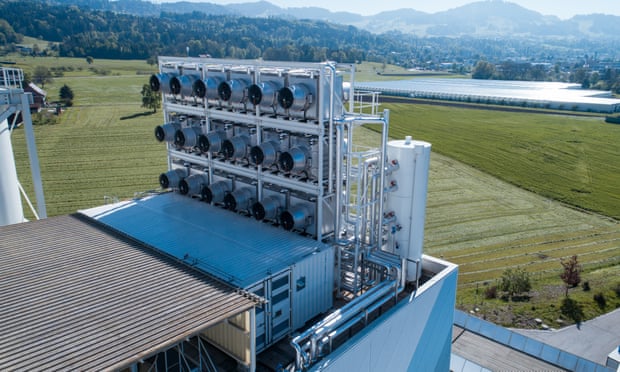
Some entrepreneurs are turning carbon dioxide into fuels.
https://i.guim.co.uk/img/media/5893d36bcd3c9b8178e76611f8706508fd091973/0_0_4921_2953/master/4921.jpg?width=620&quality=85&auto=format&fit=max&s=5ea5478563fbf41e58d67a43f5970ff8
Mark Harris of The Guardian writes:
“Technologies to capture CO2 from the air, like Climeworks’ units, have the potential for the sort of steep price declines that we’ve seen from solar, wind, and batteries, which are also factory manufactured products,” says Matt Lucas of the Center for Carbon Removal, a non-profit dedicated to curtailing climate change
Getting people to the polls will help make politicians care about climate change.
https://11bup83sxdss1xze1i3lpol4-wpengine.netdna-ssl.com/wp-content/uploads/2016/04/Voting.jpg

D.R. Tucker writes about the strategy of veteran political consultant, Nathaniel Stinnett to identify, register and motivate climate-concerned citizens to make their voices heard every Election Day.

“Then, in early 2014, my research revealed some really surprising data: namely, that there are actually tens of millions of Americans who deeply care about the environment as one of their top political priorities…but these people are awful voters, so they never show up in likely voter polls and they’re never targeted by political campaigns. This made me realize that the environmental movement may not have a ‘persuasion’ problem; instead, we may just have a ‘turnout’ problem. And that’s good news because getting an already-persuaded environmentalist to vote is far easier (and cheaper) than persuading a non-environmentalist to begin caring about the environment.”


Faculty at Harris School of Public Policy in Chicago have asked “What Would Milton Friedman Do About Climate Change?
https://upload.wikimedia.org/wikipedia/commons/thumb/2/20/Portrait_of_Milton_Friedman.jpg/220px-Portrait_of_Milton_Friedman.jpg

Jeff McMahon writes for Forbes Magazine that Steve Cicala, an assistant professor in the Harris School, argued that the market for energy operates without accounting for its full costs — without compensating people throughout the world who experience damages caused by the emission of greenhouse gases during the production of energy. But when a third party not participating in that exchange suffers costs without compensation, the market has produced a negative externality. (This situation for a market has not been supported by Friedman)


"It is theft," Cicala said. "That's a loaded term, but if anyone can come up with a better term for taking something from people without their consent and without compensating them, I'm happy to use that term."

The free market solution to this problem would be the creation of another market, Cicala and Greenstone said—a market in carbon.


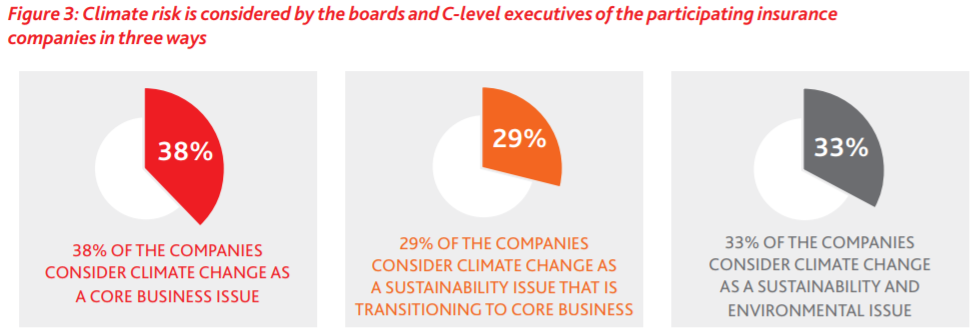
Don Jergler writes in the Insurance Journal that the Industry is making 'Significant Contributions' to battle climate change.
https://www.insurancejournal.com/app/uploads/2018/01/Geneva-Association-Survey-Graphic.png
The Geneva Association is putting forward three recommendations to accelerate the contributions of the industry to address climate change:
  1. Third-party stakeholders such as governments, policymakers, standard-setting bodies and regulators across sectors should work in a more coordinated fashion to address barriers that hinder insurers from scaling up their contribution to climate adaptation and mitigation.
  2. The insurance industry should continue to institutionalize climate change as a core business issue, expand its contributions towards building financial resilience to climate risks and support the transition to a low-carbon economy by collaborating with governments and other stakeholders.
  3. Governments and the industry should explore ways to support climate resilient and decarbonized critical infrastructure through the industry’s risk management, underwriting and investment functions.


Kate Ervine, at the end of her launch of her book "Carbon" commented on finding common ground in the struggle against increasing CO2 levels.


Entrepreneurs who are going to be successful in alternative energy, politicians who benefit from the support of concerned citizens who are urged to “turnout” at the polls, “Chicago school” economists of capitalism who want a carbon market to correct a negative externality in the energy market, and insurance companies who need to reduce the payout for catastrophic hurricanes, fires, coastal erosion, drought, and floods have common ground from which to work to reduce our addiction to a carbon based economy.

References

(n.d.). Kate Ervine (Author of Carbon) - Goodreads. Retrieved December 5, 2018, from https://www.goodreads.com/author/show/9842182.Kate_Ervine

(2017, September 14). The entrepreneurs turning carbon dioxide into fuels | Guardian .... Retrieved December 5, 2018, from https://www.theguardian.com/sustainable-business/2017/sep/14/entrepreneurs-turn-carbon-dioxide-into-fuels-artificial-photosynthesis

(2016, April 8). Step one to make politicians care about climate change: VOTE .... Retrieved December 5, 2018, from https://citizensclimatelobby.org/step-one-to-make-politicians-care-about-climate-change-vote/

(2014, October 12). What Would Milton Friedman Do About Climate Change? Tax Carbon. Retrieved December 5, 2018, from https://www.forbes.com/sites/jeffmcmahon/2014/10/12/what-would-milton-friedman-do-about-climate-change-tax-carbon/

(2018, January 25). Insurance Industry Making 'Significant Contributions' in Climate .... Retrieved December 5, 2018, from https://www.insurancejournal.com/news/national/2018/01/25/478540.htm