Showing posts with label insurance. Show all posts

Wednesday, July 5, 2023

Fire Flood Fiona

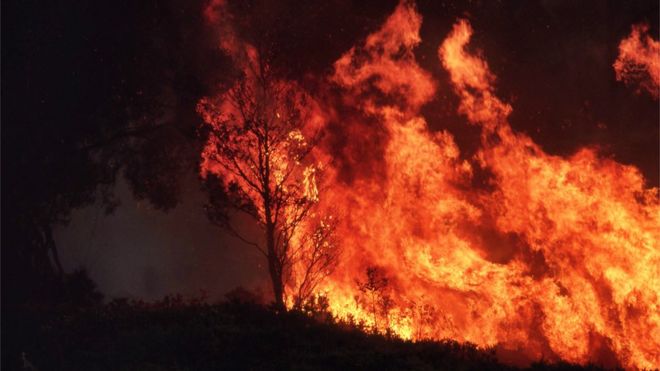
As we reflect on the consequences of fires, floods and Fiona type wind storms for Nova Scotians we become aware of the huge financial impact of these events on Government and individuals.


Insurance Concerns?


Lydia DePillis reports in The New York Times that wildfires are hurting many industries and could strain households across Canada, one of many countries reckoning with the impact of extreme weather.

Mike Savage, the mayor of Halifax, doesn’t have to be convinced that the spending is necessary. His city was the largest to sustain fire losses this spring, with 151 homes burned. That calamity came on the heels of Hurricane Fiona last year, which submerged much of the coastline. Mr. Savage worries about the fate of the isthmus that connects Nova Scotia to New Brunswick, and the power systems that now peak in the hot summer instead of the frigid winter.


“I certainly believe that when you invest in mitigation there’s a dramatic positive impact from those investments,” Mr. Savage said. “It’s going to be a challenging time. To think we got through this fire and say, ‘OK, that’s good, we’re done,’ that would be a little bit naïve.” (DePillis, 2023)

DePillis comments that what long seemed a faraway concern has snapped into sharp relief in recent years, as billowing smoke has suffused vast areas of North America, floods have washed away neighborhoods and heat waves have strained power grids. That incurs billions of dollars in costs, and has longer-reverberating consequences, such as insurers withdrawing from markets prone to hurricanes and fires.

But there is still a long, hot summer ahead. And the insurance industry is on alert, having watched the increasing damage in recent years with alarm. Before 2009, insured losses in Canada averaged around 450 million Canadian dollars a year, and now they routinely exceed $2 billion. Large reinsurers pulled back from the Canadian market after several crippling payouts, increasing prices for homeowners and businesses. That is not even counting the life insurance costs likely to be incurred by excessive heat and smoke-related respiratory ailments. (DePillis, 2023)


References

DePillis, L. (2023, July 3). Canada Offers Lesson in the Economic Toll of Climate Change. The New York Times. Retrieved July 4, 2023, from https://www.nytimes.com/2023/07/03/business/economy/canada-wildfires-economy.html?smid=nytcore-ios-share&referringSource=articleShare 


Monday, July 3, 2023

Fire and Insurance in the WUI

John Vaillant, whose latest book is Fire Weather: The Making of a Beast, in an opinion piece in the Globe and Mail, comments that we can’t call these supercharged wildfire seasons our ‘new normal.’ There’s nothing natural about how we changed the Earth’s climate.


Fort McMurray homes lie in ruins on May 13, 2016, when Prime Minister Justin Trudeau took a tour of the damage. A year later, MacEwan University researchers estimated the overall cost of the disaster at more than $8.86-billion.
JASON FRANSON/REUTERS

In Canada, and elsewhere, wildfires have traditionally been viewed as a rural problem. But as we’ve seen in recent years in Australia, the United States, Canada – and many other places – cities and towns are increasingly under threat. The area of greatest concern to Canadians is the wildland urban interface – a.k.a. the WUI (rhymes with “phooey”). The WUI is where the forest meets the built environment, i.e., those tree-lined subdivisions where so many new Canadian homes are being built. It’s a beautiful place to live, until it’s on fire. The bad news is: Whether you live in the suburbs of Victoria, Saskatoon or Calgary, your neighbourhood is more flammable than it used to be. (Vaillant & Franceschet, n.d.)


Catherine Boudreau and Dan Latu investigate, for the Business Insider, how rising insurance premiums are reshaping where people live as the climate crisis intensifies.

Nick's dilemma illustrates how the climate crisis is touching even the most mundane aspects of owning a home. More frequent and destructive wildfires, hurricanes, and flooding are pushing up the price of property insurance in high-risk states such as California and Florida; some companies are pulling out of these markets altogether. Surging policy costs and coverage deserts in already pricey markets mean insurers could become gatekeepers determining where people find it possible to live. (Latu, 2023)


When hundreds of homes in the wildland urban interface are destroyed by fire, the rising cost of insurance, if it is available, makes rebuilding in a similar WUI environment prohibitively expensive. 


References


Latu, D. (2023, July 2). Insurers May Shape Where People Live; Some People Could Be Left Out. Business Insider. Retrieved July 3, 2023, from https://www.businessinsider.com/how-insurers-will-shape-where-people-live-climate-change-2023-7 


Vaillant, J., & Franceschet, S. (n.d.). Opinion: No wonder Alberta is on fire. We made this planet into a volcano. The Globe and Mail. Retrieved July 3, 2023, from https://www.theglobeandmail.com/opinion/article-no-wonder-alberta-is-on-fire-we-made-this-planet-into-a-volcano/?utm_medium=Referrer:+Social+Network+/+Media&utm_campaign=Shared+Web+Article+Links 

Thursday, February 10, 2022

Insuring our Society

We may purchase insurance to minimize the financial impact of events which disrupt the normal rhythm of our lives. Typically insurance contracts are purchased for our residence and vehicles.

Tough on Insurance Premiums


Insurance companies are often involved in advocating change in society that will reduce the claims that are made against insurance policies. Policy holders are aware that increased claims will cause an increase in insurance premiums. Reducing claims benefits both the insurance company and the policyholder. As a consequence, involving insurance companies in campaigns for increased safety, proper operation, and harm mitigation is likely to be effective.


The Canadian Encyclopedia article reminds us of the War Measures Act that was invoked by Pierre Elliott Trudeau. The only use of the War Measures Act in a domestic crisis occurred in October and November 1970. A state of “apprehended insurrection” was officially declared to exist in Quebec as of 15 October 1970. Emergency regulations were proclaimed in response to two kidnappings by the terrorist group Front de Libération du Québec (FLQ). The FLQ had kidnapped British trade commissioner James Cross and Quebec labour minister Pierre Laporte. Laporte was found dead on 17 October.1 


The War Measures Act is currently an overreach in the Occupation of Ottawa and the blockage of vital international trade but some provincial jurisdictions have taken actions that will penalize participants as they try to continue to operate their vehicles and acquire the necessary insurance coverage. The Insurance Bureau of Canada advises that a Good Driving Record can reduce our premium.


License suspensions, parking tickets and convictions for driving offenses all add up to higher car insurance premiums. In fact, after being convicted of a driving offence, it can take up to 6 years for your record to be considered clean again by insurers. Over the years, building a consistently accident-and conviction-free driving record can help reduce your premium.2


Judy Trinh of CBC News reports that those involved with organizing the Ottawa protest include former RCMP and military officers.


Police have called those heavy trucks potential weapons, but they are also essential tools used to transport supplies such as two-by-fours to build shelters, firewood and burn barrels to keep protesters warm and propane tanks for barbecues. In the core, abandoned cars and trucks with their tires removed are blocking streets. To Michael Kempa, a University of Ottawa criminology professor,, the placement of these vehicles is not random but rather strategic in that they may prevent police infiltration… Residents have noticed protesters taking shifts getting into the cabs of idling trucks to blare air horns. The ear-piercing sound rang out at all hours, until a court injunction earlier this week forced a temporary pause.3


The nature of the occupation of Ottawa and the blocking of international trade routes certainly goes beyond the usage of vehicles likely considered when the insurance policies for these vehicles were established. It is time for enforcement officials to suspend licences, revoke vehicle permits, issue parking tickets, and initiate convictions for risking public safety.


References

1

(2013, July 25). War Measures Act | The Canadian Encyclopedia. Retrieved February 10, 2022, from https://www.thecanadianencyclopedia.ca/en/article/war-measures-act 

2

(n.d.). Welcome to Insurance Bureau of Canada. Retrieved February 10, 2022, from http://www.ibc.ca/ 

3

(2022, February 9). How organizers with police and military expertise may be helping .... Retrieved February 10, 2022, from https://www.cbc.ca/news/canada/convoy-protesters-police-tactical-knowledge-1.6345854 


Tuesday, February 8, 2022

How do you use your vehicle

The last time I sought insurance for my automobile I was asked about the way I use it. I related that I drove back and forth from work and took the car to do errands for groceries and supplies. Since then, I have retired and we have gone through two years of COVID. I am pretty confident that my use of the vehicle is well within the bounds required by my insurance contract. I wonder if the companies that insure the trucks involved in the occupation of Ottawa and the disruption of essential traffic in Canadian cities are including this usage in the coverage offered by their policies.


 Insurance Premium and Terms and Conditions

In my province, when I renew my vehicle permit, I may be required to settle outstanding tickets charged against my vehicle to complete the process. It seems to me that my driving record is something that helps determine my insurance premium. James Menzies writes that many trucking companies have decided to steer clear of Ottawa protests. Derek Koza, of Wellington Motor Freight, pointed out another reason company equipment can’t be seen in such events. 


“Due to insurance concerns we would not allow company branded equipment to participate in the convoy as the usage would be outside of the scope of our policy use. Wellington Group of Companies will not block ​individuals from using their personal vehicles and participating in the convoy should they wish as we support freedom of speech in a respectful and peaceful delivery.”1


Sierra Alley reports about violations that might be hurting  trucking insurance rates. An interview on November 16, on TalkCDL Trucking Podcast featured a REV insurance representative who discussed rates and the tangible steps truckers can take to keep their premiums down.


Accidents on record

Speeding tickets

Open containers or illegal substances on the truck

Safety violations that are logged on DOT reports

Tickets or accidents as a result of using handheld devices


There are common coverages recommended.

  • General Liability Coverage: This covers the actions of a driver who is operating on someone else’s premises, such as loading docks and truck stops. It provides coverage for bodily injury to others and damage to the property of others due to a vehicle accident.

  • Primary Liability Coverage: This does not cover your truck, but rather covers the damage you may do to others while operating your truck.

  • Physical Damage Coverage: Provides coverage to repair or replace damage to your equipment in the event of an accident or other risks, such as fire, theft, glass breakage, or vandalism.

  • Non-Trucking Liability Coverage: Coverage for damages or injuries to others while the truck is not under dispatch from the company you are currently leased with.

  • Cargo Coverage — Protects your cargo against damage or loss while in transit, whether that be stolen goods, wet load, refrigeration breakdown, debris removal, etc.

  • Trailer Interchange: Covers a non-owned trailer being used under a trailer interchange agreement.

  • Medical Payment: This covers medical bills if you or a passenger is injured while driving or riding in the tractor, this coverage varies from state to state.

  • Uninsured/Underinsured Motorists: This coverage protects you if someone hits you and does not have liability coverage to repair whatever you need repaired2

  •  

I imagine that enforcement personnel moving from vehicle to vehicle asking for proof of insurance, issuing tickets, and possibly more serious warrants would create a disincentive for truck operators to remain in a situation that threatens their ongoing cost for vehicle insurance.


References

1

(2022, January 29). Trucking companies steer clear of Ottawa protests. Retrieved February 8, 2022, from https://www.trucknews.com/transportation/trucking-companies-steer-clear-of-ottawa-protests/1003156700/ 

2

(2020, December 11). These violations might be hurting your trucking insurance rates. Retrieved February 8, 2022, from https://cdllife.com/2020/these-violations-might-be-hurting-your-trucking-insurance-rates/ 


Monday, January 13, 2020

Australia’s bushfires and mitigation of climate change

Erica Alini of Global News reports on what Australia’s fires could mean for insurance and real estate in Canada.

Source: https://ichef.bbci.co.uk/news/660/cpsprodpb/6693/production/_110495262_gettyimages-1151121024.jpg 
Climate risk analyst Karl Mallon, in a recent report from his firm, Climate Risk, projects that 720,000 homes, or five per cent of Australia’s housing stock, will be uninsurable by 2100 as coverage becomes unavailable or prohibitively expensive.
 Canada is not immune.
“The warmer it is the longer the fire season,” University of Alberta wildland fire professor Mike Flannigan told the Canadian Press. “The warmer it is the more lightning you see.”
For every degree of warming, the number of lightning strikes goes up by about 12 per cent, he said. Lightning usually causes more than half of the wildfires in Canada.
“We’re going to see a lot more. Not every year, but on average we’re going to see a lot more fire, a lot more smoke,” Flannigan said.1
Bill McKibben, author of “Falter: Has the Human Game Begun to Play Itself Out?,” comments that as the world’s leading coal exporter, Australia is burning down its own house. Now Australia is suffering, harshly, the early effects of climate change. It turns out that its unique physical features are remarkably susceptible to the global warming that’s now in its early stages. The Great Barrier Reef has been damaged by several bouts of severe bleaching from hot ocean water. The enormous kelp forests that ringed Australia’s southern coasts have been all but wiped out. And now fire has come in a way it never has before.
 In other words, if Australia really were a planet it would be quickly, all by itself, destroying its climate. It can’t blame the destruction on others; in any moral calculation, Australia has done this to itself. Which is not to say individual Australians themselves are to blame. As elsewhere, the fossil fuel industry has done all it can to manipulate political systems: The election that brought Morrison to power saw one coal baron spend more money on campaign ads than the country’s major political parties combined. (The same coal baron, Clive Palmer, is also building a full-size working replica of the Titanic, if you like metaphor overload). And of course, the Australian political discussion is poisoned by its native son Rupert Murdoch, who owns most of the country’s newspapers and uses them to—well, you’ve seen Fox News.2
In a statement regarding Australian bushfires, the Australian Academy of Science is resolute that the response to the bushfires must extend beyond the immediate and essential need to rebuild and recover. Everything, including urban planning; building standards; habitat restoration; biodiversity and species preservation; and land, water and wildlife management will need careful and measured consideration.
 We must further improve our ability to forecast changing environmental threats and continually improve climate modelling predictions. We must improve our understanding of fire behaviour and other adverse weather events, and we must continually develop new technologies, practices and behaviours to assist our nation to respond and adapt to, manage, and mitigate against such extreme events.
All the while, Australia must take stronger action as its part of the worldwide commitment to limit global warming to 1.5° C above the long-term average to reduce the worst impacts of climate change.3
Australia unfortunately may be literally blazing the trail in the response of insurance companies, mortgage lenders, to the over production of GHG from burning coal on the planet.

References

1
(n.d.). What Australia's fires could mean for insurance and real estate .... Retrieved January 13, 2020, from https://globalnews.ca/news/6376312/australia-fires-home-insurance-mortgages-property-values/ 
2
(2020, January 9). What if Australia Were Its Own Planet? | The Nation. Retrieved January 13, 2020, from https://www.thenation.com/article/australia-fire-climate-change/ 

3
(2020, January 10). Statement regarding Australian bushfires | Australian .... Retrieved January 13, 2020, from https://www.science.org.au/news-and-events/news-and-media-releases/statement-regarding-australian-bushfires 

Thursday, December 6, 2018

Common Ground on Carbon

The political turmoil in North America around climate change and measures to attempt to reduce the level of CO2 in the atmosphere may lead you to the mistaken conclusion that there is no common ground on carbon.
Carbon based energy

The book Carbon by Kate Ervine declares that carbon is the political challenge of our time.
Carbon by Kate Ervine

While critical to supporting life on Earth, too much carbon threatens to destroy life as we know it, with rising sea levels, crippling droughts, and catastrophic floods sounding the alarm on a future now upon us.

This article outlines four areas of common ground in concern over carbon
  1. Capitalism and Entrepreneurs in Alternative Energy
  2. Support for re-election of politicians
  3. Recognition of  the aversion of some to government intervention in their lives
  4. The Insurance Industry is making ‘Significant Contributions’ in climate change


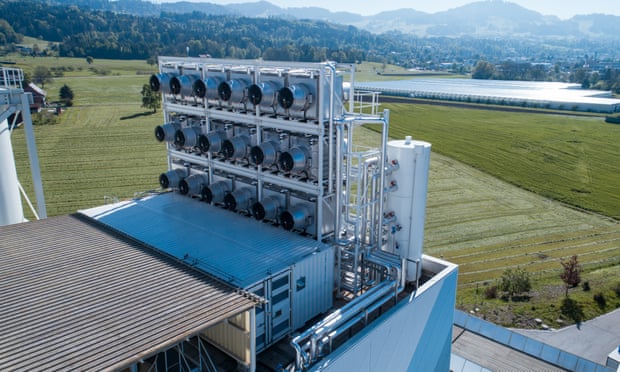
Some entrepreneurs are turning carbon dioxide into fuels.
https://i.guim.co.uk/img/media/5893d36bcd3c9b8178e76611f8706508fd091973/0_0_4921_2953/master/4921.jpg?width=620&quality=85&auto=format&fit=max&s=5ea5478563fbf41e58d67a43f5970ff8
Mark Harris of The Guardian writes:
“Technologies to capture CO2 from the air, like Climeworks’ units, have the potential for the sort of steep price declines that we’ve seen from solar, wind, and batteries, which are also factory manufactured products,” says Matt Lucas of the Center for Carbon Removal, a non-profit dedicated to curtailing climate change
Getting people to the polls will help make politicians care about climate change.
https://11bup83sxdss1xze1i3lpol4-wpengine.netdna-ssl.com/wp-content/uploads/2016/04/Voting.jpg

D.R. Tucker writes about the strategy of veteran political consultant, Nathaniel Stinnett to identify, register and motivate climate-concerned citizens to make their voices heard every Election Day.

“Then, in early 2014, my research revealed some really surprising data: namely, that there are actually tens of millions of Americans who deeply care about the environment as one of their top political priorities…but these people are awful voters, so they never show up in likely voter polls and they’re never targeted by political campaigns. This made me realize that the environmental movement may not have a ‘persuasion’ problem; instead, we may just have a ‘turnout’ problem. And that’s good news because getting an already-persuaded environmentalist to vote is far easier (and cheaper) than persuading a non-environmentalist to begin caring about the environment.”


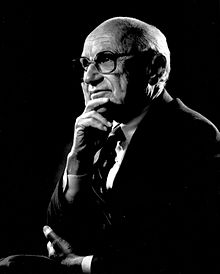
Faculty at Harris School of Public Policy in Chicago have asked “What Would Milton Friedman Do About Climate Change?
https://upload.wikimedia.org/wikipedia/commons/thumb/2/20/Portrait_of_Milton_Friedman.jpg/220px-Portrait_of_Milton_Friedman.jpg

Jeff McMahon writes for Forbes Magazine that Steve Cicala, an assistant professor in the Harris School, argued that the market for energy operates without accounting for its full costs — without compensating people throughout the world who experience damages caused by the emission of greenhouse gases during the production of energy. But when a third party not participating in that exchange suffers costs without compensation, the market has produced a negative externality. (This situation for a market has not been supported by Friedman)


"It is theft," Cicala said. "That's a loaded term, but if anyone can come up with a better term for taking something from people without their consent and without compensating them, I'm happy to use that term."

The free market solution to this problem would be the creation of another market, Cicala and Greenstone said—a market in carbon.


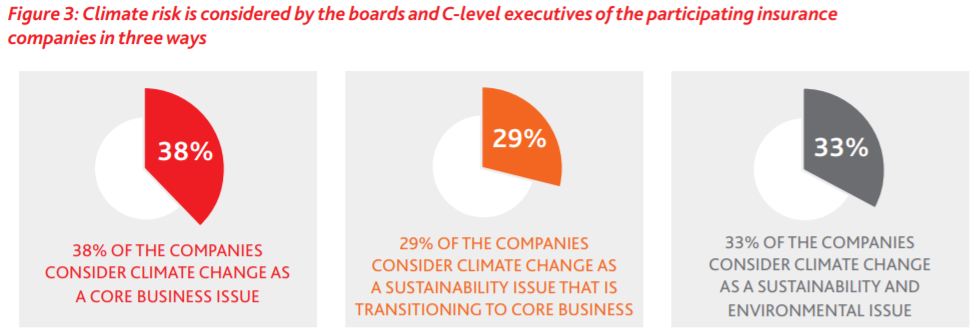
Don Jergler writes in the Insurance Journal that the Industry is making 'Significant Contributions' to battle climate change.
https://www.insurancejournal.com/app/uploads/2018/01/Geneva-Association-Survey-Graphic.png
The Geneva Association is putting forward three recommendations to accelerate the contributions of the industry to address climate change:
  1. Third-party stakeholders such as governments, policymakers, standard-setting bodies and regulators across sectors should work in a more coordinated fashion to address barriers that hinder insurers from scaling up their contribution to climate adaptation and mitigation.
  2. The insurance industry should continue to institutionalize climate change as a core business issue, expand its contributions towards building financial resilience to climate risks and support the transition to a low-carbon economy by collaborating with governments and other stakeholders.
  3. Governments and the industry should explore ways to support climate resilient and decarbonized critical infrastructure through the industry’s risk management, underwriting and investment functions.


Kate Ervine, at the end of her launch of her book "Carbon" commented on finding common ground in the struggle against increasing CO2 levels.


Entrepreneurs who are going to be successful in alternative energy, politicians who benefit from the support of concerned citizens who are urged to “turnout” at the polls, “Chicago school” economists of capitalism who want a carbon market to correct a negative externality in the energy market, and insurance companies who need to reduce the payout for catastrophic hurricanes, fires, coastal erosion, drought, and floods have common ground from which to work to reduce our addiction to a carbon based economy.

References

(n.d.). Kate Ervine (Author of Carbon) - Goodreads. Retrieved December 5, 2018, from https://www.goodreads.com/author/show/9842182.Kate_Ervine

(2017, September 14). The entrepreneurs turning carbon dioxide into fuels | Guardian .... Retrieved December 5, 2018, from https://www.theguardian.com/sustainable-business/2017/sep/14/entrepreneurs-turn-carbon-dioxide-into-fuels-artificial-photosynthesis

(2016, April 8). Step one to make politicians care about climate change: VOTE .... Retrieved December 5, 2018, from https://citizensclimatelobby.org/step-one-to-make-politicians-care-about-climate-change-vote/

(2014, October 12). What Would Milton Friedman Do About Climate Change? Tax Carbon. Retrieved December 5, 2018, from https://www.forbes.com/sites/jeffmcmahon/2014/10/12/what-would-milton-friedman-do-about-climate-change-tax-carbon/

(2018, January 25). Insurance Industry Making 'Significant Contributions' in Climate .... Retrieved December 5, 2018, from https://www.insurancejournal.com/news/national/2018/01/25/478540.htm