Showing posts with label Milton Friedman. Show all posts

Sunday, August 22, 2021

Child care election battleground

Child care is the latest battlefield between the social democrat and the neoliberal view of the proper role of government.

Child Care Battle


Paul Lakeland comments that the many current crises in our world all have something in common. Each in its own way exploits and thrives on division—between the rich and the poor, humanity and the rest of the natural world, citizens and immigrants, the relatively safe and the deeply desperate. He believes these issues are all parts of one larger, fundamental crisis: the degradation of the very notion of the human, brought on by the complex mechanism today called neoliberalism.


If “neoliberalism” is a word unknown to you, or simply one that you hear without its impinging much upon your life or consciousness, this is testimony to its sinister force. Coined by Friedrich Hayek, it referred to his belief that all reality can be explained on the model of economic competition, and that all human activity can be measured in terms of wealth, value, or price. Price in particular was a means to allocate scarce resources, and for its efficient function, the market had to be free and competitive. “The market” for Hayek was not just a term for economic activity, but one that described society as a whole. Hence, he could extrapolate a vision of human beings as creatures who would and should follow their own self-interest in competition for scarce resources. Through this human competition, we would learn who and what is really valuable…1


Donald Gutstein, adjunct professor in the School of Communication at Simon Fraser University and author of Harperism: How Stephen Harper and His Think Tank Colleagues Have Transformed Canada, writes that Harper, as you may have guessed it, sits firmly in the neoliberal fold. These are the ideological roots of Harper's opposition to child care.

Neoliberal influential economist: Milton Friedman2

In education, a system of government-funded vouchers that would enable parents to choose the school—private, public, religious—their children would attend.

Government planning will always lead to worse results than if the market or voluntary organizations do it2


 Treasury-draining, dollars per year benefits will not create a single child care space, let alone a national program.  What it will do is make the introduction of any national child care that much more difficult to finance - and imagine - in the future.


References

1

(2020, June 1). Spiritual Resistance | Commonweal Magazine. Retrieved June 1, 2020, from https://www.commonwealmagazine.org/spiritual-resistance 

2

(n.d.). The ideological roots of Harper's opposition to child care. Retrieved August 19, 2021, from https://www.broadbentinstitute.ca/the_ideological_roots_of_harper_s_opposition_to_child_care 


Wednesday, September 30, 2020

New economic direction after Covid

 Some recent articles in mainline publications point to the opportunity to use the recovery from the Covid-19 pandemic to rethink how we respond to the climate emergency through possible realignment of the macro economic policy followed by the government.


 Starting over again - The covid-19 pandemic is forcing a .... Retrieved September 30, 2020, from https://www.economist.com/

Douglas Broom Senior Writer, Formative Content with the World Economic Forum reports that an overwhelming majority of people want real change after COVID-19.


The survey also asks if people agree or disagree with the statement, “I want my life to change significantly rather than returning to how it was before the COVID-19 crisis.” And at least two-fifths of adults in the Netherlands, Germany, South Korea, Japan, Sweden, the US, UK and Canada say they want their life to go back to how it was. But globally, it seems, people are ready to see a significant change. Across the 28 countries surveyed, 72% say they want their lives to change significantly after the crisis. This sentiment is strongest in Mexico, Colombia, South Africa and Peru.1


Robyn Urback, writing in the Globe and Mail, is of the opinion that it’s not too late to sell Canadians on a climate-focused pandemic recovery. 


So while this is a government that likes to situate its policy promises in the lofty space between big dreams and butterscotch candy, there is a down-to-earth, pragmatic and persuasive way for it to justify ramping up climate-change mitigation measures now: by reframing them around better planning. We need to try to mitigate seasons of hotter, longer and larger forest fires that threaten to destroy communities in British Columbia and Alberta. We need to redraw outdated flood maps (a project the federal government has indeed undertaken) or risk leaving Canadians literally underwater. We need to be cognizant of how changing temperatures and precipitation patterns can increase the incidence of waterborne pathogens and the spread of disease. We need to heed the warnings from experts before it is too late, or risk paying massively for it – both economically, and in lost lives. Canadians are living through – and can therefore easily understand the consequences of – poor planning. The federal government would likely opt for different wording, for obvious reasons, but there’s arguably no better time to emphasize the importance of disaster preparedness than in the midst of a disaster. That is, as long as it’s about issues more immediately consequential than the nostrils of beleaguered sea turtles.2


The Economist briefing explains how the Covid-19 pandemic is forcing a rethink in macroeconomics. In the form it is known today, macroeconomics began in 1936 with the publication of John Maynard Keynes’s “The General Theory of Employment, Interest and Money”. Its subsequent history can be divided into three eras. The era of policy which was guided by Keynes’s ideas began in the 1940s. By the 1970s it had encountered problems that it could not solve and so, in the 1980s, the monetarist era, most commonly associated with the work of Milton Friedman, began. In the 1990s and 2000s economists combined insights from both approaches.


 Starting over again - The covid-19 pandemic is forcing a .... Retrieved September 30, 2020, from https://www.economist.com/


The rethink of economics is an opportunity. There now exists a growing consensus that tight labour markets could give workers more bargaining power without the need for a big expansion of redistribution. A level-headed reassessment of public debt could lead to the green public investment necessary to fight climate change. And governments could unleash a new era of finance, involving more innovation, cheaper financial intermediation and, perhaps, a monetary policy that is not constrained by the presence of physical cash. What is clear is that the old economic paradigm is looking tired. One way or another, change is coming. 3


Perhaps, in the wreckage left behind by the coronavirus pandemic, a new era is beginning.


References


1

(2020, September 18). People around the world want real change post-COVID-19 .... Retrieved September 27, 2020, from https://www.weforum.org/agenda/2020/09/sustainable-equitable-change-post-coronavirus-survey/ 

2

(n.d.). It's not too late to sell Canadians on a climate-focused .... Retrieved September 28, 2020, from https://www.theglobeandmail.com/opinion/article-its-not-too-late-to-sell-canadians-on-a-climate-focused-pandemic/ 

3

(2020, July 25). Starting over again - The covid-19 pandemic is forcing a .... Retrieved September 30, 2020, from https://www.economist.com/briefing/2020/07/25/the-covid-19-pandemic-is-forcing-a-rethink-in-macroeconomics 

Wednesday, April 24, 2019

Ethics involved in crucial balance

The public good is advanced when we are vigilant about bringing to light practices in business, investing and climate change mitigation that may be in conflict with ethical values of truth telling, transparency, care for others, and care for the planet.
Consider the balance

When brought to light, these practices may be factually assessed to form the basis for our individual and communal response to ethical missteps. The Economist reports that even as concerns about global warming grow, energy firms are planning to increase fossil-fuel production. None more than ExxonMobil. The major oil companies are responding to incentives set by society. The financial returns from oil are higher than those from renewables.
 It would be wrong to conclude that the energy firms must therefore be evil. They are responding to incentives set by society. The financial returns from oil are higher than those from renewables. For now, worldwide demand for oil is growing by 1-2% a year, similar to the average over the past five decades—and the typical major derives a minority of its stockmarket value from profits it will make after 2030. However much the majors are vilified by climate warriors, many of whom drive cars and take planes, it is not just legal for them to maximise profits, it is also a requirement that shareholders can enforce.
Some hope that the oil companies will gradually head in a new direction, but that looks optimistic. It would be rash to rely on brilliant innovations to save the day. Global investment in renewables, at $300bn a year, is dwarfed by what is being committed to fossil fuels. Even in the car industry, where scores of electric models are being launched, around 85% of vehicles are still expected to use internal-combustion engines in 2030.
So, too, the boom in ethical investing. Funds with $32trn of assets have joined to put pressure on the world’s biggest emitters. Fund managers, facing a collapse in their traditional business, are glad to sell green products which, helpfully, come with higher fees. But few big investment groups have dumped the shares of big energy firms. Despite much publicity, oil companies’ recent commitments to green investors remain modest.1
Asher Schechter, writer and editor of ProMarket, the blog of Chicago Booth’s George J. Stigler Center for the Study of the Economy and the State, writes that it is time to rethink Milton Friedman’s argument that corporate managers should “conduct the business in accordance with [shareholders’] desires, which generally will be to make as much money as possible while conforming to the basic rules of the society, both those embodied in law and those embodied in ethical custom.”
 While agreeing with Milton Friedman’s premise that managers should care only about shareholders’ interests, Nobel Laureate Oliver Hart of Harvard and Chicago Booth’s Luigi Zingales reject the view that shareholders care only about money. A company’s ultimate shareholders are ordinary people who, in addition to caring about money, are also concerned about a myriad of ethical and social issues: they purchase electric cars to lower their carbon footprint; they buy free-range chicken or fair-trade coffee because they view this as the ethical—albeit more expensive—choice. They are, in other words, prosocial in their day-to-day life—at least to some extent. “If consumers and owners of private companies take social factors into account and internalize externalities in their own behavior, why would they not want the public companies they invest in to do the same?” Hart and Zingales ask.2
The graphic below demonstrates some compatibility between conservative ethics democracy and carbon tax.
Conservative carbon tax

On Earth Day 2019, faith leaders from across Canada came together to issue an urgent call to climate action.
 “In October 2018, the United Nations Intergovernmental Panel on Climate Change released a landmark report indicating that our global community has until 2030 to dramatically change course and avoid serious climate consequences,” says Willard Metzger, Executive Director of Citizens for Public Justice (CPJ). “Now, more than ever, we believe that it is important to amplify our shared laments and shared commitments, as people of faith, to work towards climate justice.”
“Throughout scripture we read of repentance, community, compassion, and renewal: from the Genesis call ‘to work and take care of [the Earth]’ through to the Psalmist’s celebration of ‘God’s handiwork’ and the rejoicing too of the trees; recalling the prophets’ devastation at the destruction of the land, but also the Epistle message of renewal and life eternal,” continues Peter Noteboom, General Secretary of the Canadian Council of Churches. “Ever-present in the Gospels, and central to our faith is Jesus’ resurrection and promise of new life.”
“Young people from all over the world are leading the way, speaking passionately from their hearts about the state of emergency created by climate change and the need for immediate action,” says Jennifer Henry, Executive Director of KAIROS. “Inspired and challenged by their commitment, we add our voices and we commit our action, deeply aware of the spiritual crisis we face.”3
Their collective message is clear: the global climate crisis has reached a critical stage and requires an urgent moral and spiritual response.


A new peer-reviewed study by government scientists and others was published in April in the journal, Nature Communications. Based on airplane measurements of emissions, the research suggests that government officials need to revise guidelines currently used to measure carbon dioxide emissions from the oil and gas (O&G) sector. In their research, scientists collected data showing that four major oil sands facilities in northern Alberta emitted far more pollution than what they actually reported.
 The study’s lead author, John Liggio, told National Observer that Environment and Climate Change Canada shared its findings with industry representatives over the course of several conference calls and they were receptive to working with the government to “get to the bottom of why there is this discrepancy."
The office of Environment and Climate Change Canada Minister Catherine McKenna said the federal government was working with emissions-intensive sectors like the oilsands to help them reduce pollution and operate more efficiently, while noting that the industry and government had previously been relying on internationally-accepted standards for measuring greenhouse gas emissions.
“While this is just one study, we are taking these findings seriously and will be reviewing them in light of Canada’s commitment to fight climate change and build a stronger economy,” McKenna’s spokeswoman Sabrina Kim told National Observer.
Kim added that Canada would continue to prepare its GHG inventory in accordance with the United Nations Framework Convention on Climate Change reporting guidelines in line with the international community.
While the oilsands industry — an economic driver for Canada — struggles to deal with selling a discounted product in an increasingly uneconomical landscape, it also faces stiff opposition from some Indigenous groups as well as municipalities, provinces and environmental groups to its efforts to promote the expansion of pipelines that would support growth.
Oilsands extraction is a costly process, requiring vast amounts of energy and water for each barrel of oil.
"The objective of limiting the increase in global temperature to <1.5 °C this century is dependent upon reducing anthropogenic greenhouse gas (GHG) emissions to net zero," said the study. "The large contribution of the O&G sector to global GHG emissions underscores the need for accurate sectoral GHG emissions in national inventories."
Canada's pledge to reduce greenhouse gas emissions that lead to global warming by 30 per cent from 2005 levels by 2030 will require a significant shift in the operations of the industry, which has also seen the retreat of global majors and a retrenchment in investment from those that remain amid stagnant prices, particularly for the heavy, sour crude oil of which Alberta has a surplus.4
Ethical standards are embraced by serious liberals, conservatives, people affiliated with religious organizations and most citizens of our countries. These ethical standards need to drive our actions in business, investing, and infrastructure transformation due to climate change.

References

1
(2019, February 9). The truth about big oil and climate change - The Economist. Retrieved April 24, 2019, from https://www.economist.com/leaders/2019/02/09/the-truth-about-big-oil-and-climate-change
2
(2017, December 7). It's time to rethink Milton Friedman's 'shareholder value' argument .... Retrieved April 24, 2019, from http://review.chicagobooth.edu/economics/2017/article/it-s-time-rethink-milton-friedman-s-shareholder-value-argument
3
(2019, April 18). On Earth Day, Canadian faith leaders issue urgent plea for climate .... Retrieved April 23, 2019, from https://www.kairoscanada.org/canadian-faith-leaders-issue-urgent-plea-climate-action
4
(2019, April 23). Oilsands lobby speechless as government scientists point to higher .... Retrieved April 24, 2019, from https://www.nationalobserver.com/2019/04/23/news/oilsands-lobby-speechless-government-scientists-point-higher-pollution

Thursday, December 6, 2018

Common Ground on Carbon

The political turmoil in North America around climate change and measures to attempt to reduce the level of CO2 in the atmosphere may lead you to the mistaken conclusion that there is no common ground on carbon.
Carbon based energy

The book Carbon by Kate Ervine declares that carbon is the political challenge of our time.
Carbon by Kate Ervine

While critical to supporting life on Earth, too much carbon threatens to destroy life as we know it, with rising sea levels, crippling droughts, and catastrophic floods sounding the alarm on a future now upon us.

This article outlines four areas of common ground in concern over carbon
  1. Capitalism and Entrepreneurs in Alternative Energy
  2. Support for re-election of politicians
  3. Recognition of  the aversion of some to government intervention in their lives
  4. The Insurance Industry is making ‘Significant Contributions’ in climate change


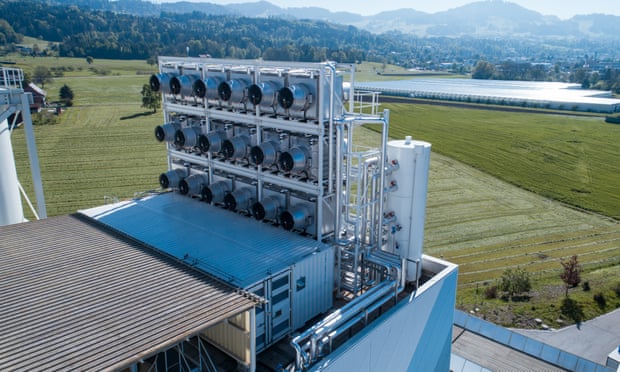
Some entrepreneurs are turning carbon dioxide into fuels.
https://i.guim.co.uk/img/media/5893d36bcd3c9b8178e76611f8706508fd091973/0_0_4921_2953/master/4921.jpg?width=620&quality=85&auto=format&fit=max&s=5ea5478563fbf41e58d67a43f5970ff8
Mark Harris of The Guardian writes:
“Technologies to capture CO2 from the air, like Climeworks’ units, have the potential for the sort of steep price declines that we’ve seen from solar, wind, and batteries, which are also factory manufactured products,” says Matt Lucas of the Center for Carbon Removal, a non-profit dedicated to curtailing climate change
Getting people to the polls will help make politicians care about climate change.
https://11bup83sxdss1xze1i3lpol4-wpengine.netdna-ssl.com/wp-content/uploads/2016/04/Voting.jpg

D.R. Tucker writes about the strategy of veteran political consultant, Nathaniel Stinnett to identify, register and motivate climate-concerned citizens to make their voices heard every Election Day.

“Then, in early 2014, my research revealed some really surprising data: namely, that there are actually tens of millions of Americans who deeply care about the environment as one of their top political priorities…but these people are awful voters, so they never show up in likely voter polls and they’re never targeted by political campaigns. This made me realize that the environmental movement may not have a ‘persuasion’ problem; instead, we may just have a ‘turnout’ problem. And that’s good news because getting an already-persuaded environmentalist to vote is far easier (and cheaper) than persuading a non-environmentalist to begin caring about the environment.”


Faculty at Harris School of Public Policy in Chicago have asked “What Would Milton Friedman Do About Climate Change?

https://upload.wikimedia.org/wikipedia/commons/thumb/2/20/Portrait_of_Milton_Friedman.jpg/220px-Portrait_of_Milton_Friedman.jpg

Jeff McMahon writes for Forbes Magazine that Steve Cicala, an assistant professor in the Harris School, argued that the market for energy operates without accounting for its full costs — without compensating people throughout the world who experience damages caused by the emission of greenhouse gases during the production of energy. But when a third party not participating in that exchange suffers costs without compensation, the market has produced a negative externality. (This situation for a market has not been supported by Friedman)


"It is theft," Cicala said. "That's a loaded term, but if anyone can come up with a better term for taking something from people without their consent and without compensating them, I'm happy to use that term."

The free market solution to this problem would be the creation of another market, Cicala and Greenstone said—a market in carbon.


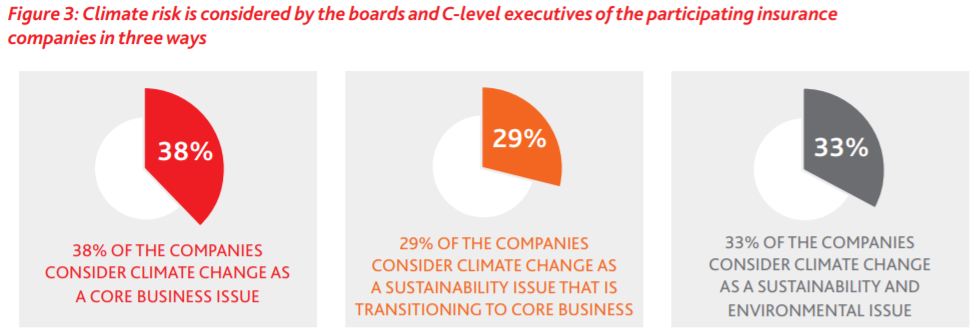
Don Jergler writes in the Insurance Journal that the Industry is making 'Significant Contributions' to battle climate change.
https://www.insurancejournal.com/app/uploads/2018/01/Geneva-Association-Survey-Graphic.png
The Geneva Association is putting forward three recommendations to accelerate the contributions of the industry to address climate change:
  1. Third-party stakeholders such as governments, policymakers, standard-setting bodies and regulators across sectors should work in a more coordinated fashion to address barriers that hinder insurers from scaling up their contribution to climate adaptation and mitigation.
  2. The insurance industry should continue to institutionalize climate change as a core business issue, expand its contributions towards building financial resilience to climate risks and support the transition to a low-carbon economy by collaborating with governments and other stakeholders.
  3. Governments and the industry should explore ways to support climate resilient and decarbonized critical infrastructure through the industry’s risk management, underwriting and investment functions.


Kate Ervine, at the end of her launch of her book "Carbon" commented on finding common ground in the struggle against increasing CO2 levels.


Entrepreneurs who are going to be successful in alternative energy, politicians who benefit from the support of concerned citizens who are urged to “turnout” at the polls, “Chicago school” economists of capitalism who want a carbon market to correct a negative externality in the energy market, and insurance companies who need to reduce the payout for catastrophic hurricanes, fires, coastal erosion, drought, and floods have common ground from which to work to reduce our addiction to a carbon based economy.

References

(n.d.). Kate Ervine (Author of Carbon) - Goodreads. Retrieved December 5, 2018, from https://www.goodreads.com/author/show/9842182.Kate_Ervine

(2017, September 14). The entrepreneurs turning carbon dioxide into fuels | Guardian .... Retrieved December 5, 2018, from https://www.theguardian.com/sustainable-business/2017/sep/14/entrepreneurs-turn-carbon-dioxide-into-fuels-artificial-photosynthesis

(2016, April 8). Step one to make politicians care about climate change: VOTE .... Retrieved December 5, 2018, from https://citizensclimatelobby.org/step-one-to-make-politicians-care-about-climate-change-vote/

(2014, October 12). What Would Milton Friedman Do About Climate Change? Tax Carbon. Retrieved December 5, 2018, from https://www.forbes.com/sites/jeffmcmahon/2014/10/12/what-would-milton-friedman-do-about-climate-change-tax-carbon/

(2018, January 25). Insurance Industry Making 'Significant Contributions' in Climate .... Retrieved December 5, 2018, from https://www.insurancejournal.com/news/national/2018/01/25/478540.htm