Showing posts with label mitigation. Show all posts

Sunday, July 2, 2023

Building Consensus with Business on Climate


The Financial Post and the Fraser Institute are unusual sources of encouragement for people who are very concerned about the climate emergency. In Episode 106 of the Down to Business podcast, Nobel-prize winning economist William Nordhaus, is cited as one expert who thinks that Canada is showing the world how carbon pricing should be done.


Attention to Climate now is cheaper than later


This week on Down to Business, Yale economist William Nordhaus discusses the economics of climate change.


In 2018, Nordhaus won the Nobel Memorial Prize in Economic Sciences for his work integrating long run models of climate change with macroeconomic analysis. (Friedman, 2021)


In his new book, The Spirit of Green, Nordhaus examines what markets can and cannot address when it comes to climate change, and other issues, including the pandemics. He also talked about Canada’s carbon tax and what the costs and rewards of stopping climate change are.


In a discussion that ranges from the history of the environmental movement to the Green New Deal, Nordhaus explains how the spirit of green thinking provides a compelling and hopeful new perspective on modern life. At the heart of green thinking is a recognition that the globalized world is shaped not by isolated individuals but rather by innumerable interactions inside and outside the economy. He shows how rethinking economic efficiency, sustainability, politics, profits, taxes, individual ethics, corporate social responsibility, finance, and more would improve the effectiveness and equity of our society. And he offers specific solutions—on how to price carbon, how to pursue low-carbon technologies, how to design an efficient tax system, and how to foster international cooperation through climate clubs.


The result is a groundbreaking new vision of how we can have our environment and our economy too. (Nordhaus, n.d.)


An article on the web site of the Fraser Institute features a commentary by Kenneth P. Green

Senior Fellow, Fraser Institute, that expresses a desire for more empirical measurements in our analysis of trends in climate change.


Rarely, if ever, do we see much discussion of empirical measurements of climate change; global average temperature and sea level are rare exceptions. But empirical measurements of climate policy impacts, empirical measurements of changes that might, or might not, validate modeled projections of such climate changes, or empirical measurement of meteorological (weather) changes are scarce to non-existent in most media. (Green, n.d.)


The path to effective mitigation and adaptation of the effects of rising global average temperature and increasing sea level requires working on the common ground between environmental activism and strategic economic planning. Some of that common ground appears to be in carbon tax systems and empirical measurement of change in crucial parameters.


References

Friedman, G. (2021, June 16). Canada is showing the world how carbon pricing should be done: Nobel-prize winning economist William Nordhaus. Financial Post. Retrieved June 30, 2023, from https://financialpost.com/commodities/energy/renewables/canada-is-showing-the-world-how-carbon-pricing-should-be-done-nobel-prize-winning-economist-william-nordhaus 

Green, K. P. (n.d.). Models or Measures of Climate Change: Why Does It Matter? Fraser Institute. Retrieved July 2, 2023, from https://www.fraserinstitute.org/studies/ 

Nordhaus, W. D. (n.d.). The Spirit of Green. Princeton University Press. Retrieved July 2, 2023, from https://press.princeton.edu/books/hardcover/9780691214344/the-spirit-of-green 


Tuesday, October 4, 2022

Climate change tree down on PEI

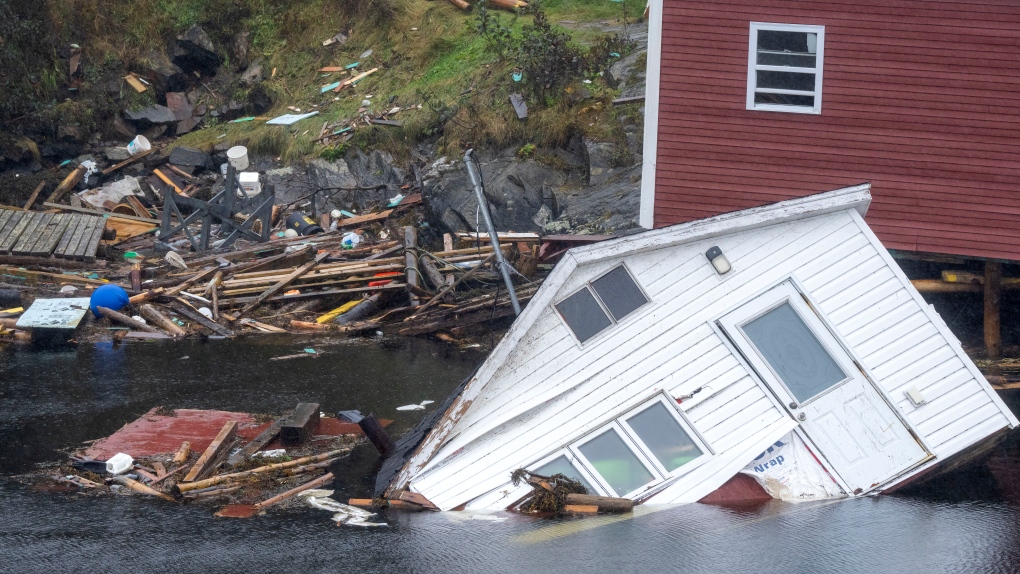
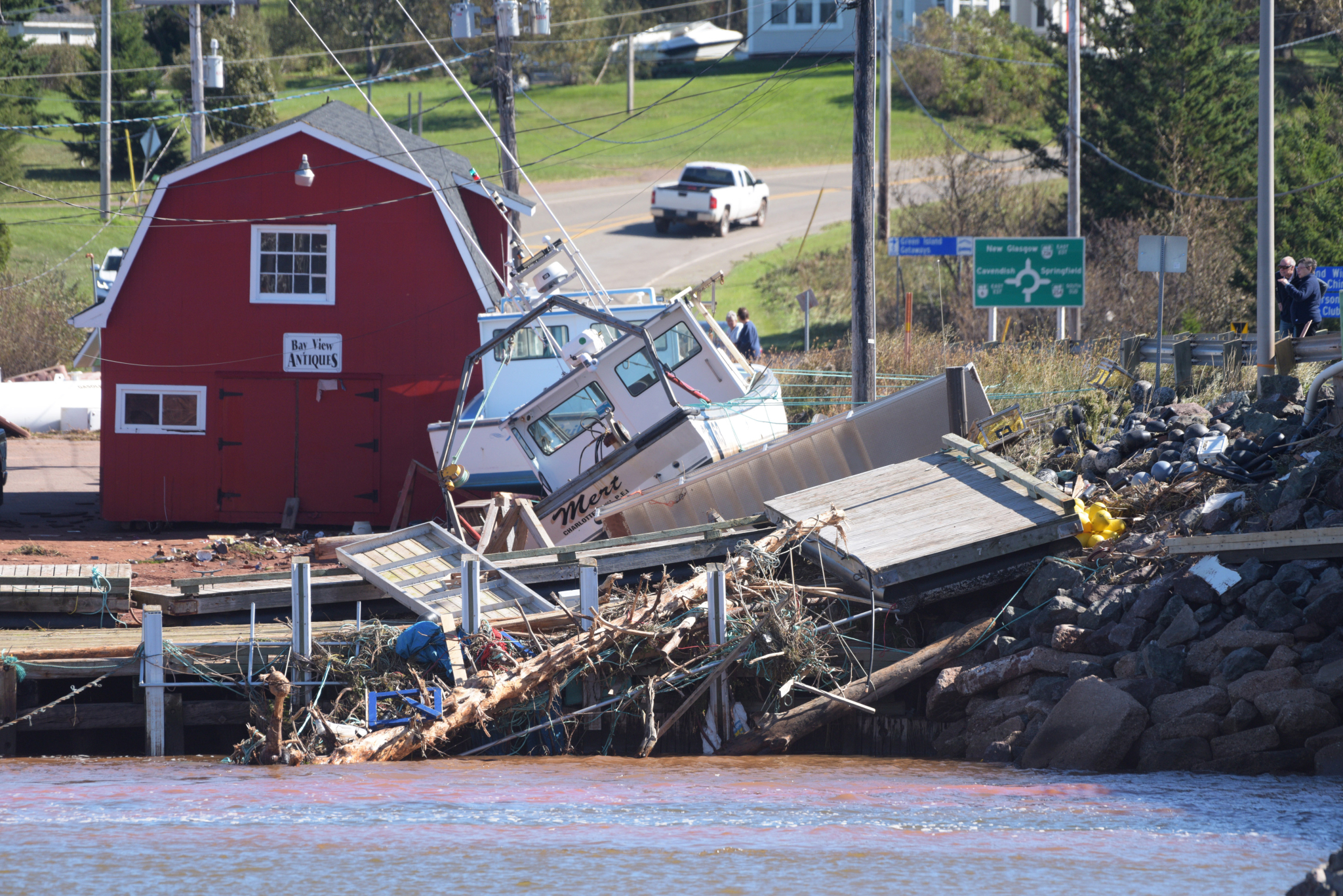
As we attempt to come to grips with destruction on the coastline of P.E.I., floods in Florida turning roads into rivers, and floodwaters that upended the lives of tens of millions in Pakistan, it dawns on us that restoration is going to be extremely expensive.


Heidi Petracek, CTV News Atlantic Reporter, reports on the destruction in Neil’s Harbour in Nova Scotia’s Victoria County, the massive downed trees in Sydney, N.S., and the receding dunes on Prince Edward Island. Climate experts say the aftereffects of post-tropical storm Fiona make up a new reality on the east coast. Brian Feltmate, head of the Intact Centre on Climate Adaptation at the University of Waterloo says “The severity of the storms is going to get more challenging over time.”


“With more heat in the system, there's more energy to the storms, and warmer air holds more moisture, so you get a combination of higher winds, and more water coming down in shorter periods of time, and that's all driven by climate change,” says Feltmate. ('The Reality Is Kicking in': Experts Say Storms Like Fiona Are the New Normal for Maritimers, 2022)


Avi Lewis considers  a couple of weeks on planet Earth when hurricanes plunged 11 million people into darkness in Cuba, permanently redrew the coastline of P.E.I., and turned Florida roads into rivers. All while the floodwaters that upended the lives of tens of millions in Pakistan, and drowned their future crops, have yet to recede.


Right now in Canada, the costs of climate-turbocharged disasters fall disproportionately at the local level. Ottawa and the provinces kick in with one-time emergency injections that get the big headlines, while on the ground, it’s a long, grinding story of individuals struggling with insurance companies to get their homes and businesses rebuilt. Moreover, 60 per cent of core public infrastructure is owned and maintained by municipalities in Canada — so our system places a disproportionate burden on the very level of government that has seen its fiscal capacity shredded by decades of austerity even as a pile of social costs has been dumped on its doorstep. And that was before the disarray, burnout, staff shortages and chaos of the pandemic. (Lewis & Fawcett, 2022)


The people of Pakistan are facing great costs for restoration that is a consequence of the GHG emissions for electrical generation, transportation, and industrial processes in the wealthy countries of the Global North. The carbon footprint of the populated industrial provinces of Canada makes weather disasters more likely to affect the small agricultural and marine economy of PEI. When responsible entities and governments address these “externalities” that severely impact “someone else” we will bring justice and justification to the emergency need to mitigate the damage of climate change.


References

Lewis, A., & Fawcett, M. (2022, October 4). Big Oil: We're coming to collect. Canada's National Observer. Retrieved October 4, 2022, from https://www.nationalobserver.com/2022/10/04/opinion/big-oil-we-are-coming-collect 

'The reality is kicking in': Experts say storms like Fiona are the new normal for Maritimers. (2022, October 3). CTV News Atlantic. Retrieved October 4, 2022, from https://atlantic.ctvnews.ca/the-reality-is-kicking-in-experts-say-storms-like-fiona-are-the-new-normal-for-maritimers-1.6094263 


Wednesday, April 14, 2021

Engineering Work Plan for Climate Emergency


Putting Canada on the path towards meeting our Paris Agreement GHG emissions reduction target of 30% below 2005 levels by 2030 is a task that will require enormous engineering effort  calculating the Social Cost of Carbon (SCC) and in the construction of infrastructure to mitigate the effects of Greenhouse Gas emission.

Engineering mitigation of GHG effects


  Marieke Walsh writes in the Globe and Mail that Environment Minister Wilkinson says that 2019 will be the last year of emission increases in Canada. The highest emitting sectors in Canada (oil and gas and transportation) are the ones that Mr. Wilkinson said he will be most focused on in the years ahead. 


On transportation, Mr. Wilkinson said emissions can largely be cut through regulatory changes that will target vehicle fuel efficiency. He said in his talks with Mr. Biden’s special envoy for climate, John Kerry, the focus is on “how fast can we go in terms of raising the level of ambition” on fuel economy standards. More investments in zero-emission vehicle infrastructure will also be needed, he said. On the oil and gas sector, Mr. Wilkinson said the increasing stringency of methane regulations will “start to bite” and the pending implementation of the clean fuel standard will also have a “significant impact on emissions.” Raising the carbon price to $170 a tonne by 2030 is the key reason why Canada can show that it will meet its emissions targets in less than a decade.1


An article in The Economist proposes this is the moment for an ambitious attempt by President Biden to deal with climate change and move America to less carbon and blackouts. Biden has said that he wants fossil-fuel emissions from power generation to end by 2035 and the economy to be carbon-neutral by 2050. America is not just the world’s second-largest emitter, but also a source of climate-related policy, technology and, potentially, leadership. What is about to unfold in Washington will set the course in America for the next decade—and quite possibly beyond.


Time is pressing. Neither Mr Biden nor his successors may get a second chance to recast policy on such a scale. Global emissions from fossil fuels and cement production in 2019 were 16% higher than in 2009. It will be even harder to limit climate change to less than 2°C above the pre-industrial level, the global threshold from which America’s target for 2050 comes. To be carbon neutral, the world must curb emissions by 7.6% a year for a decade, a steeper decline than in 2020, when covid-19 cut demand for oil and coal. For America, delaying action to 2030 would nearly double the cost of reaching net zero or, more likely, mean it overshoots its targets. Yet there are grounds for hope. Although the Republican Party is against almost all action, voters are increasingly alarmed by climate change. Two-thirds of them think the federal government is doing too little about it, and that share includes plenty of younger Republicans. Although the fossil-fuel lobby remains powerful, many Republican business donors want more action—partly because asset managers are urging firms to align their strategies with the net-zero world Mr Biden envisions. Most encouraging of all, the costs of power from wind and solar have plunged by 70% and 90% over the past decade. Along with cheap gas, this has already helped America decarbonise at an impressive rate, despite Donald Trump’s rolling back of fossil-fuel regulations. Price has not been the only factor; more than half of the states have some sort of clean-energy mandate, a device that Mr Biden wants to introduce on a national scale.2


The Canada Department of the Environment and Climate Change reported on Greenhouse gas sources and sinks in 2020. Emission increases since 2005 in the oil and gas and transportation sectors have been offset by decreases in electricity and heavy industry.


After hovering between 700 and 720 megatonnes of carbon dioxide equivalent (Mt CO2 eq) in recent years, in 2018 (the most recent annual dataset in this report) Canada’s greenhouse gas (GHG) emissions increased to 729 Mt CO2 eq. This increase is attributed to higher fuel consumption for transportation, winter heating and oil and gas extraction. Over the long term, Canada’s economy has grown more rapidly than its GHG emissions: the emissions intensity for the entire economy (GHG per Gross Domestic Product [GDP]) has declined by 36% since 1990 and 20% since 2005. Emission trends since 2005 remain consistent, with emission increases in the Oil and Gas and Transportation sectors being offset by decreases in other sectors, notably Electricity and Heavy Industry. The Pan-Canadian Framework on Clean Growth and Climate Change (adopted in 2016) puts Canada on the path towards meeting our Paris Agreement GHG emissions reduction target of 30% below 2005 levels by 2030. The Framework is a comprehensive plan to reduce emissions across all sectors of Canada’s economy, stimulate clean economic growth and build resilience to the impacts of climate change. Canada is committed to continue implementing the Framework, while working to exceed its 2030 emissions reduction goal, and developing a plan to achieve net-zero emissions by 2050.3


Breach Media reports on a committee formed by the Canadian Association of Petroleum Producers ( CAPP ) and Canadian Government representatives named “Create the Path Table” to discuss regulations and creating “opportunities” post-pandemic.  Themes for discussion included advancing offshore projects in Atlantic Canada and tar sands projects in Western Canada, “cooperation in building investor confidence,” and “government industry collaboration to strengthen energy trade” with the United States.


 There was discussion of “emission reducing technologies,” hydrogen energy, and carbon capture and sequestration—several proposals promoted by oil companies that have been widely panned as false solutions perpetuating fossil fuel use. “Canada’s LNG” is referred to as an “opportunity” for the country’s climate plans, even though scientists have concluded that liquified natural gas is in fact a carbon-intensive fuel that needs to be phased out. CAPP “greatly appreciated” government engagement with industry. The oil lobby’s focus on Natural Resources Canada appears to have paid off.  In June, O’Regan announced that the government would exempt offshore drilling in Newfoundland and Labrador from federal environmental impact assessments. In September, he announced a $320 million public handout with no strings attached to Newfoundland’s offshore oil industry. That same month, O’Regan began echoing the CAPP’s talking points by touting LNG as the answer to the climate crisis and a key part of the Liberal’s “green recovery” agenda. Soon after, he reassured CEOs from Husky and Suncor that the federal government “cannot achieve Net Zero without our oil and gas sector” and that any economic recovery would involve “continued exploration” for oil off the east coast, according to a memo obtained by Greenpeace.4


Mitigation of the effects of the climate emergency on Canada is an enormous engineering challenge that will require government support of research, training, design and construction of infrastructure that meets the IPCC goals on emission reduction and supported by SCC calculations.


References


1

(2021, April 12). 2019 will be last year of emission increases in Canada, Environment .... Retrieved April 13, 2021, from https://www.theglobeandmail.com/politics/article-canadas-last-year-for-emissions-increase-was-2019-jonathan-wilkinson/ 

2

(2021, February 20). How America can rid itself of both carbon and blackouts | The .... Retrieved April 13, 2021, from https://www.economist.com/leaders/2021/02/20/how-america-can-rid-itself-of-both-carbon-and-blackouts 

3

(2021, January 19). Greenhouse gas sources and sinks: executive summary 2020 .... Retrieved April 13, 2021, from https://www.canada.ca/en/environment-climate-change/services/climate-change/greenhouse-gas-emissions/sources-sinks-executive-summary-2020.html 

4

(2021, April 13). Oil lobby, Trudeau government formed secretive committee during .... Retrieved April 13, 2021, from https://breachmedia.ca/oil-lobby-trudeau-government-formed-secretive-committee-during-pandemic/