Showing posts with label hurricanes. Show all posts

Friday, August 25, 2023

Fiona Flood Fire and Franklin

The F’s have had a lot of influence on our Maritime quality of life while racking up enormous bills for recovery. Anne Shibata Casselman, writing in McLeans, identifies our time as a weird century of fire, biblical floods, dying forests, retreating coasts, economic turmoil, and political unrest.


Concern about Climate Change


Armel Castellan’s job to know the weather 24/7, Environment and Climate Change Canada’s disaster preparedness meteorologist for B.C. and Yukon, hydrated between speaking to the New York Times and Reuters. At night, he set up a tent in his backyard so his three young children’s bodies could cool down. When Victoria set a record high of 39.8 degrees, he tried not to think too hard about what that meant for the future his kids would inherit.


In other words, more heat domes are inevitable—as are many more extreme events and disasters that were once unimaginable. By the time we reach two degrees, our Great White North will look like the Great Wet North, as precipitation increases and winter’s edge is blunted. The summertime flow of rivers that bring water to prairie cities will decline. Rain, heat and hail will be biblical in scale, with no god to blame. Wildfires will burn hotter, larger and longer, poisoning the air for millions and potentially hastening the decline of our vast northern forests, which will already be stressed by rising temperatures. These disasters will lead in turn to declines in prosperity, productivity, well-being, social cohesion and physical health. Even the unborn won’t escape: in-utero exposure to wildfire smoke, for example, will leave an indelible, lifelong mark on babies’ health. (Casselman & Dyck, n.d.)


Ian Fairclough, a multimedia journalist, with SaltWire, interviewed  Kate Ervine, a professor in the global development studies department at Saint Mary’s University, who says many impacts of climate change have an effect on the fire season.


“Looking at these things globally, whether it’s the wildfires, or the extreme heatwaves, or the droughts, or the flooding and record ocean temperatures, we’re seeing all these cascading events that are intensifying year on year,” 


“Fossil fuels are the primary source of carbon dioxide in the atmosphere and stay there for hundreds to thousands of years, so the CO2 that was emitted during the industrial age, there’s a good chance it’s with us today, and what we’re burning in our coal-fired power plant today is going to be around for hundreds of years,” “It’s a cumulative problem.”


“As it accumulates in the atmosphere, we’re now starting to see the much more intense repercussions in terms of all the events we’re (experiencing).” (Fairclough, 2023)


Ervine notes that when she’s out in the community she’s hearing more conversations about climate, and “it seems like the mainstream discussion of climate change is here now because people are seeing it and they’re feeling it.”


Jagmeet Singh in an Opinion Piece for the National Observer, proposes action for the people of Canada.


There is a lot of work ahead of us, and we will not achieve it with half-measures or attempts to divide Canadians. The federal government must work with all levels of government and community leaders to ensure that when climate disasters strike, communities have the resources they need to protect themselves.


We must work together to address the climate crisis — both to reduce our emissions and increase renewable energy. It will not be enough to set ambitious targets. We must also have a plan to meet them and the investments that it takes to prevent even more catastrophic climate disasters.


We must ramp up efforts to make our homes and communities as safe as possible from the climate emergency that is threatening all of us. There is no more time to waste arguing over the science of climate change when the results are right in front of us. (Singh & Fawcett, 2023)


Max Fawcett shares his opinion in the National Observer, that Pierre Poilievre’s version of the CPC has made its indifference to climate change a key selling feature to its base.


That sales job seems to be working, too. According to an Aug. 9 EKOS poll, just 24 per cent of CPC voters assign a “high extent” of responsibility for the surge in wildfires to climate change compared to 91 per cent for people who vote NDP, 88 per cent for Liberal supporters and 81 per cent for the BQ. (Fawcett & Saxifrage, 2023)


Climate Change Attention

Climate Change Conservatives

Kelowna under a state of emergency after wildfire in West Kelowna exploded

Kelowna MP, Tracy Gray “Canadians cannot afford Trudeau's carbon tax.

19,000 residents of Yellowknife were ordered to evacuate as another huge fire bore down on their community.

Poilievre postponed his Aug. 24 “axe the tax” rally in Whitehorse due to the wildfires

Market-led transition @BloombergNEF

 expects 20 million barrels/day of oil demand destruction by 2040.

Refuse to entertain the possibility that demand for Canada’s oil and gas could decline dramatically in the near future

Invested in protecting the people and communities oil and gas emissions put at risk.

Invested in protecting the oil and gas industry’s status quo 


As we struggle to cope with the disastrous climate events of the past year, we can not longer delay development of mitigation and adaptation strategies to reduce destruction of our environment and our quality of life.


References


Casselman, A. S., & Dyck, D. (n.d.). Canada in the Year 2060. Macleans.ca. Retrieved August 23, 2023, from https://macleans.ca/society/environment/canada-in-the-year-2060/ 


Fairclough, I. (2023, August 21). Wildfires have always happened, but climate change is making them worse. SaltWire. Retrieved August 23, 2023, from https://www.saltwire.com/atlantic-canada/news/wildfires-have-always-happened-but-climate-change-is-making-them-worse-100884746/ 

Fawcett, M., & Saxifrage, B. (2023, August 22). Conservatives tweet while Canada burns | Canada's National Observer: News & Analysis. National Observer. Retrieved August 23, 2023, from https://www.nationalobserver.com/2023/08/22/opinion/pierre-poilievre-conservatives-tweet-while-canada-burns


Singh, J., & Fawcett, M. (2023, August 22). The climate crisis is here. It's time to act like it: Jagmeet Singh. National Observer. Retrieved August 23, 2023, from https://www.nationalobserver.com/2023/08/22/opinion/climate-crisis-here-its-time-act-it 

Tuesday, October 4, 2022

Climate change tree down on PEI

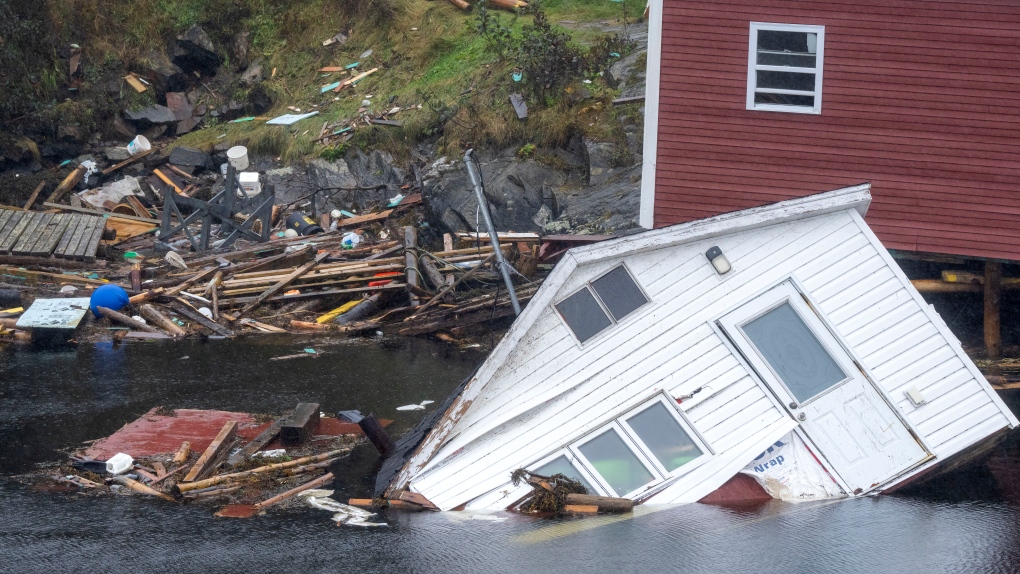
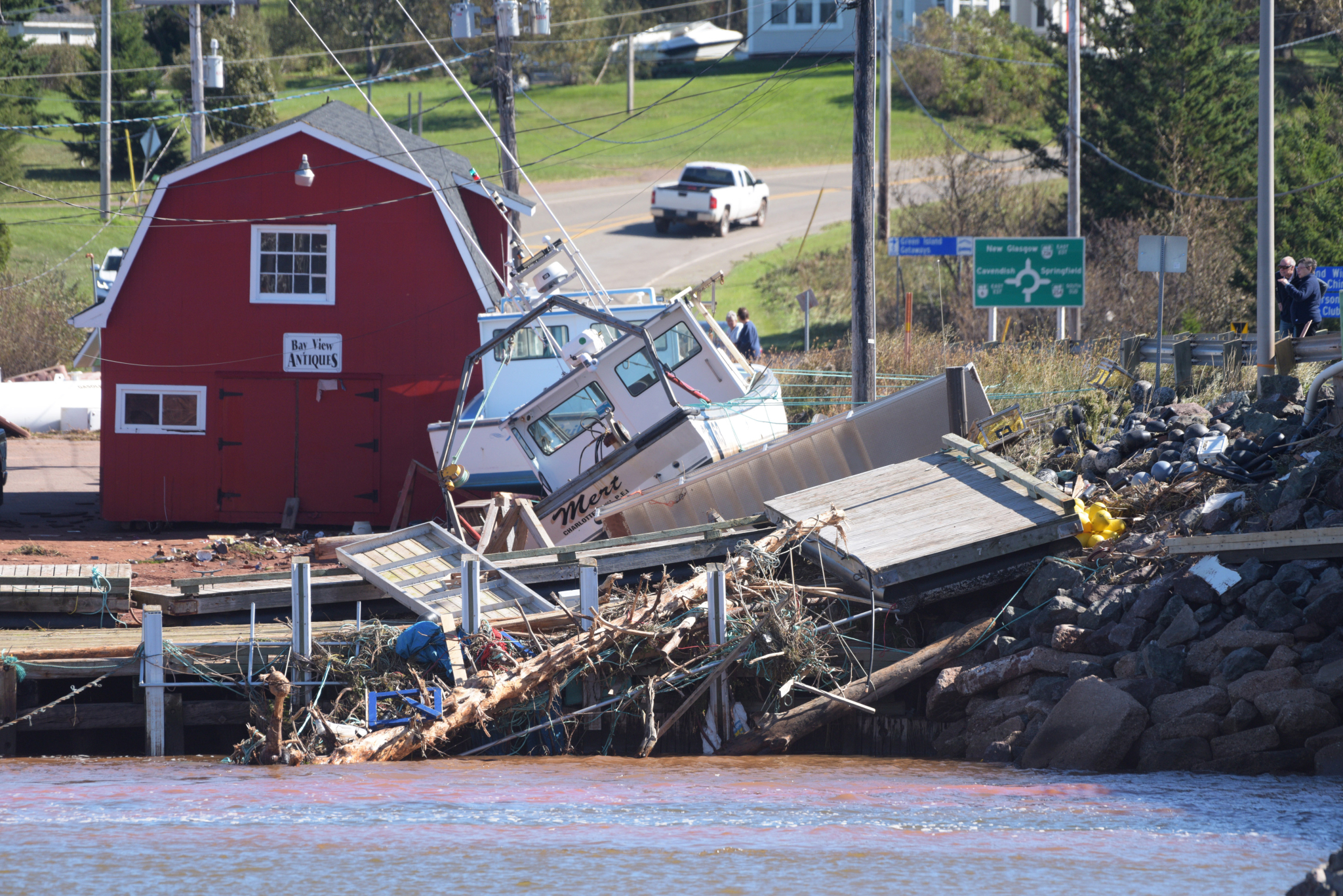
As we attempt to come to grips with destruction on the coastline of P.E.I., floods in Florida turning roads into rivers, and floodwaters that upended the lives of tens of millions in Pakistan, it dawns on us that restoration is going to be extremely expensive.


Heidi Petracek, CTV News Atlantic Reporter, reports on the destruction in Neil’s Harbour in Nova Scotia’s Victoria County, the massive downed trees in Sydney, N.S., and the receding dunes on Prince Edward Island. Climate experts say the aftereffects of post-tropical storm Fiona make up a new reality on the east coast. Brian Feltmate, head of the Intact Centre on Climate Adaptation at the University of Waterloo says “The severity of the storms is going to get more challenging over time.”


“With more heat in the system, there's more energy to the storms, and warmer air holds more moisture, so you get a combination of higher winds, and more water coming down in shorter periods of time, and that's all driven by climate change,” says Feltmate. ('The Reality Is Kicking in': Experts Say Storms Like Fiona Are the New Normal for Maritimers, 2022)


Avi Lewis considers  a couple of weeks on planet Earth when hurricanes plunged 11 million people into darkness in Cuba, permanently redrew the coastline of P.E.I., and turned Florida roads into rivers. All while the floodwaters that upended the lives of tens of millions in Pakistan, and drowned their future crops, have yet to recede.


Right now in Canada, the costs of climate-turbocharged disasters fall disproportionately at the local level. Ottawa and the provinces kick in with one-time emergency injections that get the big headlines, while on the ground, it’s a long, grinding story of individuals struggling with insurance companies to get their homes and businesses rebuilt. Moreover, 60 per cent of core public infrastructure is owned and maintained by municipalities in Canada — so our system places a disproportionate burden on the very level of government that has seen its fiscal capacity shredded by decades of austerity even as a pile of social costs has been dumped on its doorstep. And that was before the disarray, burnout, staff shortages and chaos of the pandemic. (Lewis & Fawcett, 2022)


The people of Pakistan are facing great costs for restoration that is a consequence of the GHG emissions for electrical generation, transportation, and industrial processes in the wealthy countries of the Global North. The carbon footprint of the populated industrial provinces of Canada makes weather disasters more likely to affect the small agricultural and marine economy of PEI. When responsible entities and governments address these “externalities” that severely impact “someone else” we will bring justice and justification to the emergency need to mitigate the damage of climate change.


References

Lewis, A., & Fawcett, M. (2022, October 4). Big Oil: We're coming to collect. Canada's National Observer. Retrieved October 4, 2022, from https://www.nationalobserver.com/2022/10/04/opinion/big-oil-we-are-coming-collect 

'The reality is kicking in': Experts say storms like Fiona are the new normal for Maritimers. (2022, October 3). CTV News Atlantic. Retrieved October 4, 2022, from https://atlantic.ctvnews.ca/the-reality-is-kicking-in-experts-say-storms-like-fiona-are-the-new-normal-for-maritimers-1.6094263 


Monday, November 11, 2019

Our 1.6 percent and Canada warming


One of our challenges in Canada is that we are in a large group of countries that contribute almost 16% of global emissions and our country, in the North is warming at twice the rate of other countries…


CO2 and Global Temperature


Jackie Hong reports that the Canadian North is feeling the impacts of climate change more acutely than the rest of the country, with a portion of the Yukon seeing one of the largest temperature increases nationwide, according to a newly-released federal report on climate change.
Entitled Canada’s Changing Climate Report, the eight-chapter document, released April 1, is essentially a summary of decades of data showing how Canada’s climate has changed as well as explanations of what’s causing the changes and their impacts… It’s the first of several to be released as part of a larger project led by Natural Resources Canada called Canada in a Changing Climate: Advancing our Knowledge for Action… Canada, overall, is warming twice as fast as the rest of the world on average, according to Canada’s Changing Climate Report, with the country’s average annual temperature having risen 1.7 C between 1948 and 2016. However, the North has been warming faster than the south, with the territories seeing a 2.3 C increase — three times the global average — during that time frame… “Historical warming has led to changes in rain and snow, rivers and lakes, ice, and coastal zones, and these changes are challenging our sense of what a ‘normal’ climate is,” the report concludes.1
Our west is suffering from a longer and more intense wildfire season, in the east (and Winnipeg and Calgary), concern mounts with the increasing severity and frequency of floods, the sea level rise is eroding our coasts at an increased rate, and some species of fish are abandoning our waters where the ocean reefs deal with higher temperatures and acidity, even as hurricanes are more frequent and powerful…
Sea level rise

Matt McGrath of the BBC writes that researchers say the biggest and most damaging hurricanes are now three times more frequent than they were 100 years ago.


The new study says the increase in damage caused by these big cyclones is linked by global warming… The authors found that the frequency of the most damaging hurricanes had increased by a rate of 330% per century. And they believe that is mainly due to rising temperatures.

"Our data reveal an emergent positive trend in damage which we attribute to a detectable change in extreme storms due to global warming," they write.
The scientists involved believe their new method is solid and gives a more accurate picture of what is happening with the worst storms.
"The new method of looking at the frequencies is really robust," said Aslak Grinsted, from the University of Copenhagen, who carried out the study.
"The increase in frequency is not only in my own dataset but is also present in other datasets, so it is extremely robust, and I think that will help it become more accepted."
The study has been published in the journal PNAS.2

The climate emergency impacts our country more that our 1.6 % should... Per capita Canada emits GHG in the top ten of industrialized nations…


Climate Transparency says Canada, South Korea and Australia are the farthest from meeting targets to cut emissions in line with their Paris Agreement commitments, but those commitments are nowhere close to enough, the report says.


Canada, South Korea and Australia are the farthest from meeting targets to cut emissions in line with their Paris Agreement commitments, but those commitments are nowhere close to enough, the report says. Canada's per-capita emissions, the greenhouse gases it releases divided by the number of people who live here, are the second-highest in the G20, behind only Australia ..The report applauded Canada for introducing a national price on carbon earlier this year, and for implementing tougher environmental reviews for major projects like pipelines and mines. But it slammed the Liberal government for approving the Trans Mountain pipeline expansion a second time in June, just days after Parliament voted in favour of a Liberal motion declaring a climate emergency.
The report says Canada is among global leaders in getting rid of coal power but is a laggard on a number of fronts, including energy use and emissions from cars and buildings..3

We need other countries to decide to meet IPCC targets so that we don't suffer consequences "above our 1.6% weight". I think we need to strive to meet or exceed our IPCC targets if we can have any credibility in convincing the other countries to follow suit. Our well educated and trained population is likely to be a resource to the rest of the world in the necessary mitigation and transition work on the whole planet…
Work for the planet

We certainly can "punch above our weight" in providing solutions to the world... It is necessary NOW to exceed other countries in our 16% group in GHG emission reduction. Canada is too rich a country to sit on the sidelines while less developed countries suffer. It is the Canadian way to do all we can when people are in trouble!

References


1
(2019, April 5). Climate change affecting northern Canada faster than rest of .... Retrieved November 11, 2019, from https://www.yukon-news.com/news/climate-change-affecting-northern-canada-faster-than-rest-of-the-country-report-says/ 
2
(2019, November 11). Climate change: Bigger hurricanes are now more damaging .... Retrieved November 11, 2019, from https://www.bbc.com/news/science-environment-50380431 
3
(2019, November 11). Canada among G20 countries least likely to hit emissions .... Retrieved November 11, 2019, from https://windsor.ctvnews.ca/canada-among-g20-countries-least-likely-to-hit-emissions-targets-report-card-1.4680509