Showing posts with label CAPP. Show all posts

Monday, September 7, 2026

Oils Well that Ends

 An article in the Economist Business section: “On shifting oil sands” asks: Canada’s oil industry is booming. Can it last?


Looser regulations will help with pipelines—but may not boost production


Mark Carney, Canada’s prime minister, is intent on promoting a speedier process that will apply to a new pipeline under development to British Columbia. Lisa Baiton of the Canadian Association of Petroleum Producers, an industry group, has spoken of a “generational opportunity” to rally political and public support behind new oil projects.


Enbridge, an energy-infrastructure firm, has paused construction of a pipeline to the east, citing a lack of commitments by producers to provide enough oil to make it worthwhile.


The unique challenges of the oil sands provide an explanation. Investment in new sites has been virtually non-existent since the oil price crashed in 2014 as demand weakened while America’s shale oil gushed and opec opened the taps. “It cannot be overstated how much that changed the industry,” says Kent Fellows of the University of Calgary. Moreover, projects in the oil sands take far longer to develop than conventional wells. They require enormous amounts of capital that could be tied up for five to ten years before profits flow. Uncertainty over the future price of oil—and the danger that a change of government might lead to the reinstatement of tighter regulations—make for risky bets. (Canada's Oil Industry Is Booming. Can It Last?, n.d.)


References

Canada's oil industry is booming. Can it last? (n.d.). The Economist. Retrieved September 7, 2026, from https://www.economist.com/business/2026/08/20/canadas-oil-industry-is-booming-can-it-last? 


Saturday, November 19, 2022

Both True at COP27

Mia Rabson, reporting for the Globe and Mail, writes that Canada won’t back the call at COP27 to ‘phase down’ oil and gas production.


Two directions?


“Everything we do is challenged in the court,” he said. “[Carbon] pricing was challenged, our plastic pollution regulations were challenged, our environmental impact assessment is being challenged – either by provinces or companies, or both. And if we’re not on very solid legal ground, we will lose in front of the tribunals and that doesn’t help anyone.”


Guilbeault said Canada hasn’t been challenged over plans to phase out coal, but is on almost everything it does on the oil and gas side.


“We have to be super careful in terms of what we do that what we do will hold in court,” he said. “Otherwise we’re wasting time, and precious time, to fight climate change.”


Julia Levin, national climate program manager for Environmental Defence, called that a disappointing excuse.


“I’d say it’s clear that the government of Canada is beholden to fossil fuel lobbyists and putting their interests ahead of public welfare,” said Levin.


She added that Canada’s position is strange, considering the agreement would likely have included the same abatement provision as coal. While Levin doesn’t back carbon capture and storage as a serious solution to cutting emissions, she said even that would be “a clear signal that, according to the U.S. and others, the age of oil and gas is over.”


The Canadian Association of Petroleum Producers, meanwhile, said getting lower-emission oil and natural gas to international markets is paramount for its members. (Rabson, 2022)


Perhaps the concern of the Environment Minister Steven Guilbeault and the goal of Julia Levin, national climate program manager for Environmental Defence, both reflect progress in dealing with the climate emergency.


References


Rabson, M. (2022, November 18). Canada won't back call at COP27 to 'phase down' oil and gas production. The Globe and Mail. Retrieved November 19, 2022, from https://www.theglobeandmail.com/canada/article-canada-wont-back-call-at-cop27-to-phase-down-oil-and-gas-production-2/ 

Monday, August 30, 2021

Update on Policy for Emission Reduction

NDC Commitments Canada


As Canadian Federal Election #44 comes closer, the policy of the political parties concerning meeting GHG reduction goals set by the IPCC needs to be examined and critically evaluated.


Stephanie Taylor of The Canadian Press reports to Global News that Conservative Leader Erin O’Toole rejects the Liberals’ higher emission reduction goal but vows to still meet the Paris target. O’Toole is facing criticism after rejecting Canada’s new target for reducing greenhouse gas emissions in favour of a lower one first set by Stephen Harper.


His pledge comes as Canada prepares to attend the United Nations Climate Change conference this fall where countries are expected to commit more ways to tackle the issue. In anticipation of the meeting, the Liberal government recently increased its targets for reducing greenhouse gas emissions to between 40 to 45 per cent below 2005 levels by 2030, up from 30 per cent. The 30 per cent goal was set by former Conservative prime minister Stephen Harper and was the commitment the country was held to under the 2015 Paris Agreement. O’Toole says the Conservatives’ climate change plan “will meet the Paris objectives” of 30 per cent, despite the United Nations specifying the agreement works by countries coming up with “increasingly ambitious climate action” every five years.1


Mitchell Beer has compiled a report in the The Energy Mix noting that Conservative Leader Erin O’Toole pledged to move boldly backwards on Canada’s emissions reduction target, and the fossil lobby has published its campaign wish list, and the climate crisis held its spot as a top concern for Canadian voters as the federal election moved into its third week.


Speaking in Newfoundland on Friday, Conservative Leader Erin O’Toole said he would jettison the Trudeau government’s international commitment to cut Canada’s greenhouse gas emissions 40 to 45% by 2030, and return to the Harper-era target of 30%, in search of a carbon target the country can achieve without “crippling” the economy.


If Canada were to [act on O’Toole’s promise], it would not violate an obligation, because the NDC itself is not legally binding,” University of Toronto law professor Jutta Brunnée explained. “But it would be contrary to the spirit of the Paris Agreement,” and “a challenge to the entire logic of the Paris Agreement, because the logic is progression over time. So it’s not something that one should take lightly.” New Democrats are campaigning on a 50% GHG reduction target by 2030, while the Green Party is talking about 60%..2


The fossil lobby has published its campaign wish list and CAPP President and CEO Tim McMillan says “To be resilient and sustainable, recovery will be a multi-year process based on robust economic activity.”


 McMillan says continues “ It is crucially important for the incoming federal government to make policy decisions that position Canada for success in an ultra-competitive international investment market. Investment supports industry growth and is vital to developing and commercializing technologies that reduce emissions, water use, and more.” Cenovus Energy CEO Alex Pourbaix let it be known—apparently without a hint of irony—that he expects Canadian taxpayers to shell out up to C$52.5 billion to help his industry get the carbon out of its operations. “It’s going to take tens of billions of dollars over 30 years to decarbonize [our oil] industry,” Pourbaix said2


Angela Carter, associate professor of political science at the University of Waterloo, noted that climate was already a top priority in the 2019 election.


“But this year, there’s a difference.“ There is a growing awareness that the climate crisis is, of course, also a health crisis,” Carter told the CBC. “And we have leaders, international leaders, Mark Carney is one of these, at the United Nations who said that the climate crisis in 50 years is going to look like a COVID pandemic every single year.”2


Sussex Strategy Group Senior Counsel Shawn McCarthy says climate change will show up as a “wedge issue” on the campaign trail, even if it didn’t much look that way in the first two weeks.


Though Conservative Leader O’Toole has made an effort to close the gap between his party’s 2019 climate platform and its position today, there are still “yawning differences among the parties with regard to climate ambition,” McCarthy writes. “There continue to be deep cleavages in terms of how they would treat the oil and gas sector, which is responsible for 25% of Canada’s greenhouse gas (GHG) emissions.” While the Trudeau government is vulnerable on its continuing support for the fossil industry, not least its decision to buy the Trans Mountain pipeline with taxpayers’ dollars, O’Toole’s carbon target “is clearly insufficient to put the country on course for achieving net-zero status by 2050,” McCarthy says. “The Liberals will no doubt remind climate-conscious voters that the Conservatives have not endorsed the net-zero target.”.2


The commitment of the Government we elect on September 20 to aggressively cooperate with the industrial nations of the world to reduce GHG emissions is essential to mitigate the effects in storms, fires, biodiversity, and public health of the climate emergency.


References

1

2021, August 27). O'Toole rejects Liberals' higher emission reduction ... - Global News. Retrieved August 30, 2021, from https://globalnews.ca/news/8146328/conservative-party-climate-target-canada-election/ 


2


(n.d.). The Energy Mix: Home. Retrieved August 30, 2021, from https://www.theenergymix.com/ 


Wednesday, April 14, 2021

Engineering Work Plan for Climate Emergency


Putting Canada on the path towards meeting our Paris Agreement GHG emissions reduction target of 30% below 2005 levels by 2030 is a task that will require enormous engineering effort  calculating the Social Cost of Carbon (SCC) and in the construction of infrastructure to mitigate the effects of Greenhouse Gas emission.

Engineering mitigation of GHG effects


  Marieke Walsh writes in the Globe and Mail that Environment Minister Wilkinson says that 2019 will be the last year of emission increases in Canada. The highest emitting sectors in Canada (oil and gas and transportation) are the ones that Mr. Wilkinson said he will be most focused on in the years ahead. 


On transportation, Mr. Wilkinson said emissions can largely be cut through regulatory changes that will target vehicle fuel efficiency. He said in his talks with Mr. Biden’s special envoy for climate, John Kerry, the focus is on “how fast can we go in terms of raising the level of ambition” on fuel economy standards. More investments in zero-emission vehicle infrastructure will also be needed, he said. On the oil and gas sector, Mr. Wilkinson said the increasing stringency of methane regulations will “start to bite” and the pending implementation of the clean fuel standard will also have a “significant impact on emissions.” Raising the carbon price to $170 a tonne by 2030 is the key reason why Canada can show that it will meet its emissions targets in less than a decade.1


An article in The Economist proposes this is the moment for an ambitious attempt by President Biden to deal with climate change and move America to less carbon and blackouts. Biden has said that he wants fossil-fuel emissions from power generation to end by 2035 and the economy to be carbon-neutral by 2050. America is not just the world’s second-largest emitter, but also a source of climate-related policy, technology and, potentially, leadership. What is about to unfold in Washington will set the course in America for the next decade—and quite possibly beyond.


Time is pressing. Neither Mr Biden nor his successors may get a second chance to recast policy on such a scale. Global emissions from fossil fuels and cement production in 2019 were 16% higher than in 2009. It will be even harder to limit climate change to less than 2°C above the pre-industrial level, the global threshold from which America’s target for 2050 comes. To be carbon neutral, the world must curb emissions by 7.6% a year for a decade, a steeper decline than in 2020, when covid-19 cut demand for oil and coal. For America, delaying action to 2030 would nearly double the cost of reaching net zero or, more likely, mean it overshoots its targets. Yet there are grounds for hope. Although the Republican Party is against almost all action, voters are increasingly alarmed by climate change. Two-thirds of them think the federal government is doing too little about it, and that share includes plenty of younger Republicans. Although the fossil-fuel lobby remains powerful, many Republican business donors want more action—partly because asset managers are urging firms to align their strategies with the net-zero world Mr Biden envisions. Most encouraging of all, the costs of power from wind and solar have plunged by 70% and 90% over the past decade. Along with cheap gas, this has already helped America decarbonise at an impressive rate, despite Donald Trump’s rolling back of fossil-fuel regulations. Price has not been the only factor; more than half of the states have some sort of clean-energy mandate, a device that Mr Biden wants to introduce on a national scale.2


The Canada Department of the Environment and Climate Change reported on Greenhouse gas sources and sinks in 2020. Emission increases since 2005 in the oil and gas and transportation sectors have been offset by decreases in electricity and heavy industry.


After hovering between 700 and 720 megatonnes of carbon dioxide equivalent (Mt CO2 eq) in recent years, in 2018 (the most recent annual dataset in this report) Canada’s greenhouse gas (GHG) emissions increased to 729 Mt CO2 eq. This increase is attributed to higher fuel consumption for transportation, winter heating and oil and gas extraction. Over the long term, Canada’s economy has grown more rapidly than its GHG emissions: the emissions intensity for the entire economy (GHG per Gross Domestic Product [GDP]) has declined by 36% since 1990 and 20% since 2005. Emission trends since 2005 remain consistent, with emission increases in the Oil and Gas and Transportation sectors being offset by decreases in other sectors, notably Electricity and Heavy Industry. The Pan-Canadian Framework on Clean Growth and Climate Change (adopted in 2016) puts Canada on the path towards meeting our Paris Agreement GHG emissions reduction target of 30% below 2005 levels by 2030. The Framework is a comprehensive plan to reduce emissions across all sectors of Canada’s economy, stimulate clean economic growth and build resilience to the impacts of climate change. Canada is committed to continue implementing the Framework, while working to exceed its 2030 emissions reduction goal, and developing a plan to achieve net-zero emissions by 2050.3


Breach Media reports on a committee formed by the Canadian Association of Petroleum Producers ( CAPP ) and Canadian Government representatives named “Create the Path Table” to discuss regulations and creating “opportunities” post-pandemic.  Themes for discussion included advancing offshore projects in Atlantic Canada and tar sands projects in Western Canada, “cooperation in building investor confidence,” and “government industry collaboration to strengthen energy trade” with the United States.


 There was discussion of “emission reducing technologies,” hydrogen energy, and carbon capture and sequestration—several proposals promoted by oil companies that have been widely panned as false solutions perpetuating fossil fuel use. “Canada’s LNG” is referred to as an “opportunity” for the country’s climate plans, even though scientists have concluded that liquified natural gas is in fact a carbon-intensive fuel that needs to be phased out. CAPP “greatly appreciated” government engagement with industry. The oil lobby’s focus on Natural Resources Canada appears to have paid off.  In June, O’Regan announced that the government would exempt offshore drilling in Newfoundland and Labrador from federal environmental impact assessments. In September, he announced a $320 million public handout with no strings attached to Newfoundland’s offshore oil industry. That same month, O’Regan began echoing the CAPP’s talking points by touting LNG as the answer to the climate crisis and a key part of the Liberal’s “green recovery” agenda. Soon after, he reassured CEOs from Husky and Suncor that the federal government “cannot achieve Net Zero without our oil and gas sector” and that any economic recovery would involve “continued exploration” for oil off the east coast, according to a memo obtained by Greenpeace.4


Mitigation of the effects of the climate emergency on Canada is an enormous engineering challenge that will require government support of research, training, design and construction of infrastructure that meets the IPCC goals on emission reduction and supported by SCC calculations.


References


1

(2021, April 12). 2019 will be last year of emission increases in Canada, Environment .... Retrieved April 13, 2021, from https://www.theglobeandmail.com/politics/article-canadas-last-year-for-emissions-increase-was-2019-jonathan-wilkinson/ 

2

(2021, February 20). How America can rid itself of both carbon and blackouts | The .... Retrieved April 13, 2021, from https://www.economist.com/leaders/2021/02/20/how-america-can-rid-itself-of-both-carbon-and-blackouts 

3

(2021, January 19). Greenhouse gas sources and sinks: executive summary 2020 .... Retrieved April 13, 2021, from https://www.canada.ca/en/environment-climate-change/services/climate-change/greenhouse-gas-emissions/sources-sinks-executive-summary-2020.html 

4

(2021, April 13). Oil lobby, Trudeau government formed secretive committee during .... Retrieved April 13, 2021, from https://breachmedia.ca/oil-lobby-trudeau-government-formed-secretive-committee-during-pandemic/ 


Wednesday, November 20, 2019

Avoid stranded assets and meet GHG emission goals

Government subsidies for infrastructure in the oil and gas industry and investment in oil and gas operations by pension funds is counter to moving toward Canada’s obligation to reduce GHG emissions in accord with the Paris targets.
Divest now

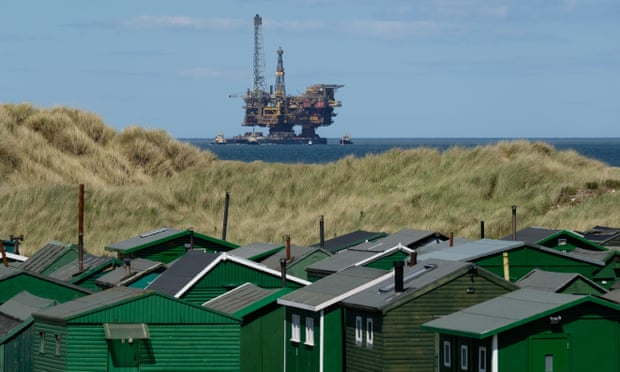
Bill McKibben notes that the European Investment Bank has met to decide its policy on fossil fuels. When the world’s climate scientists declared last autumn that we would need to have fundamentally transformed our energy sector within a decade, it was clear that the first job was to stop building any new infrastructure.
Source: https://i.guim.co.uk/img/media/1aea50fcba8e8afce674fc15d4d86ce6d5a8cbd1/0_53_5283_3169/master/5283.jpg?width=620&quality=85&auto=format&fit=max&s=c48655cf220017d3bff15cd7ce1b8295

The first rule of holes is, when you’re in one, stop digging. In this case that means no more digging for gas pipelines or ports or anything else that will help lock in carbon emissions for decades to come.
And if the EIB does act, it will send a strong signal to markets and to other lenders. For almost a decade now, observers have understood that restricting the flow of money to the fossil fuel industry is a key part of the climate fight. That’s why endowments and portfolios worth more than $11tn have begun divesting their fossil fuel stocks; last month the University of California system became the latest big player to join in, scrubbing its $80bn endowment and pension fund of fossil fuel stocks. Heck, even a major American utility announced that it was divesting its pension fund because it could see where the future lay.1 
In the past week of Guardian reporting we’ve learned that the biggest oil companies plan to increase production as much as 35% in the next decade. It’s going to be hard enough to phase out the vast existing fossil fuel infrastructure in the years ahead: adding new projects at this point is insane.

The European Investment Bank has agreed to phase out its multibillion-euro financing for fossil fuels within the next two years to become the world’s first ‘“climate bank”. The bank will end its financing of oil, gas, and coal projects after 2021, a policy that will make the EU’s lending arm the first multilateral lender to rule out financing for projects that contribute to the climate crisis.
The decision to stem the flow of capital into fossil fuel projects has been welcomed by green groups as an important step towards the EU’s aim to be carbon-neutral by 2050.
The EIB, the world’s largest multilateral financial institution, described its decision as a “quantum leap” in ambition. “Climate is the top issue on the political agenda of our time,” said the bank’s president, Werner Hoyer. “We will stop financing fossil fuels and launch the most ambitious climate investment strategy of any public financial institution anywhere.”
The bank’s vice-president, Andrew McDowell, said the move was “an important first step – not the last step, but probably one of the most difficult.”
Under its new policy, the bank will end all lending to fossil fuels within two years and align all funding decisions with the Paris climate accord. Energy projects applying for EIB funding will have to show they can produce one kilowatt hour of energy while emitting less than 250 grammes of carbon dioxide.2
Laura Kane of CBC News writes that The Trans Mountain pipeline received $320 million in subsidies from the Canadian and Alberta governments in the first half of 2019,
Source: https://i.cbc.ca/1.5206171.1572992816!/cumulusImage/httpImage/image.jpg_gen/derivatives/original_780/trans-mountain-pipeline.jpg

according to a new report by an economic institute that analyzes environmental issues.
The money included $135.8 million in direct subsidies and $183.8 million in indirect subsidies that were not clearly disclosed to taxpayers, says the report by the Institute for Energy Economics and Financial Analysis.
"This is a very large subsidy. It really does require more public discussion and public disclosure," said Tom Sanzillo, the group's director of finance.
Sanzillo and the report's co-author, institute financial analyst Kathy Hipple, analyzed the second-quarter report of the Canada Development Investment Corp., a Crown corporation that counts Trans Mountain Corp. among its subsidiaries.3 
James Rowe, Steph Glanzmann, Jessica Dempsey, and Zoë Yunker of the Canadian Centre for Policy Alternatives report that The Canada Pension Plan Investment Board (CPPIB) manages one of the country’s largest pools of investment capital at over $400 billion. How pension funds choose to invest has significant bearing on how we collectively address the climate emergency and the needed energy transition away from fossil fuels.

This report asks if the CPPIB is investing with the 1.5-degree Celsius limit on global average temperature rise as outlined in the Paris Agreement and finds it is not.
The CPPIB has chosen to invest millions in companies with a long history of policy obstructionism…
The preceding analysis demonstrates that the CPPIB’s investments are not congruent with the1.5-degree limit. Moreover, the CPPIB has chosen to invest millions in companies with a longhistory of policy obstructionism. For example, the CPPIB has over $1.9 billion invested in fossil fuel companies that belong to the Canadian Association of Petroleum Producers (CAPP).27 CAPP haa long record of lobbying against, and seeking to neutralize the effectiveness of, needed climate policy.28 For example, CAPP has pushed to neutralize national carbon taxation by requesting that its members get back all of the revenue they pay in taxes.29 This lobbying appears to have been successful since approximately 80 per cent of the oil and gas sector’s emissions are exempted from Canada’s national carbon price, thereby greatly reducing the plan’s effectiveness.30 CAPP also actively funds and manages Canada’s Energy Citizens, a group marketed as a “grassroots” pro–oil and gas citizen initiative. Under the Energy Citizens banner, CAPP recently launched a massive advertising campaign supporting the Trans Mountain pipeline expansion and encouraging policy-makers to “use the appropriate legislative, legal and financial steps to ensure the Trans Mountain Expansion project gets built.”31 Concerns have been raised that CAPP’s campaign targeted swing ridings in Ontario’s recent provincial election and was meant to tilt the balance toward Doug Ford’s Progressive Conservative Party, which opposes carbon pricing.32 Finally, in January 2019, CAPP released a platform meant to influence the Alberta provincial elections, which were held in April. The platform called for the rate of Alberta’s oil supply for export to double in growth...4 
The authors of this report say this is a moral and ecological failure and also a financial risk. As energy generation shifts away from fossil fuels, investors who do not respond may find themselves left with “stranded assets”—investments that are no longer profitable—and Canada Pension Plan recipients would be collectively affected. Worse still, is that their pension investments would continue to contribute to climate change rather than supporting measures committed to finding solutions. Divestment is a strategy to reduce financial support to GHG emitters and slow down the warming of the planet.

References

1
(2019, October 13). Divestment works – and one huge bank can lead the way | Bill .... Retrieved November 9, 2019, from https://www.theguardian.com/commentisfree/2019/oct/13/divestment-bank-european-investment-fossil-fuels 
2
(2019, November 15). European Investment Bank to phase out fossil fuel financing .... Retrieved November 20, 2019, from https://www.theguardian.com/environment/2019/nov/15/european-investment-bank-to-phase-out-fossil-fuels-financing 
3
(2019, November 19). Trans Mountain received $320M in government subsidies in .... Retrieved November 20, 2019, from https://www.cbc.ca/news/canada/british-columbia/trans-mountain-government-subsidies-2019-1.5365747 
4
(2019, November 19). Fossil Futures | Canadian Centre for Policy Alternatives. Retrieved November 20, 2019, from https://www.policyalternatives.ca/publications/reports/fossil-futures