Showing posts with label market. Show all posts

Monday, December 11, 2023

Articles on Homelessness from Ponder Patterns

Research that has been curated in the Ponder Patterns blog since August 2023 underlines the urgent need for the Government to increase efforts to address homelessness and food insecurity for immediate relief to suffering residents and long term equity and balance in our social safety net.


Homeless in Winter


Saturday, August 26, 2023

Supply or Speculation 


A plan to alleviate the shortage of housing in Canada is likely to be mentioned in the political platforms of all persons seeking election federally, provincially, and in municipalities. The plans may differ depending on the understanding of the authors about the root cause of the shortage.
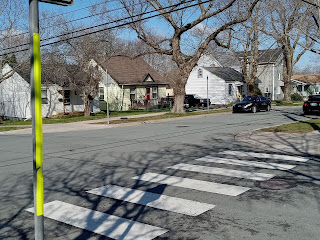

When we built Homes


Supply, speculation, demand, and the lack of taxes on the sale of principal residences are cited as contributors to the shortage of available housing in Canada. In the next election cycles, we expect the successful candidates will support policy to tackle this disastrous situation.


Tuesday, September 5, 2023

Housing Crisis Recent History


The evidence of the housing crisis in Nova Scotia is as close as our neighborhood park. This crisis has been building for many years. This article reviews some analysis and proposals from a few years ago.


Some Recommendations


The analysis of the housing crisis in these articles from 2019 and 2021 have identified the need for investment by government in affordable rental housing to rectify the inequity and injustice that continues to increase the number of homeless people in Nova Scotia.


Friday, September 8, 2023

Getting Back to Building Housing


A previous post, Housing Crisis Recent History, touched on the government decisions that have led to social housing austerity in Canada and the need for a large-scale community-based land acquisition strategy based on sustainable living, not returns for investors.


Building for Homeless or Investors


The need to address homelessness in HRM will be immediate as winter approaches. The alleviation of the housing crisis is urgent and requires action to maintain the status of HRM as a place to support living and working.


Saturday, September 16, 2023

Different Understanding of Housing Concerns


The housing emergency in Nova Scotia is increasing daily and the understanding of the problem by provincial political leadership appears to differ in important details with the assessment of the situation by at least one Halifax Regional Municipality Councillor. This development resonates with concerns expressed in the Housing and Ideology post in June 2023. As noted then, political ideology may be a serious obstacle to effective action in the area of housing.


Housing as a Human Right

In the crisis of homelessness that we are experiencing in Nova Scotia, and particularly HRM, one essential criteria for efficient progress on this catastrophe is cooperation between all levels of governments that avoids political “half truths”and acceptance rather than shifting of responsibility.


Tuesday, November 21, 2023

Insecurity and the Economy


Our community is experiencing severe housing and food insecurity. The increasing numbers of people living in tents and depending on food banks indicates that action by the government is essential and urgent.


Klein, Seth. (2020) A Good War: Mobilizing Canada for the Climate Emergency. Toronto, ON:ECW Press.


The role of the government to protect the health of Canadians was essential during the Covid 19 emergency. Government Action, similar to wartime programs, to guarantee the right of Canadians to adequate housing and access to healthy food is urgently required now.


Saturday, December 2, 2023

When the Market fails


We are more keenly aware of homelessness and food insecurity in our community when the days grow short and the temperature drops prior to the holiday season. We are fortunate to have many people who work very hard supporting the homeless and gathering food for food banks and soup kitchens.
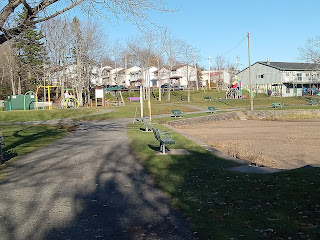

Adequate Housing


Perhaps, simply put, the answer to homelessness is to build more homes and the answer to poverty is access to more money. In Canada, the Government has responded, in the past, to housing needs by rapidly building houses. Rent subsidies and a guaranteed basic income are examples of Government providing money to improve the life situation of citizens. When the market fails, the Government must step up.


Wealth Distribution Canada 2023

Renewal of Government Action for adequate housing and healthy food that mirrors the programs that created housing after WWII and during the CMHC supported housing initiatives that built Lower Sackville and Forest Hills with “sweat equity” are urgently required in combination with income support programs to alleviate food insecurity. Spending on housing and income for food security reduces spending in health, education, and social services and confirms the human right in Canada for adequate housing and food security for our residents.


Tuesday, June 27, 2023

Emergency Response to Housing Need

The current economic situation and the rapid increase of population, particularly in HRM, has aggravated an already existing emergency situation that needs action to provide “deeply affordable” housing in Nova Scotia. Some recent views have been expressed on the immediate action required.


The new building is for the market... not the people in tents in the ballpark


Dr. Catherine Leviten-Reid is a CCPA-NS Research Associate writes in The Monitor.


A short-sighted vision that relies primarily on the market to ensure everyone has access to housing underestimates this issue's tremendous rippling impact, which erodes efforts to build a healthy, growing, more inclusive province. (Leviten-Reid, 2023)


Alex Cooke reports for Global News on differing viewpoints about social housing.


Jeff Karabanow, a professor at Dalhousie University and the co-director of Dal’s Social Work Community Clinic, says the province’s housing crisis has been happening for years, and is the result of disinvestment in social housing. (Cooke, 2023)


Municipal Affairs and Housing Minister John Lohr said in recent years, their efforts have touched about a thousand non-profit and co-op housing units through programs such as Compass, the Housing Trust of Nova Scotia, and the Land for Housing Initiative.


He couldn’t say how many of those units were rent-geared-to-income but said they were a mix of different options with more affordable rates.


In terms of “affordable” units going for 80 per cent of market value – a figure typically touted on housing announcements in Nova Scotia – Lohr said it “doesn’t work for some people, but for those it works for, it’s incredibly important.” (Cooke, 2023)


Halifax Councillor Waye Mason has expressed that in this time of likely global housing price collapse, high interest rates, and recession we are in need of the government to help preserve our labour force by funding affordable housing construction.


Finally and most importantly, you are responsible for affordable housing construction in Nova Scotia.  In the election, Premier Houston promised to deliver the Affordable Housing Commission report.  That report talks extensively about the need for social or below-market housing.   I say again to you Minister, the market will not produce below-market housing.


You need to have a massive plan to build affordable housing, and you needed it a year ago.  With the coming global housing price collapse, high-interest rates and recession, there has never been a better time for the government to help preserve our labour force by funding affordable housing construction. (Mason, 2022)


In A Good War, author and activist Seth Klein looks at the Second World War strategies and shows how they can be repurposed today for a rapid transition.


Addressing the need for adequate housing in Canada would seem to be connected to the difficulty of life in our winter without appropriate shelter. Housing insecurity creates particularly intense anxiety in our land of ice and snow. Immediate action on a large scale to mitigate this disastrous situation is appropriate for the government. 


References

Cooke, A. (2023, June 26). Nova Scotia hasn't built public housing in 30 years. Why that was a 'huge mistake' | Globalnews.ca. Global News. Retrieved June 26, 2023, from https://globalnews.ca/news/9784037/ns-public-housing-stagnant-supply/ 

Klein, S. (2020). A Good War: Mobilizing Canada for the Climate Emergency. ECW Press.

Leviten-Reid, C. (2023, June 26). Lack of affordable housing in Nova Scotia requires urgent action. The Monitor. Retrieved June 26, 2023, from https://monitormag.ca/articles/lack-of-affordable-housing-in-nova-scotia-requires-urgent-action/ 

Mason, W. (2022, November 15). Correspondence from Councillor Mason to Minister Lohr Regarding Housing. Waye Mason, Councillor. Retrieved November 15, 2022, from https://wayemason.ca/2022/11/15/correspondence-from-councillor-mason-to-minister-lohr-regarding-housing/ 


Monday, August 15, 2022

How to Improve Access to Health Care

The challenges in our healthcare system to provide timely access to primary practitioners and specialized treatments have brought the question of what degree of public and private delivery of services will best address these needs.

How to address the needs in Health Care


The improvement in access to health care and the reduction of wait time for treatment and procedures will require increased funding that will raise the per capita cost of care for Canadians.  Dr. Katharine Smart, president of the Canadian Medical Association, says, on the surface, it might seem privatization would increase capacity and take weight off the public system, but “that's not really what happens.”


“What starts to happen, of course, is differential access to care,” Smart said in an interview Thursday. “So people with more resources have more access, shorter wait times, and people who don’t, do not. “


Smart says, if Canadians want equity in accessing the health-care system, it needs more resources and investments to make it “successful.” (Rushdie, 2022)


Dr. Adam Hofmann, co-founder of Algomed, says he's a strong advocate for public health care but Canada's strained system can't meet the needs of citizens.


"What public health care does badly is adapt to the times. It doesn't innovate. It cannot innovate. It is too big a battleship to turn around," said Hofmann.(Affan & Donaldson, 2022)


Alexandra Rose, the The Nova Scotia Health Coalition's provincial coordinator, says while private care might provide a temporary solution, it makes the shortfalls in Canada's public health care system even worse.


"Every time a private clinic opens, doctors leave the public sector, doctors, nurses, nurse practitioners. That's less staff working in the public sector, which is only going to exacerbate the extreme staffing crisis that we're already facing," Rose said.


Rose says the responsibility to solve systemic issues lands on the shoulders of the government. She says she's worried private care will dissuade the government from finding long-term solutions on their own. (Affan & Donaldson, 2022)


The urgent need for improved access to health services has generated interest in the possibility that a different public/private mixture may be better for our citizens.


References

Affan, E., & Donaldson, J. (2022, August 13). Owner of private medical clinic says it will ease burden on N.S. health-care system. CBC. Retrieved August 13, 2022, from https://www.cbc.ca/news/canada/nova-scotia/private-ns-medical-clinic-says-ease-health-care-system-1.6549725 

Rushdie, S. (2022, August 12). Privatizing health care would cause inequity: CMA president. CTV News Atlantic. Retrieved August 13, 2022, from https://atlantic.ctvnews.ca/privatizing-health-care-results-in-worse-access-for-less-fortunate-cma-president-1.6025038 


Sunday, December 12, 2021

Climate Mitigation in a Market Economy

A curation of recent articles in the media invite a SWOT (strengths, weaknesses, opportunities, and threats) analysis of action by investment, industrial, insurance, and service enterprises to mitigate the disastrous effects of climate events like those that the people of the east and west coast of Canada have endured.


 Environmental racism in Nova Scotia

Matt Galloway, of the Current on CBC Radio, interviewed Tom Rand, managing partner at ARK turned Venture Capital and the author of The Case for Climate Capitalism, and Christine Bergeron, president and CEO of Van City, a credit union in British Columbia. Galloway asks if the pension fund leaders are in a bind if there is a moral imperative to not destroy the planet, but their job is to make sure that my pension is taken care of?

An investment fund manager has a fiduciary obligation to maximise long term returns for their beneficiaries. There's two kinds of arguments, as Christine just pointed out. One is that investment managers are beginning to realise that there is a boatload of money to be made in this transition to a low carbon economy. This is the biggest economic opportunity of the 21st century. The other, more nuanced argument I would make, though, is that pension funds have an obligation, as you say, to meet their beneficiaries' needs, sort of 20, 30, 40 years from now if we head into three degrees and four degrees. I'm sorry, is Mad Max the economy? You know, to think that the economy is going to keep growing and that we can meet those obligations, financial obligations many decades out and of the world you're dreaming of. And so I would argue there's actually a fiduciary obligation on behalf of the industry as a whole. No single pension fund can do it by themselves, but as a whole, they have a responsibility to help solve this problem because if you don't solve this problem, the economy is not going to be running the way we expect it to in 20 or 30 years.1 

Megan O'Toole and Jillian Kestler-D'Amours, of Al Jazeera, report on the fight to end environmental racism in Canada and Nova Scotia that has been the result of putting industrial development ahead of the health and welfare of marginalized communities. In the article, Ingrid Waldron, Canada’s preeminent expert on the topic and author of There’s Something In The Water: Environmental Racism in Indigenous & Black Communities, says rural and isolated areas are most affected.

whose book on environmental racism was the basis of a 2019 documentary co-directed and co-produced by actor Elliot Page, has spent years documenting the phenomenon in the province. She serves as executive director of the Environmental Noxiousness, Racial Inequities and Community Health (ENRICH) project, which has mapped the proximity of dozens of waste disposal sites and other toxic industries to First Nations and African Nova Scotian communities.2
 

  A report By Simran Chatha outlines plans involving the private sector to mitigate the effects of rising seas that threaten Canada’s Atlantic and Pacific Coasts.

As for Canada, the report indicates that the country “does not yet have a strategic planning framework or standard classification of approaches for coastal risk management.” To properly build and maintain future flood mitigation measures, the report recommends Canada develop a set of national standards to support a consistent evaluation of nature-based solutions compared to infrastructure solutions, develop national monitoring standards for these solutions and to build the capacity to fund nature-based projects in the private sector.3 

Tom Perkins, in an article for the Guardian, reports on the math of confusion as McDonald’s avoids the bold step of cutting beef offerings to reduce GHG emissions. Jennifer Molidor, ​a senior food campaigner with the Center For Biological Diversity points to the absence of menu changes needed to significantly reduce beef production and emissions in McDonald’s plans.

“One of the main signs that something is ‘greenwashing’ is that it’s not clear or transparent,” she added…McDonald’s “net zero” by 2050 pledge has also been criticized because such plans can allow polluters to continue emitting high levels of greenhouse gases over the next decades. To offset emissions that companies continue to produce, “net zero” programs often rely on carbon offset schemes – which have been the subject of multiple investigations pointing to flawed carbon calculations and uncertain impacts – as well as carbon capture technology, which is expensive and not yet operating at scale. Though McDonald’s plans and metrics are complex and controversial, they hold high marketing value because they give the appearance to the layperson of real progress, Molidor said. “McDonald’s is taking advantage of people who don’t understand this kind of math,” she added.4 

Significant players in the market economy have identified strengths for their enterprises in the upcoming low carbon environment. Our role as individuals is to highlight the weakness and threats to these organizations of delayed action.


References


1

(2021, December 8). What We Can Do: A special show on fighting climate change in your .... Retrieved December 10, 2021, from https://www.cbc.ca/radio/thecurrent/what-we-can-do-a-special-show-on-fighting-climate-change-in-your-home-work-and-finances-1.6277706 

2

(2021, December 8). Toxic legacy: The fight to end environmental racism in Canada. Retrieved December 10, 2021, from https://www.aljazeera.com/features/longform/2021/12/8/toxic-legacy-the-fight-to-end-environmental-racism-in-canada 

3

(2021, December 9). Rising seas threaten Canada's Atlantic and Pacific Coasts: Report. Retrieved December 10, 2021, from https://www.watercanada.net/rising-seas-threaten-canadas-atlantic-and-pacific-coasts-report/ 

4

(2021, December 10). Hold the beef: McDonald's avoids the bold step it must take to cut .... Retrieved December 10, 2021, from https://www.theguardian.com/environment/2021/dec/10/mcdonalds-emissions-beef-burgers 

Tuesday, August 31, 2021

Affordable Housing Crisis and the Election

The need for affordable housing in Canada has reached a crisis level. The plans of the political parties seeking election in September contain incentives, regulations and restrictions to hopefully increase the supply of affordable and deeply affordable housing.

Balance to create affordable housing


CBC The Current asks two nonpartisan experts what the parties are promising on affordable housing ahead of election day. Leilani Farha, former U.N. Special Rapporteur on the right to housing, now the global director of the Shift, an organisation that's focussed on that issue, speaking on CBC the Current, thinks the parties need to get their head around addressing homelessness. It has to be urgent and a priority. These are life and death situations.


These are situations that are desperate and need to be addressed. She thinks we definitely need more supply in the country. That's a given, but it's what kind of supply. It is necessary to encourage supply, but encourage affordable and deeply affordable supply. She thinks that has to be a priority. Housing is understood as a human right, and there are a lot of people who are not at all enjoying that right in any way in this country.1


 Murtaza Haider, professor of data science and real estate management at Ryerson University and research director of the Urban Analytics Institute, thinks homelessness is a thing that he was expecting a little more on because he saw some mention of it in each platform. 


Conservatives and NDP call it a crisis. They have put forward plans to increase the supply of new housing or new construction. They have to put measures to help new home buyers, especially First-Time Homebuyers or the Millennials, to purchase more homes. There's some programmes to increase the construction of new rental housing. But if you put all of these together, these programmes are not aggressive enough to address the almost five decades of under-construction that we have built fewer homes than we were building in the 70s on a per capita basis in Canada, which has created this state where housing is unaffordable for many people, both renting and buying.1


Natasha Bulowski comments that the sad truth is, Canada’s housing affordability crisis has been 30 years in the making. In a nation where housing needs drastically outstrip availability in most cities, and where the private sector is unwilling or unable to build more truly affordable units, could the COVID-19 pandemic offer a once-in-a-lifetime opportunity to embrace new policies and new partnerships with the non-profit housing sector? Could we not use this moment to fix Canada’s housing crisis for good times and bad?


“The private sector is not going to get us out of our housing emergency,” said Ottawa-Centre Councilor Catherine McKenney when I spoke to her in March. “When we talk about affordable housing, supportive housing, social housing, we can’t look at a profit margin. We have to look at a health, social service margin. We have to make sure people are well taken care of and once you put profit into that you will lose that.” Not only must cities figure out ways to prevent the erosion of existing housing stock—“so that we aren’t losing that affordable stock as property owners and landlords renovate and push out tenants,” said McKenney—but also how to drastically increase the construction of new affordable rental units, preferably by public or non-profit actors and in combination with provincial and federal rental assistance programs, so that people can afford to pay for their homes.2


John Rapley, a political economist at the University of Cambridge, speaking on CBC Cross Country Checkup, notes that Canadians value the gains they've made from a soaring housing market. While he welcomes plans to create more housing stock, Rapley warns that new developments will likely face opposition. Communities may push back against plans to increase a neighbourhood's density, which could cause projects to move to lower-income areas or the outskirts of cities, adding to urban sprawl. He believes it won't be up to governments to decide how to move forward, but rather what Canadian homeowners will allow them to do.


"You can't actually just say we'll build cheap houses here and [have] all the other houses keep their same value. Once you add supply to the market, the price and everything comes down, and that's not popular."3


Canada's major federal parties have shared their visions for making housing accessible, offering up ideas from restrictions on foreign buyers to building more housing.3


With many prospective homebuyers feeling squeezed out of the market, and others struggling to find reasonably priced rent in cities across the country, housing affordability has emerged as a key issue for voters ahead of the Sept. 20 election.


References

1

(n.d.). The Current with Matt Galloway | Live Radio | CBC Listen. Retrieved August 31, 2021, from https://www.cbc.ca/listen/live-radio/1-63-the-current/clip/15863238-what-parties-promising-affordable-housing-ahead-election-day 


2

(2020, May 1). Our opportunity to end housing poverty - | Canadian Centre for .... Retrieved August 31, 2021, from https://www.policyalternatives.ca/publications/monitor/our-opportunity-end-housing-poverty 


3

(2021, August 29). Measures to make housing more affordable wouldn't be popular with .... Retrieved August 31, 2021, from https://www.cbc.ca/radio/checkup/how-affordable-is-your-housing-situation-right-now-1.6155647/measures-to-make-housing-more-affordable-wouldn-t-be-popular-with-voters-economist-1.6155683