Showing posts with label investor. Show all posts

Monday, December 11, 2023

Articles on Homelessness from Ponder Patterns

Research that has been curated in the Ponder Patterns blog since August 2023 underlines the urgent need for the Government to increase efforts to address homelessness and food insecurity for immediate relief to suffering residents and long term equity and balance in our social safety net.


Homeless in Winter


Saturday, August 26, 2023

Supply or Speculation 


A plan to alleviate the shortage of housing in Canada is likely to be mentioned in the political platforms of all persons seeking election federally, provincially, and in municipalities. The plans may differ depending on the understanding of the authors about the root cause of the shortage.


When we built Homes


Supply, speculation, demand, and the lack of taxes on the sale of principal residences are cited as contributors to the shortage of available housing in Canada. In the next election cycles, we expect the successful candidates will support policy to tackle this disastrous situation.


Tuesday, September 5, 2023

Housing Crisis Recent History


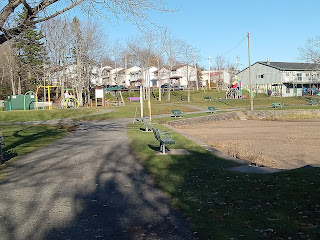
The evidence of the housing crisis in Nova Scotia is as close as our neighborhood park. This crisis has been building for many years. This article reviews some analysis and proposals from a few years ago.


Some Recommendations


The analysis of the housing crisis in these articles from 2019 and 2021 have identified the need for investment by government in affordable rental housing to rectify the inequity and injustice that continues to increase the number of homeless people in Nova Scotia.


Friday, September 8, 2023

Getting Back to Building Housing


A previous post, Housing Crisis Recent History, touched on the government decisions that have led to social housing austerity in Canada and the need for a large-scale community-based land acquisition strategy based on sustainable living, not returns for investors.


Building for Homeless or Investors


The need to address homelessness in HRM will be immediate as winter approaches. The alleviation of the housing crisis is urgent and requires action to maintain the status of HRM as a place to support living and working.


Saturday, September 16, 2023

Different Understanding of Housing Concerns


The housing emergency in Nova Scotia is increasing daily and the understanding of the problem by provincial political leadership appears to differ in important details with the assessment of the situation by at least one Halifax Regional Municipality Councillor. This development resonates with concerns expressed in the Housing and Ideology post in June 2023. As noted then, political ideology may be a serious obstacle to effective action in the area of housing.


Housing as a Human Right

In the crisis of homelessness that we are experiencing in Nova Scotia, and particularly HRM, one essential criteria for efficient progress on this catastrophe is cooperation between all levels of governments that avoids political “half truths”and acceptance rather than shifting of responsibility.


Tuesday, November 21, 2023

Insecurity and the Economy


Our community is experiencing severe housing and food insecurity. The increasing numbers of people living in tents and depending on food banks indicates that action by the government is essential and urgent.


Klein, Seth. (2020) A Good War: Mobilizing Canada for the Climate Emergency. Toronto, ON:ECW Press.


The role of the government to protect the health of Canadians was essential during the Covid 19 emergency. Government Action, similar to wartime programs, to guarantee the right of Canadians to adequate housing and access to healthy food is urgently required now.


Saturday, December 2, 2023

When the Market fails


We are more keenly aware of homelessness and food insecurity in our community when the days grow short and the temperature drops prior to the holiday season. We are fortunate to have many people who work very hard supporting the homeless and gathering food for food banks and soup kitchens.

Adequate Housing


Perhaps, simply put, the answer to homelessness is to build more homes and the answer to poverty is access to more money. In Canada, the Government has responded, in the past, to housing needs by rapidly building houses. Rent subsidies and a guaranteed basic income are examples of Government providing money to improve the life situation of citizens. When the market fails, the Government must step up.


Wealth Distribution Canada 2023

Renewal of Government Action for adequate housing and healthy food that mirrors the programs that created housing after WWII and during the CMHC supported housing initiatives that built Lower Sackville and Forest Hills with “sweat equity” are urgently required in combination with income support programs to alleviate food insecurity. Spending on housing and income for food security reduces spending in health, education, and social services and confirms the human right in Canada for adequate housing and food security for our residents.


Thursday, July 6, 2023

Science concerned about Record Breaking Temperatures

July 2023 is bringing record breaking temperatures to North America even as we deal with smoke from hundreds of wildfires burning across Canada. At a time when we need drastic action to change our economic system and adapt our communities, the Liberal government continues to “subsidize Big Oil and praise Big Oil for their wonderful contribution to the building of their so-called green economy,” says Green Party deputy leader Jonathan Pedneault.


Reduced Visibility


One of the main drivers of climate change is the burning of fossil fuels, like coal, oil and gas. The fires that are destroying the homes, livelihoods and health of Canadians are intrinsically linked to the continued expansion of oil and gas production, said Canadian climate activist Tzeporah Berman in a phone interview with Canada’s National Observer. (Bulowski & Brown, 2023)


Burning Fossil Fuel


Dmitry Zhdannikov, Ron Bousso, and Shadia Nasralla report for Reuters from Vienna that climate activists and some investors have placed pressure on oil and gas producers to shift their portfolios towards zero-carbon renewable energy to tackle global warming.


But record profits from oil and gas last year and relatively low returns from renewable energy prompted some investors to demand companies renew their focus on oil and gas to raise profits.


Companies, such as Shell and BP, have slowed plans to reduce fossil fuels output.


In an interview with the BBC published on Thursday, Shell CEO Wael Sawan said cutting oil and gas production would be “dangerous and irresponsible,” given the likely impact on prices when inflation is already high.


Simon Stiell, the executive secretary of the United Nation’s climate change body (UNFCCC), in turn described Sawan’s comments as “irresponsible” at the OPEC event, according to a source present.


The burning of fossil fuels accounts for the majority of planet-warming emissions, which scientists say need to be reduced to net zero by 2050 to avoid the most extreme effects of climate change. (Zhdannikov, et al., 2023)


Research shows heat domes, wildfires and vanishing polar ice are the symptoms; unabated greenhouse gas emissions are the cause.


Bob Berwyn, an Austria-based reporter who has covered climate science and international climate policy for more than a decade, reports for Inside Climate News that June 2023 may be remembered as the start of a big change in the climate system, with many key global indicators flashing red warning lights amid signs that some systems are tipping toward a new state from which they may not recover. Included in this article are comments from scientists that use technical language that communicates efficiently to other scientists the details that highlight their concern about our warming planet.


  • Earth’s critical reflective polar ice caps
  • early warning of tipping points towards different weather or sea ice or fire regimes
  • shifting into the warm El Niño phase
  • “I expect a step change to higher global mean temperatures starting this year,”
  • next year will be the warmest on record, either 1.4 or 1.5C above pre-industrial.” “I expect it then to oscillate about that value and not come down again,”
  • record-high carbon dioxide concentrations in the atmosphere, he said, adding that the rate of increase is as high as it has ever been and continues to accelerate.
  • negative Antarctic sea ice anomaly has continued to widen
  • what appears to be another resonance event,” he said, referencing research that shows how the warming climate favors planetary atmospheric wave patterns that “can give rise to persistent summer weather extremes.
  • the hypothesis that changes in the Arctic can lead to a wavier jet stream that can trap heat domes in place.
  • could be a symptom of disruption to the Atlantic Meridional Overturning Circulation, a critical part of the global climate system that transports cold and warm ocean water between the poles.
  • that global energy imbalance, building steadily since the start of the fossil-fueled industrial age, is the best measure of how humans have affected the climate
  • “It is not global temperature that matters but Earth’s energy imbalance. (Berwyn & Green, 2023)

When our financial transactions become too complicated, we trust the accountants to keep our books. The medical diagnosis we attend to for health reflects our trust in the science and practice of health care. The need to mitigate the effects of global warming by reduction of emissions from oil and gas is underlined by the concerns of scientists about the consequences of the changes in the scientific parameters that impact the energy response of the Earth that is so critical to the life of species in the biosphere. It is past time to heed their advice!


References

Berwyn, B., & Green, A. (2023, July 4). June Extremes Suggest Parts of the Climate System Are Reaching Tipping Points. Inside Climate News. Retrieved July 6, 2023, from https://insideclimatenews.org/news/04072023/june-extremes-climate-tipping-points/ 

Bulowski, N., & Brown, V. (2023, July 6). If you're not terrified, 'you're not paying attention': Politicians, activist urge action amid record-breaking temperatures. National Observer. Retrieved July 6, 2023, from https://www.nationalobserver.com/2023/07/06/news/if-youre-not-terrified-youre-not-paying-attention-politicians-activist-urge-action 

Zhdannikov,, D., Bousso, R., & Nasralla, S. (2023, July 6). Oil bosses urge governments to tackle demand, not supply, in bid to cut emissions. The Globe and Mail. Retrieved July 6, 2023, from https://www.theglobeandmail.com/business/industry-news/energy-and-resources/article-oil-bosses-urge-governments-to-tackle-demand-not-supply-in-bid-to-cut/?utm_source=dlvr.it&utm_medium=twitter 


Saturday, January 29, 2022

Ponder People Power and Profit

Two of the transitions that Nova Scotia must make in the near future involve action to reduce the GHG in power generation and provide affordable housing for many of our citizens. Recent media coverage points to market forces that are apparently acting against these transitions.


Transition needed in Energy Generation


The Canadian Renewable Energy Association calls on the Nova Scotia Government to restore consumer confidence by challenging recent actions taken by Nova Scotia Power Inc. in proposing a significant system access fee for solar energy installations.

Solar Energy Installation


“We are calling on the Government of Nova Scotia to intervene to ensure that Nova Scotians can continue to pursue rooftop solar installations and make significant climate-friendly investments in the province,” said Brandy Giannetta, CanREA’s Vice-President of Policy, Regulatory and Government Affairs. NSPI’s proposed system access charge, of $8 per kilowatt of solar PV capacity per month, or nearly $800 per year for the average solar home in Nova Scotia, would erase approximately 60% of the economic value of solar net-metering.1


A Media Release from the Sierra Club of Canada declares it is time to break up with Nova Scotia Power. NSPI’s announcement that it wants to charge a premium on homeowners with solar panel installations is a huge step backward for renewable energy in the province.


“The company is gaslighting homeowners who want to be part of the climate solution,” says National Program Director Gretchen Fitzgerald.. “It’s giving the public the false impression that homeowners with solar panels are cashing in on low electricity at the expense of other customers. That’s simply not true. It takes most solar customers at least ten years just to pay off the loans for their solar panel installation.”2


The Sierra Club suggests NSPI’s proposed 10 percent rate hike over three years, while maintaining its 9 percent guaranteed profit rate underscores the problem of a private energy monopoly.


“Nova Scotians are waking up to the reality that there is no way forward with Nova Scotia Power. If we want affordable, reliable, and clean renewable energy in this province, it can’t be controlled by a private multinational and a rubber stamp review board,” says Deveaux. “We need to recognize that electricity is an essential service. We shouldn’t have to tell Nova Scotia Power that reducing greenhouse gas emissions isn’t a luxury; it’s essential too.”2


Taryn Grant, of CBC News, reports that investors make a fifth of home purchases in Halifax where real estate prices continue to soar.

CBC and Bank Of Canada Chart


The report provides context, although it does not directly answer the question of how much investors are responsible for driving up real estate prices.


In Halifax, the average home sale was 26 per cent higher in 2021 than the year before, and 14 per cent higher in 2020 than the year before that, according to statistics reported by the Nova Scotia Real Estate Association. Most major Canadian cities have seen investor activity grow in recent years, but Halifax has seen one of the biggest jumps. Since 2014, investor purchases rose more than four per cent in Halifax, second only to Ottawa's five per cent growth.3 


Providing power to Nova Scotia through publicly owned, community or province wide utilities would recognize the public interest in providing a high standard of electrical service while at the same time leading the transition to reduce the GHG emissions without the need to maintain shareholder dividends. Social action groups are increasingly making the case that in the often severe and constantly changing climate of Nova Scotia, adequate housing is a right and a necessity for health and welfare. When housing is bought and sold as a commodity, the cost of shelter becomes subject to the laws of supply and demand. Unfortunately, demand drives the price up and investors seem to have little interest in increasing the supply of affordable accommodations.


References

1

(2022, January 28). Nova Scotia Power's proposed “system access charge” would .... Retrieved January 29, 2022, from https://renewablesassociation.ca/nspi-proposal-would-devastate/ 

2

(2022, January 28). Media Release: Time to Break Up With Nova Scotia Power. Retrieved January 29, 2022, from https://www.sierraclub.ca/en/media/2022-01-28/media-release-time-break-nova-scotia-power 

3

(2022, January 29). Investors make a fifth of home purchases in Halifax, where real .... Retrieved January 29, 2022, from https://www.cbc.ca/news/canada/nova-scotia/nova-scotia-real-estate-home-prices-investors-bank-of-canada-1.6330903