Showing posts with label ideology. Show all posts

Monday, December 11, 2023

Articles on Homelessness from Ponder Patterns

Research that has been curated in the Ponder Patterns blog since August 2023 underlines the urgent need for the Government to increase efforts to address homelessness and food insecurity for immediate relief to suffering residents and long term equity and balance in our social safety net.


Homeless in Winter


Saturday, August 26, 2023

Supply or Speculation 


A plan to alleviate the shortage of housing in Canada is likely to be mentioned in the political platforms of all persons seeking election federally, provincially, and in municipalities. The plans may differ depending on the understanding of the authors about the root cause of the shortage.
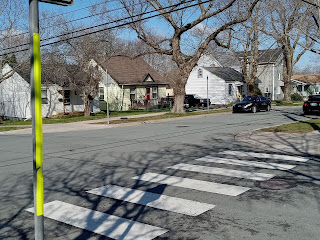

When we built Homes


Supply, speculation, demand, and the lack of taxes on the sale of principal residences are cited as contributors to the shortage of available housing in Canada. In the next election cycles, we expect the successful candidates will support policy to tackle this disastrous situation.


Tuesday, September 5, 2023

Housing Crisis Recent History


The evidence of the housing crisis in Nova Scotia is as close as our neighborhood park. This crisis has been building for many years. This article reviews some analysis and proposals from a few years ago.


Some Recommendations


The analysis of the housing crisis in these articles from 2019 and 2021 have identified the need for investment by government in affordable rental housing to rectify the inequity and injustice that continues to increase the number of homeless people in Nova Scotia.


Friday, September 8, 2023

Getting Back to Building Housing


A previous post, Housing Crisis Recent History, touched on the government decisions that have led to social housing austerity in Canada and the need for a large-scale community-based land acquisition strategy based on sustainable living, not returns for investors.


Building for Homeless or Investors


The need to address homelessness in HRM will be immediate as winter approaches. The alleviation of the housing crisis is urgent and requires action to maintain the status of HRM as a place to support living and working.


Saturday, September 16, 2023

Different Understanding of Housing Concerns


The housing emergency in Nova Scotia is increasing daily and the understanding of the problem by provincial political leadership appears to differ in important details with the assessment of the situation by at least one Halifax Regional Municipality Councillor. This development resonates with concerns expressed in the Housing and Ideology post in June 2023. As noted then, political ideology may be a serious obstacle to effective action in the area of housing.


Housing as a Human Right

In the crisis of homelessness that we are experiencing in Nova Scotia, and particularly HRM, one essential criteria for efficient progress on this catastrophe is cooperation between all levels of governments that avoids political “half truths”and acceptance rather than shifting of responsibility.


Tuesday, November 21, 2023

Insecurity and the Economy


Our community is experiencing severe housing and food insecurity. The increasing numbers of people living in tents and depending on food banks indicates that action by the government is essential and urgent.


Klein, Seth. (2020) A Good War: Mobilizing Canada for the Climate Emergency. Toronto, ON:ECW Press.


The role of the government to protect the health of Canadians was essential during the Covid 19 emergency. Government Action, similar to wartime programs, to guarantee the right of Canadians to adequate housing and access to healthy food is urgently required now.


Saturday, December 2, 2023

When the Market fails


We are more keenly aware of homelessness and food insecurity in our community when the days grow short and the temperature drops prior to the holiday season. We are fortunate to have many people who work very hard supporting the homeless and gathering food for food banks and soup kitchens.
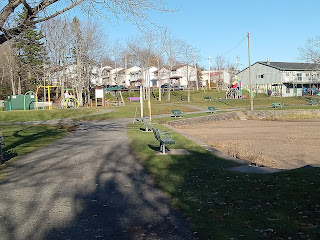

Adequate Housing


Perhaps, simply put, the answer to homelessness is to build more homes and the answer to poverty is access to more money. In Canada, the Government has responded, in the past, to housing needs by rapidly building houses. Rent subsidies and a guaranteed basic income are examples of Government providing money to improve the life situation of citizens. When the market fails, the Government must step up.


Wealth Distribution Canada 2023

Renewal of Government Action for adequate housing and healthy food that mirrors the programs that created housing after WWII and during the CMHC supported housing initiatives that built Lower Sackville and Forest Hills with “sweat equity” are urgently required in combination with income support programs to alleviate food insecurity. Spending on housing and income for food security reduces spending in health, education, and social services and confirms the human right in Canada for adequate housing and food security for our residents.


Saturday, September 16, 2023

Different Understanding of Housing Concerns

The housing emergency in Nova Scotia is increasing daily and the understanding of the problem by provincial political leadership appears to differ in important details with the assessment of the situation by at least one Halifax Regional Municipality Councillor. This development resonates with concerns expressed in the Housing and Ideology post in June 2023. As noted then, political ideology may be a serious obstacle to effective action in the area of housing. 


Housing is a Human Right


Haley Ryan of CBC News reports on differences between the understanding of housing fees and timelines in Halifax between Nova Scotia Premier, Tim Houston, and Halifax Regional Municipality Councillor, Shawn Cleary for District 9, Halifax West Armdale.


Houston said the municipality is taking too long to approve housing projects, while fees for building, construction and waste water have climbed "through the roof" and are too expensive for developers to handle.


Cleary said it's unclear whether it's Houston personally who is not up to speed, his staff, or Housing Minister John Lohr — "but clearly someone is not providing him with correct information." (Ryan, 2023)


Housing Concern

Houston understanding

Cleary understanding

approve housing projects

Taking too long

cut waiting times in half for construction and mixed-use permits,

fees for building, construction and waste water 

have climbed "through the roof"


council raised building permit fees by 25 per cent; but following the CPI they would be 69 per cent higher.

Delay in construction

No mention of labour and supply chain issues

labour and supply chain issues are the real holdup right now.

bulldozing forests and putting up all new infrastructure

special planning areas fast-tracked by the province that will create new neighbourhoods.

want developments which are more financially sustainable and more environmentally sustainable

Competitive fees for Halifax


Halifax has the lowest development charges of any major, or other city, across Canada; below the national average when it comes to development charges

waste water and water fees for building projects

have climbed "through the roof"

Halifax Water, not HRM, controls those fees, which are regulated through the Utility and Review Board (UARB).


Haley Ryan expands on some of the details of the difference of understanding between the Premier and the Councillor.


Data that planning staff presented to regional council in August shows Halifax has cut waiting times in half for construction and mixed-use permits, compared to last year. Other permit timelines, including residential, are either below or slightly over their targets depending on the project size.


Development agreements can take the longest, a range of eight months to more than two years, but staff said those lengthier waits are for complicated projects that might need new services or roads — like many of the special planning areas fast-tracked by the province that will create new neighbourhoods.


Fees have gone up in recent years, but not exponentially as suggested by the premier. In 2019, council approved an increase to planning and development fees after a staff report suggested moving them up from 13 per cent of the cost of processing these applications, to 33 per cent. 


As part of this year's budget, council also raised building permit fees by 25 per cent as they had not been adjusted since 1997. A staff report noted that if fees had been increased annually to account for the consumer price index (CPI) up to 2022, they would be 69 per cent higher.


"Halifax actually has the lowest development charges of any major, or other city, across Canada and we're well below the national average when it comes to development charges," Cleary said.


Cleary did agree with Houston on one point — that waste water and water fees for building projects are certainly steep, and Cleary said some could run up to $6,000 a unit.


But, Halifax Water controls those fees, which are regulated through the Utility and Review Board (UARB). (Ryan, 2023)


In the crisis of homelessness that we are experiencing in Nova Scotia, and particularly HRM, one essential criteria for efficient progress on this catastrophe is cooperation between all levels of governments that avoids political “half truths”and acceptance rather than shifting of responsibility.


References


Ryan, H. (2023, September 15). Halifax councillor says N.S. premier's housing comments based on 'sheer ignorance'. CBC. Retrieved September 16, 2023, from https://www.cbc.ca/news/canada/nova-scotia/halifax-councillor-says-n-s-premier-s-housing-comments-based-on-sheer-ignorance-1.6968719?cmp=rss

Monday, April 24, 2023

Windfall and Social Need

Stephen Kimber reports on the response of NDP leader Claudia Chender to Premier Tim Houston’s government unaccountable spending of its unexpected revenue.


Windfall Money has needs to fill


Nova Scotia, as the auditor general pointed out, is the only jurisdiction in the country where such “extra spending is approved solely by the government of the day and is never required to return to the House of Assembly for review, vote, or approval.”


What should have happened to that windfall? That wasn’t even discussed in the latest session.


According to NDP leader Chender, the government’s unaccountable spending of its unexpected revenue “utterly fails to address the cost of living, utterly fails to address the housing crisis that we have before us, the increasing doctor waitlist, increasing surgical waitlist… We have a massive amount of money going out the door and we don’t really have anything to show for it.” (Kimber, n.d.)


The four areas identified by NDP leader Chender as needing attention in Nova Scotia are high on the priority list of many citizens. The expectation of many voters is that government funds need to be utilized to address these crises. Perhaps voters need to ascertain if an ideological distaste for government action in these areas is causing unnecessary stress and suffering for our population.


References


Kimber, S. (n.d.). Halifax Examiner Article. Stephen Kimber. Retrieved April 24, 2023, from https://stephenkimber.com/tim-houstons-idea-of-accountability-then-and-now/ 


Wednesday, July 24, 2019

Psychology to shake our carbon-emitting habits

Anthony A. Davis writes about 37 different reasons why it is so hard to change our climate change habits. University of Victoria psychology professor Robert Gifford calls the barriers “dragons”.
Source: https://www.dragonsofinaction.com/wp-content/uploads/2015/12/doi_3dragon_header.png

They fall into seven broad categories: limited cognition, ideologies, comparison with others, sunk costs, discredence, perceived risks and limited behaviour. When he published a 2011 article in American Psychologist that identified the first 29 of these dragons, the article went viral and became the publication’s most-read piece in its history.1
Mistrust dragon

Seth Wynes, a Ph.D. candidate in the department of geography at the University of British Columbia, found evidence of a “climate mitigation gap,” where education and government recommendations often miss the most effective actions Canadians and others can take.

For instance, he says, few governments say the most effective ways to reduce carbon footprints include having one less child, ceasing air travel, living car-free and eating a plant-based diet. Instead, much of the educational and government literature focuses on less effective measures, such as hanging clothes out to dry, or installing more efficient LED lighting in homes.
The reason for that, Wynes suggests, is a “foot-in-the-door” strategy. “Communicators emphasize easy-to-perform actions that get people started on environmental lifestyles, and hope that people adopt more important actions later. Unfortunately, with the scale of the climate problem, we don’t have time to focus on small changes anymore.”2 


Tokenism dragon

One troubling finding in Wynes’s research is how misinformed people are when they engage in what psychologists call “moral licensing.” “We do this with dieting,” says Wynes, explaining the term. “We say, ‘I went for a jog, now I can eat cake.'' Some people do this with green behaviours: ‘I have recycled for a year, so therefore I can go on a vacation to Cuba.’ ”

References


1
(n.d.). The Dragons of Inaction – Diagnosing and Slaying the Barriers to .... Retrieved July 24, 2019, from https://www.dragonsofinaction.com/ 
2
(2019, July 22). Why we can't shake our carbon-emitting habits, even as the world burns. Retrieved July 24, 2019, from https://www.macleans.ca/society/health/why-we-cant-shake-our-carbon-emitting-habits-even-as-the-world-burns/