Showing posts with label supply. Show all posts

Monday, December 11, 2023

Articles on Homelessness from Ponder Patterns

Research that has been curated in the Ponder Patterns blog since August 2023 underlines the urgent need for the Government to increase efforts to address homelessness and food insecurity for immediate relief to suffering residents and long term equity and balance in our social safety net.


Homeless in Winter


Saturday, August 26, 2023

Supply or Speculation 


A plan to alleviate the shortage of housing in Canada is likely to be mentioned in the political platforms of all persons seeking election federally, provincially, and in municipalities. The plans may differ depending on the understanding of the authors about the root cause of the shortage.
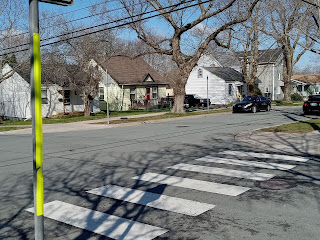

When we built Homes


Supply, speculation, demand, and the lack of taxes on the sale of principal residences are cited as contributors to the shortage of available housing in Canada. In the next election cycles, we expect the successful candidates will support policy to tackle this disastrous situation.


Tuesday, September 5, 2023

Housing Crisis Recent History


The evidence of the housing crisis in Nova Scotia is as close as our neighborhood park. This crisis has been building for many years. This article reviews some analysis and proposals from a few years ago.


Some Recommendations


The analysis of the housing crisis in these articles from 2019 and 2021 have identified the need for investment by government in affordable rental housing to rectify the inequity and injustice that continues to increase the number of homeless people in Nova Scotia.


Friday, September 8, 2023

Getting Back to Building Housing


A previous post, Housing Crisis Recent History, touched on the government decisions that have led to social housing austerity in Canada and the need for a large-scale community-based land acquisition strategy based on sustainable living, not returns for investors.


Building for Homeless or Investors


The need to address homelessness in HRM will be immediate as winter approaches. The alleviation of the housing crisis is urgent and requires action to maintain the status of HRM as a place to support living and working.


Saturday, September 16, 2023

Different Understanding of Housing Concerns


The housing emergency in Nova Scotia is increasing daily and the understanding of the problem by provincial political leadership appears to differ in important details with the assessment of the situation by at least one Halifax Regional Municipality Councillor. This development resonates with concerns expressed in the Housing and Ideology post in June 2023. As noted then, political ideology may be a serious obstacle to effective action in the area of housing.


Housing as a Human Right

In the crisis of homelessness that we are experiencing in Nova Scotia, and particularly HRM, one essential criteria for efficient progress on this catastrophe is cooperation between all levels of governments that avoids political “half truths”and acceptance rather than shifting of responsibility.


Tuesday, November 21, 2023

Insecurity and the Economy


Our community is experiencing severe housing and food insecurity. The increasing numbers of people living in tents and depending on food banks indicates that action by the government is essential and urgent.


Klein, Seth. (2020) A Good War: Mobilizing Canada for the Climate Emergency. Toronto, ON:ECW Press.


The role of the government to protect the health of Canadians was essential during the Covid 19 emergency. Government Action, similar to wartime programs, to guarantee the right of Canadians to adequate housing and access to healthy food is urgently required now.


Saturday, December 2, 2023

When the Market fails


We are more keenly aware of homelessness and food insecurity in our community when the days grow short and the temperature drops prior to the holiday season. We are fortunate to have many people who work very hard supporting the homeless and gathering food for food banks and soup kitchens.
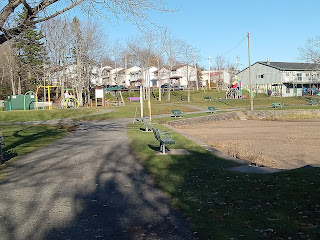

Adequate Housing


Perhaps, simply put, the answer to homelessness is to build more homes and the answer to poverty is access to more money. In Canada, the Government has responded, in the past, to housing needs by rapidly building houses. Rent subsidies and a guaranteed basic income are examples of Government providing money to improve the life situation of citizens. When the market fails, the Government must step up.


Wealth Distribution Canada 2023

Renewal of Government Action for adequate housing and healthy food that mirrors the programs that created housing after WWII and during the CMHC supported housing initiatives that built Lower Sackville and Forest Hills with “sweat equity” are urgently required in combination with income support programs to alleviate food insecurity. Spending on housing and income for food security reduces spending in health, education, and social services and confirms the human right in Canada for adequate housing and food security for our residents.


Saturday, August 26, 2023

Supply or Speculation

A plan to alleviate the shortage of housing in Canada is likely to be mentioned in the political platforms of all persons seeking election federally, provincially, and in municipalities. The plans may differ depending on the understanding of the authors about the root cause of the shortage.


Affordable Housing For Canadians


Commentary from the RateSpy website in 2020 underlined the importance of supply and the Law of Supply and Demand in the availability and affordability of housing in Canada.


On that note, an IMF report last October had a radical solution to Canada’s housing crisis: “ To Tackle Housing Affordability in Canada, Build More Houses.” Hey, they might be onto something.


In truth, there’s no easy cure that doesn’t disadvantage someone. Real progress takes hard fixes, like incentivizing more homes within tolerable commutes to job centres, building ultra-high-speed transit to regions with cheaper land, or other capital, time or bureaucratic-intensive solutions. Or maybe it takes more out-of-the-box thinking, like government land acquisition partnerships or near-interest free financing to developers that build strategic high-density housing in/near public transportation corridors.


The Department of Finance has said it many times; home construction is “needed to address…housing supply shortages in Canada, particularly in our largest cities.” The 2019 Federal Budget stated that increasing the supply of housing “is the most effective way to address affordability in the long run.” Righto. Because whatever the solution, supply is the problem, and it has been for 20 years. (Who Repealed the Law of Supply and Demand?, 2020)


Steve Pomeroy, Industry Professor, Department of Health Aging and Society, McMaster University, advises to solve the housing problem we need to address supercharged demand.


If policy-makers and the newly re-elected government want to improve housing affordability and the ability of young families to become homeowners, they need to turn their attention to the primary driver of price increases — super-charged demand, abetted by the sacred cow of non-taxation of capital gains on a principal residence.(Pomeroy, 2021)


Mark Morris, who has established and sold numerous businesses in the legal space and is presently the principal lawyer at LegalClosing.ca and runs and operates LegalReview.ca, shares the opinion that we need governments that can refocus economic incentives around real business value and promote programs that foster enduring products and services with economic potential beyond Airbnb. This will involve unwinding any number of perverse incentives designed to foster real estate growth at the expense of everything else.


Or consider the principal residence exemption, which is usable over and over again by individuals for any amount of money garnered from the sale of their home, as long as they lived in it. Compare that to the sale of shares of an active Canadian business, which is tax-free only on an amount of less than a million dollars and, even then, is only available for use once in a lifetime. 


These perverse incentives exist throughout our system and need to be addressed if this country is to continue to remain on course.


Canada is hooked on real estate. We need to detox fast for our sake, for our children's future and, above all, for all future aspiring business creators who would seek to develop their skills in a system that encourages rather than punishes their efforts. (Morris, 2022)


Adena Ali, of the The Canadian Press, reported that, according to the CMHC, Canada needs 5.8 million new homes by 2030.


If current rates of new construction continue, CMHC said the country's housing stock is expected to increase by 2.3 million units by 2030, reaching close to 19 million units total. But in order to achieve affordability for all Canadians, the agency said an additional 3.5 million homes are needed.


Softening housing market conditions and a labour shortage in the construction sector could get in the way of bringing Canada's housing stock to more than 22 million by 2030, however.


"There are supply issues, labour shortages at the moment and the cost of financing is going up, so clearly there are short-term challenges," said CMHC deputy chief economist Aled ab Iorwerth during a conference call.


BMO economist Robert Kavcic says it will be tough to achieve what the CMHC wants to achieve.


"The jobless rate in construction is near a record low; vacancies are at a record high, we have a deep shortage of skilled trades, and the cost of building materials is already rising quickly," he said. "So, unless the economy really rolls over and is in need of stimulus, effectively doubling the rate of new construction over the next decade will be extremely difficult without significant inflationary pressure." (Ali, 2022)


Supply, speculation, demand, and the lack of taxes on the sale of principal residences are cited as contributors to the shortage of available housing in Canada. In the next election cycles, we expect the successful candidates will support policy to tackle this disastrous situation.


References

Ali, A. (2022, June 23). Canada needs 5.8 million new homes by 2030 to tackle affordability crisis, CMHC warns. CBC. Retrieved August 26, 2023, from https://www.cbc.ca/news/canada/toronto/housing-affordability-cmhc-report-2030-1.6498898 

Morris, M. (2022, June 21). Canada is hooked on real estate. It needs a detox. CBC. Retrieved August 26, 2023, from https://www.cbc.ca/news/opinion/opinion-canada-real-estate-addiction-morris-1.6492967 

Pomeroy, S. (2021, November 25). Want to solve the housing crisis? Address super-charged demand. The Conversation. Retrieved August 26, 2023, from https://theconversation.com/want-to-solve-the-housing-crisis-address-super-charged-demand-169809 

Who Repealed the Law of Supply and Demand? (2020, September 16). Ratespy.com. Retrieved August 26, 2023, from https://www.ratespy.com/who-repealed-the-law-of-supply-and-demand-opinion-091615871 


Saturday, January 29, 2022

Ponder People Power and Profit

Two of the transitions that Nova Scotia must make in the near future involve action to reduce the GHG in power generation and provide affordable housing for many of our citizens. Recent media coverage points to market forces that are apparently acting against these transitions.


Transition needed in Energy Generation


The Canadian Renewable Energy Association calls on the Nova Scotia Government to restore consumer confidence by challenging recent actions taken by Nova Scotia Power Inc. in proposing a significant system access fee for solar energy installations.

Solar Energy Installation


“We are calling on the Government of Nova Scotia to intervene to ensure that Nova Scotians can continue to pursue rooftop solar installations and make significant climate-friendly investments in the province,” said Brandy Giannetta, CanREA’s Vice-President of Policy, Regulatory and Government Affairs. NSPI’s proposed system access charge, of $8 per kilowatt of solar PV capacity per month, or nearly $800 per year for the average solar home in Nova Scotia, would erase approximately 60% of the economic value of solar net-metering.1


A Media Release from the Sierra Club of Canada declares it is time to break up with Nova Scotia Power. NSPI’s announcement that it wants to charge a premium on homeowners with solar panel installations is a huge step backward for renewable energy in the province.


“The company is gaslighting homeowners who want to be part of the climate solution,” says National Program Director Gretchen Fitzgerald.. “It’s giving the public the false impression that homeowners with solar panels are cashing in on low electricity at the expense of other customers. That’s simply not true. It takes most solar customers at least ten years just to pay off the loans for their solar panel installation.”2


The Sierra Club suggests NSPI’s proposed 10 percent rate hike over three years, while maintaining its 9 percent guaranteed profit rate underscores the problem of a private energy monopoly.


“Nova Scotians are waking up to the reality that there is no way forward with Nova Scotia Power. If we want affordable, reliable, and clean renewable energy in this province, it can’t be controlled by a private multinational and a rubber stamp review board,” says Deveaux. “We need to recognize that electricity is an essential service. We shouldn’t have to tell Nova Scotia Power that reducing greenhouse gas emissions isn’t a luxury; it’s essential too.”2


Taryn Grant, of CBC News, reports that investors make a fifth of home purchases in Halifax where real estate prices continue to soar.

CBC and Bank Of Canada Chart


The report provides context, although it does not directly answer the question of how much investors are responsible for driving up real estate prices.


In Halifax, the average home sale was 26 per cent higher in 2021 than the year before, and 14 per cent higher in 2020 than the year before that, according to statistics reported by the Nova Scotia Real Estate Association. Most major Canadian cities have seen investor activity grow in recent years, but Halifax has seen one of the biggest jumps. Since 2014, investor purchases rose more than four per cent in Halifax, second only to Ottawa's five per cent growth.3 


Providing power to Nova Scotia through publicly owned, community or province wide utilities would recognize the public interest in providing a high standard of electrical service while at the same time leading the transition to reduce the GHG emissions without the need to maintain shareholder dividends. Social action groups are increasingly making the case that in the often severe and constantly changing climate of Nova Scotia, adequate housing is a right and a necessity for health and welfare. When housing is bought and sold as a commodity, the cost of shelter becomes subject to the laws of supply and demand. Unfortunately, demand drives the price up and investors seem to have little interest in increasing the supply of affordable accommodations.


References

1

(2022, January 28). Nova Scotia Power's proposed “system access charge” would .... Retrieved January 29, 2022, from https://renewablesassociation.ca/nspi-proposal-would-devastate/ 

2

(2022, January 28). Media Release: Time to Break Up With Nova Scotia Power. Retrieved January 29, 2022, from https://www.sierraclub.ca/en/media/2022-01-28/media-release-time-break-nova-scotia-power 

3

(2022, January 29). Investors make a fifth of home purchases in Halifax, where real .... Retrieved January 29, 2022, from https://www.cbc.ca/news/canada/nova-scotia/nova-scotia-real-estate-home-prices-investors-bank-of-canada-1.6330903