Showing posts with label freedom. Show all posts

Sunday, September 15, 2024

Lesser of two evils

The BBC has reported that Pope Francis has called both major US presidential candidates "against life" and advised Catholic voters to choose the "lesser evil" when casting their ballots in the November election. This news conference, as he wrapped up a 12-day tour through southeast Asia, has been covered by many world news outlets. Five themes have come to mind in reflection about the Pontiff's advice.


Views and the Vatican


  1. Forgive them, they know not what they do.(Luke 23:34).


Christians are familiar with this admonition of Jesus from the cross that originally referred to the people responsible for His crucifixion. Many of the followers of the political scenarios identified by Francis would do well to understand the grief and suffering that has moved people to the paths “against life” that they polarize for political advantage. An extension of political rhetoric to include “walking in the shoes” of the people concerned about the consequences of political policy is required. 


  1. Misinformation and disinformation disguises the full story.


The loss of truth that accompanies misinformation and disinformation about the actions and consequences of the alternate political policy is extremely dangerous to the operation of a democracy which can only operate at its best motivated by truth, goodness, and beauty as aspirations for all.


  1. Real needs for support and care are present in the cause.


The political effort to achieve policy objectives needs to recognize that people have real needs for support and care that may be denied or reduced by polarized persecution of groups with differing desires.


  1. Demonizing others is a path to destruction. 


There seems to be more than enough evil done against groups that have been demonized in political rhetoric. Death and destruction have too often been the response advocated and actioned by misinformed zealots to the perception intentionally created that the opposition are demons.


  1. Acting in conscience requires freedom to choose. 

Much political rhetoric lauds “freedom”. The conscientious choices that are required to be our best people and create our best society cannot be coerced. We move toward the justice we seek through our freedom to act according to our conscience.


There are tragic results when political polarization leans toward policy that casts the opposing side as “evil” and fails to address the suffering and pain that they may encounter as a consequence. 


Monday, July 18, 2022

Papal Perspective on Life and Freedom

Popular opinion on political support of “culture of life” issues that frequently assumes John Paul II would have had a distinctly different emphasis than Pope Francis may be mistaken.


The "Angels Unaware" boat by Canadian artist Timothy P. Schmalz 


David Albertson recently found himself rereading John Paul II’s 1995 encyclical, Evangelium vitae (The Gospel of Life), during the weeks between the leaking of Justice Samuel Alito’s draft opinion and the shooting in Uvalde.


Pope Francis has drawn criticism for reasserting an integral ethic of life—linking the climate crisis to the dignity of the unborn, for instance—and for resisting the reduction of political responsibility to a single issue. Many of Francis’s detractors assume that John Paul II would have endorsed their current strategy: to trade support for Republican neoliberal economics in exchange for the appointment of pro-life justices, by anti-democratic means if necessary. (Albertson & Preziosi, 2022)


Albertson found the text of Evangelium vitae suggests something quite different. John Paul II offers a probing social analysis of the “culture of death,” in the course of which he articulates some critical principles for a future politics of life. To be sure, the encyclical focuses rightly and above all on abortion and euthanasia. But only an inattentive reader could imagine that those are the only evils John Paul II was worried about. The encyclical offers a structural understanding of contemporary threats to human life, of which abortion is the signal, but by no means sole, instance. Evangelium vitae has many themes.


An insight of the encyclical identifies that the root of the culture of death is an economic system backed by a legal regime. The economic system is the commodification of human life, which calculates its value exclusively in terms of efficient profit accumulation (i.e. neoliberal capitalism). (Albertson & Preziosi, 2022)


John Paul II asks Christians to examine how goods are distributed in our society and who exerts power within that distribution. For example, he examines what links together not only the recent increase in abortion and euthanasia, but also technological investments in artificial contraception, artificial reproduction, and prenatal eugenics.


The link, he concludes, is a certain approach to assessing the value of human life. If we read his analysis carefully, we can depict the main features of the ideology he describes: an excessive concern with “efficiency” (12), a reduction of human beings to disposable “biological material” (14), “the utilitarian motive of avoiding costs which bring no return” (15), and the lack of “fair production and distribution of resources” among countries (16). The goodness of life is reduced to “economic efficiency” and “inordinate consumerism” (23). Human dignity is replaced by “the criterion of efficiency, functionality and usefulness” (23). Human beings become commodities, “reduced to the level of a thing” among other things (34). (Albertson & Preziosi, 2022)


In the encyclical, John Paul II asserts that absolute freedom also includes freedom from the social bonds of truthfulness, or freedom to invent alternative facts.


Once freedom becomes so debased that it justifies “the destruction of others,” then “the person ends up by no longer taking as the sole and indisputable point of reference for his own choices the truth about good and evil, but only his subjective and changeable opinion or, indeed, his selfish interest and whim” (19). (Albertson & Preziosi, 2022)


According to John Paul II, the erosion of truth itself is the final result of valorizing personal liberty, rejecting solidarity, and excluding the weak, sick, and poor from moral obligation by the rich and powerful. “At that point, everything is negotiable, everything is open to bargaining,” he writes, and “social life ventures onto the shifting sands of complete relativism” (20). In this situation, the state becomes a “tyrant” and democracy creeps toward “totalitarianism.” Instead of providing a secure home in which all live together, the state guarantees “the right to dispose of the life of the weakest and most defenseless members” by taking the side of the most powerful partisans (20). (Albertson & Preziosi, 2022)


David Albertson expresses a theme of the encyclical that the culture of life—and with it, democracy and truth itself—can be sustained only when solidarity with “the weakest and most innocent” takes priority above all else, especially an idolatrous claim to absolute freedom.


References

Albertson, D., & Preziosi, D. (2022, July 13). American Idols. Commonweal Magazine. Retrieved July 18, 2022, from https://www.commonwealmagazine.org/american-idols 


Monday, February 21, 2022

Economic and Social Capital in Freedom Convoy

The decision to invoke the Emergency Act in response to the “Freedom Convoy” activities in Ottawa will be debated in Parliament and reviewed by a commission under the terms of the Act. Some voices have urged us to look deeper at some of the underlying social and economic conditions that may underlie these turbulent times. Temitope Oriola, Associate Professor of Sociology at the University of Alberta, and his research team received SSHRC funding to study police use of force in Canada. He writes about what the ‘freedom convoy’ reveals about the ties among politics, police and the law. He notes that the “freedom convoy” protesters have been able to draw on a level of political capital that most people who take to the streets to fight for their rights rarely have.


Former Conservative party leader Erin O'Toole met with some of the protesting truckers before being ousted. CTV reported that his interim successor, Candice Bergen, ‘pushed’ O'Toole to show support for the “freedom convoy” protest, arguing there were “good people on both sides.” It was an unoriginal statement, but emblematic of the thinking at the highest echelons of the Conservative Party. Bergen also told MPs that she thought the “issue should be turned into a problem for the prime minister,” a polarizing statement in advance of an election. The truckers and their anger may be used as a catalyst for electoral mobilization, and their protest is being approached with greater circumspection. Bergen and other MPs and MLAs who have voiced their support are aware of the social and political value of the protesters…1


Regina Bateson, reporting for Slate News, argues that the “Freedom Convoy” was an armed occupation of a G-7 capital.


As the rule of law retreats into the distance, what’s the takeaway? Both the right and the left seem weirdly tempted to objectify Ottawa, slotting the city’s plight into preexisting debates about big tech, freedom of speech, and the perverse consequences of social capital… Full-fledged rebellions in advanced industrialized democracies are rare. Either would-be rebels are deterred by the power of the state, or governments react swiftly. But just because a state has the capacity to resist an insurrection doesn’t guarantee that it will. Democracy and security are intricately linked and more tenuous than we might like to think—even in Canada. 2


David Deane, faculty member at the Atlantic School of Theology, asks in a YouTube presentation, “Are the freedom protesters racist? And if not, why are we so desperate to say they are?”


My answer draws on some Marxist analysis and suggests two things (1) That our demonization of them helps retain trust in our capitalist society and preserve our capital, and (2) it 'covers up' and justifies the inherent disgust the bourgeoisie have for those without capital. On the basis of this analysis I then claim that Christians can not continue to despise these people, especially when such despising serves to elevate the social capital of Christians. Instead, following Christ, we are called to love them – this does not mean agree with them – but loving them, and refusing to dehumanize them by supposing them to be racist, is essential to being a faithful follower of Christ at this time.3


Leah Gazan, MP for Winnipeg Centre, in her speech in the debate about the Emergency Act makes the connection of the “Freedom Convoy” to wealthy Canadian elites. She claims these elites are not concerned about the needs of the working class in Canada. She urges Canadians to shift our focus to make lives better and defend democracy.


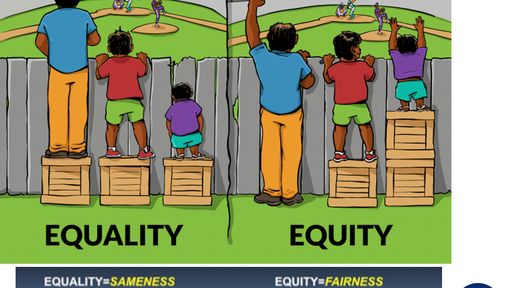
 Equality vs. Equity - by the Interaction Institute for Social Change | Artist: Angus Maguire.” Image Found: interactioninstitute.org

Regardless of the outcome of the vote to approve the Government use of the Emergency Act, we need to work to achieve greater equity in Canada for groups who suffer as a consequence of their lack of economic and social capital.


References

1

(2022, February 8). What the 'freedom convoy' reveals about the ties among politics .... Retrieved February 19, 2022, from https://theconversation.com/what-the-freedom-convoy-reveals-about-the-ties-among-politics-police-and-the-law-176680 

2

(2022, February 17). The “freedom convoy” was never just a protest.. Retrieved February 19, 2022, from https://slate.com/news-and-politics/2022/02/ottawa-canada-trucker-convoy-protests-militia.html 

3

(n.d.). Uploads from Catholic Theology with David Deane - YouTube. Retrieved February 19, 2022, from https://www.youtube.com/playlist?list=UUpIQeUSMcKxD9hh0mip-Jbw 


Tuesday, February 15, 2022

Temporary and Fulfilled

The decision of the Government to use the Emergencies Act as a temporary measure to control the illegal aspects of the “Freedom Convoy” occupation of areas of the country may become a permanent example to anarchists of extreme government overreach.
A man waves a flag while taking part in the convoy protest against vaccine mandates in Ottawa. (CBC / Radio-Canada)


John Paul Tasker, of CBC News, explains what the Emergencies Act means.

In this instance, the act is being invoked to deal with a public order emergency. This means the cabinet has the power to prohibit "public assembly that may reasonably be expected to lead to a breach of the peace," to prohibit travel to, from or within any specified area, to forbid the use of a "specified property" and to secure "protected places." The cabinet can also direct any person or class of person to "render essential services" and gives the government the power to regulate the "distribution and availability of essential goods."... Trudeau said the federal powers will be used to prohibit people from illegally gathering in the city's downtown core and to order tow truck companies in the area to help remove big rigs used in the protests… The cabinet is also directing banks and financial institutions to halt the flow of funds to protest organizers through amendments to the Proceeds of Crime and Terrorist Financing Act.1
 

On the other hand, the predictable, controlled, and monitored lifting of temporary COVID restrictions by provincial public health authorities was an opportunity for anarchist elements who know frustration with these measures might be both a rallying point and an opportunity to claim a win. Being mindful of the TEMPORARY nature of the Emergencies Act and the Covid restrictions is extremely important to avoid overreaction to these events.
Monitor the trends


Steve Scherer and Nichola Saminather report, for Reuters, on how the Emergencies Act can squeeze funding for the trucker protests.

Canadian Prime Minister Justin Trudeau on Monday invoked rarely-used special measures to end protests that have shut some border crossings and paralyzed downtown Ottawa. He said he would invoke the Emergencies Act to deal with the "Freedom Convoy" protests, started on Jan. 28 by Canadian truckers opposing a vaccinate-or-quarantine mandate for cross-border drivers. They have turned into a rallying point for people opposed to a range of Trudeau's policies, including COVID-19 pandemic restrictions and a carbon tax. The demonstrations shut a main economic corridor between Canada and the United States for six days before it was reopened on Sunday2
 

The majority in Canada respect the value of enjoying an environment of peace, order, and good government where they live and the respect the rights of people to demonstrate for change through the democratic processes that protect us all. This is not a right respected by anarchists who act by denying freedom to fellow citizens and seek replacement of democracy with autocracy.


References

1

(2022, February 14). The federal government has invoked the Emergencies Act ... - CBC. Retrieved February 15, 2022, from https://www.cbc.ca/news/politics/emergencies-act-explainer-1.6351504 

2

(2022, February 14). Factbox: Canada's Emergencies Act: how will it squeeze funding of .... Retrieved February 15, 2022, from https://www.reuters.com/world/americas/canadas-emergencies-act-what-it-would-allow-quell-protests-against-pandemic-2022-02-14/ 


Tuesday, February 8, 2022

How do you use your vehicle

The last time I sought insurance for my automobile I was asked about the way I use it. I related that I drove back and forth from work and took the car to do errands for groceries and supplies. Since then, I have retired and we have gone through two years of COVID. I am pretty confident that my use of the vehicle is well within the bounds required by my insurance contract. I wonder if the companies that insure the trucks involved in the occupation of Ottawa and the disruption of essential traffic in Canadian cities are including this usage in the coverage offered by their policies.


 Insurance Premium and Terms and Conditions

In my province, when I renew my vehicle permit, I may be required to settle outstanding tickets charged against my vehicle to complete the process. It seems to me that my driving record is something that helps determine my insurance premium. James Menzies writes that many trucking companies have decided to steer clear of Ottawa protests. Derek Koza, of Wellington Motor Freight, pointed out another reason company equipment can’t be seen in such events. 


“Due to insurance concerns we would not allow company branded equipment to participate in the convoy as the usage would be outside of the scope of our policy use. Wellington Group of Companies will not block ​individuals from using their personal vehicles and participating in the convoy should they wish as we support freedom of speech in a respectful and peaceful delivery.”1


Sierra Alley reports about violations that might be hurting  trucking insurance rates. An interview on November 16, on TalkCDL Trucking Podcast featured a REV insurance representative who discussed rates and the tangible steps truckers can take to keep their premiums down.


Accidents on record

Speeding tickets

Open containers or illegal substances on the truck

Safety violations that are logged on DOT reports

Tickets or accidents as a result of using handheld devices


There are common coverages recommended.

  • General Liability Coverage: This covers the actions of a driver who is operating on someone else’s premises, such as loading docks and truck stops. It provides coverage for bodily injury to others and damage to the property of others due to a vehicle accident.

  • Primary Liability Coverage: This does not cover your truck, but rather covers the damage you may do to others while operating your truck.

  • Physical Damage Coverage: Provides coverage to repair or replace damage to your equipment in the event of an accident or other risks, such as fire, theft, glass breakage, or vandalism.

  • Non-Trucking Liability Coverage: Coverage for damages or injuries to others while the truck is not under dispatch from the company you are currently leased with.

  • Cargo Coverage — Protects your cargo against damage or loss while in transit, whether that be stolen goods, wet load, refrigeration breakdown, debris removal, etc.

  • Trailer Interchange: Covers a non-owned trailer being used under a trailer interchange agreement.

  • Medical Payment: This covers medical bills if you or a passenger is injured while driving or riding in the tractor, this coverage varies from state to state.

  • Uninsured/Underinsured Motorists: This coverage protects you if someone hits you and does not have liability coverage to repair whatever you need repaired2

  •  

I imagine that enforcement personnel moving from vehicle to vehicle asking for proof of insurance, issuing tickets, and possibly more serious warrants would create a disincentive for truck operators to remain in a situation that threatens their ongoing cost for vehicle insurance.


References

1

(2022, January 29). Trucking companies steer clear of Ottawa protests. Retrieved February 8, 2022, from https://www.trucknews.com/transportation/trucking-companies-steer-clear-of-ottawa-protests/1003156700/ 

2

(2020, December 11). These violations might be hurting your trucking insurance rates. Retrieved February 8, 2022, from https://cdllife.com/2020/these-violations-might-be-hurting-your-trucking-insurance-rates/ 


Thursday, January 27, 2022

Conflict As Ends Justify Means

A recent segment of the Current on CBC radio included an interview with Jon Ronson who has produced a podcast that explores the history of the development of the culture wars in areas such as abortion and sex education.

PHOTO BY ROB GURDEBEKE/THE CANADIAN PRESS/FILE


Some scenarios he relates reveal how the fury of these debates may have evolved because of decisions and desires not related to the values currently driving heated conflicts.


In his new podcast Things Fell Apart: Strange Tales From The Culture Wars, Jon Ronson traces the history of culture wars over issues like religion, gender, and sexuality — and finds some very weird stories along the way.1


Steven Mintz, aka Ethics Sage, asks the related question “Do the Ends Justify the Means?” He cites Niccolo Machiavelli for an early explanation of the ends justifying the means, expressed in Chapter XVIII of The Prince. The statement that “the ends justify the means” can be traced back to Niccolo Machiavelli. The closest he came to it was when he expressed his view in Chapter XVIII of The Prince:


“There is nothing more necessary to appear to have than this last quality (appearing to be religious), inasmuch as men judge generally more by the eye than by the hand, because it belongs to everybody to see you, to few to come in touch withyou.”Machiavel_Offices_Florence2


Mintz explains that in this quote from Chapter 18 of The Prince about keeping faith, or being true to your word, Machiavelli is instructing a Prince on how to behave and how to keep up appearances. He says it’s very important to appear merciful, faithful, humane, upright, and religious. He also says that one must be prepared to act in a manner contrary to the appearance to keep up the appearance. This is because everyone can see what you appear to be, and only a few will get close enough to touch you and actually find out what happened. 


These people (each with slightly different reasons and motivations) are all about appearing as they wish people to see them. Even if it is nothing like what they really are, even if they are saying the exact opposite of what they will eventually do, they know that few will see through their appearances. So, for Machiavelli, to appear to be doing something is good enough even if the actor has no intention of doing so, or achieving an end result far outweighs how we got there; what road we took; and whether our behavior was ethical or not.2


Max Fawcett shares his opinion, in the National Observer, that the anti-vaxxer truck convoy signals an insidious spread of Trumpism in Canada where Conservatives are misrepresenting reality and promoting false information and fake controversies to their base.


Take former leader Andrew Scheer’s recent tweet, in which he declared his affinity for the convoy of truckers making their way to Ottawa to protest the government’s policy. “Trudeau is attacking personal liberty and threatening everyone's ability to get groceries because of his overreach on vaccine mandates,” Scheer wrote. “He is the biggest threat to freedom in Canada.”3


The fusion of hyperbole, hatred and fear-mongering is, to Fawcett, exactly the sort of thing the Republican Party has traded in ever since Donald Trump stepped onto that Trump Tower escalator in 2015. Since then, both he and the Republican Party he controls have routinely treated the truth and those who tried to defend it with open contempt.


There’s no question supply chains are stretched right now due to a combination of factors (recent floods in B.C. and droughts on the Prairies, for example, not to mention the growing percentage of truck drivers and other key employees who are sick with the Omicron variant), and that this is showing up in the form of shortages of certain products in our grocery stores. But to pretend, as the Conservative Party of Canada has for days now, this is entirely because of the federal government’s vaccine mandate for cross-border truck drivers (a similar mandate already exists in the United States) is dishonest in the extreme.3


Fawcett finds that they have gone further than just garden variety dishonesty, too.


In a recent tweet, Thornhill MP Melissa Lantsman (who was once heralded as a bright, new moderate voice in the party) used a stock image of empty shelves in a British grocery store in a post that suggested “empty Canadian grocery store shevles [sic] could become a larger problem.” When people pointed out the obvious error — and deceit — she simply doubled down and directed people to her petition against the federal government’s vaccine mandate. These sorts of blatant lies and deliberate attempts to mislead Canadians are a threat to our democracy. But what makes the CPC’s recent conduct even more dangerous is the obvious desire on the part of its key members, including former leader Scheer and potential leadership front-runner Pierre Poilievre, to provoke a portion of the Canadian public that’s already inclined towards anti-social behaviour — and direct their fury towards the prime minister.3


The truckers, who are over 80% vaccinated, have gathered support for their freedom convoy. Unfortunately, it is likely that this demonstration has become the means for others to use misinformation, and populist demagoguery to promote ends that threaten the truth needed in a well functioning democracy.


References

1 

(2022, January 25). The Current for Jan. 25, 2022 | CBC Radio. Retrieved January 27, 2022, from https://www.cbc.ca/radio/thecurrent/the-current-for-jan-25-2022-1.6326525 

2 

(2018, April 3). Do the Ends Justify the Means? - Ethics Sage. Retrieved January 27, 2022, from https://www.ethicssage.com/2018/04/do-the-ends-justify-the-means.html 


3 

(2022, January 27). Anti-vaxxer truck convoy signals insidious spread of Trumpism in .... Retrieved January 27, 2022, from https://www.nationalobserver.com/2022/01/27/opinion/anti-vaxxer-truck-convoy-signals-insidious-spread-trumpism-canada