Showing posts with label fires. Show all posts

Friday, August 25, 2023

Fiona Flood Fire and Franklin

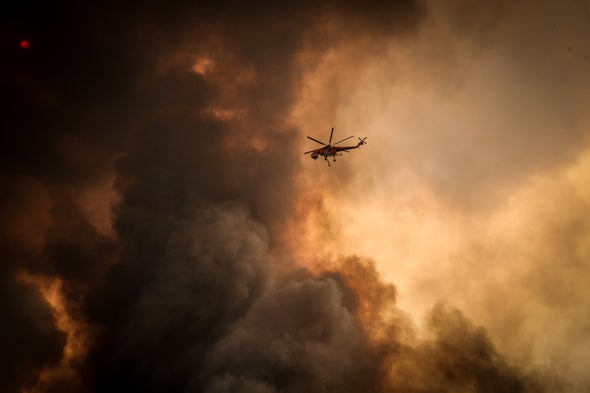
The F’s have had a lot of influence on our Maritime quality of life while racking up enormous bills for recovery. Anne Shibata Casselman, writing in McLeans, identifies our time as a weird century of fire, biblical floods, dying forests, retreating coasts, economic turmoil, and political unrest.


Concern about Climate Change


Armel Castellan’s job to know the weather 24/7, Environment and Climate Change Canada’s disaster preparedness meteorologist for B.C. and Yukon, hydrated between speaking to the New York Times and Reuters. At night, he set up a tent in his backyard so his three young children’s bodies could cool down. When Victoria set a record high of 39.8 degrees, he tried not to think too hard about what that meant for the future his kids would inherit.


In other words, more heat domes are inevitable—as are many more extreme events and disasters that were once unimaginable. By the time we reach two degrees, our Great White North will look like the Great Wet North, as precipitation increases and winter’s edge is blunted. The summertime flow of rivers that bring water to prairie cities will decline. Rain, heat and hail will be biblical in scale, with no god to blame. Wildfires will burn hotter, larger and longer, poisoning the air for millions and potentially hastening the decline of our vast northern forests, which will already be stressed by rising temperatures. These disasters will lead in turn to declines in prosperity, productivity, well-being, social cohesion and physical health. Even the unborn won’t escape: in-utero exposure to wildfire smoke, for example, will leave an indelible, lifelong mark on babies’ health. (Casselman & Dyck, n.d.)


Ian Fairclough, a multimedia journalist, with SaltWire, interviewed  Kate Ervine, a professor in the global development studies department at Saint Mary’s University, who says many impacts of climate change have an effect on the fire season.


“Looking at these things globally, whether it’s the wildfires, or the extreme heatwaves, or the droughts, or the flooding and record ocean temperatures, we’re seeing all these cascading events that are intensifying year on year,” 


“Fossil fuels are the primary source of carbon dioxide in the atmosphere and stay there for hundreds to thousands of years, so the CO2 that was emitted during the industrial age, there’s a good chance it’s with us today, and what we’re burning in our coal-fired power plant today is going to be around for hundreds of years,” “It’s a cumulative problem.”


“As it accumulates in the atmosphere, we’re now starting to see the much more intense repercussions in terms of all the events we’re (experiencing).” (Fairclough, 2023)


Ervine notes that when she’s out in the community she’s hearing more conversations about climate, and “it seems like the mainstream discussion of climate change is here now because people are seeing it and they’re feeling it.”


Jagmeet Singh in an Opinion Piece for the National Observer, proposes action for the people of Canada.


There is a lot of work ahead of us, and we will not achieve it with half-measures or attempts to divide Canadians. The federal government must work with all levels of government and community leaders to ensure that when climate disasters strike, communities have the resources they need to protect themselves.


We must work together to address the climate crisis — both to reduce our emissions and increase renewable energy. It will not be enough to set ambitious targets. We must also have a plan to meet them and the investments that it takes to prevent even more catastrophic climate disasters.


We must ramp up efforts to make our homes and communities as safe as possible from the climate emergency that is threatening all of us. There is no more time to waste arguing over the science of climate change when the results are right in front of us. (Singh & Fawcett, 2023)


Max Fawcett shares his opinion in the National Observer, that Pierre Poilievre’s version of the CPC has made its indifference to climate change a key selling feature to its base.


That sales job seems to be working, too. According to an Aug. 9 EKOS poll, just 24 per cent of CPC voters assign a “high extent” of responsibility for the surge in wildfires to climate change compared to 91 per cent for people who vote NDP, 88 per cent for Liberal supporters and 81 per cent for the BQ. (Fawcett & Saxifrage, 2023)


Climate Change Attention

Climate Change Conservatives

Kelowna under a state of emergency after wildfire in West Kelowna exploded

Kelowna MP, Tracy Gray “Canadians cannot afford Trudeau's carbon tax.

19,000 residents of Yellowknife were ordered to evacuate as another huge fire bore down on their community.

Poilievre postponed his Aug. 24 “axe the tax” rally in Whitehorse due to the wildfires

Market-led transition @BloombergNEF

 expects 20 million barrels/day of oil demand destruction by 2040.

Refuse to entertain the possibility that demand for Canada’s oil and gas could decline dramatically in the near future

Invested in protecting the people and communities oil and gas emissions put at risk.

Invested in protecting the oil and gas industry’s status quo 


As we struggle to cope with the disastrous climate events of the past year, we can not longer delay development of mitigation and adaptation strategies to reduce destruction of our environment and our quality of life.


References


Casselman, A. S., & Dyck, D. (n.d.). Canada in the Year 2060. Macleans.ca. Retrieved August 23, 2023, from https://macleans.ca/society/environment/canada-in-the-year-2060/ 


Fairclough, I. (2023, August 21). Wildfires have always happened, but climate change is making them worse. SaltWire. Retrieved August 23, 2023, from https://www.saltwire.com/atlantic-canada/news/wildfires-have-always-happened-but-climate-change-is-making-them-worse-100884746/ 

Fawcett, M., & Saxifrage, B. (2023, August 22). Conservatives tweet while Canada burns | Canada's National Observer: News & Analysis. National Observer. Retrieved August 23, 2023, from https://www.nationalobserver.com/2023/08/22/opinion/pierre-poilievre-conservatives-tweet-while-canada-burns


Singh, J., & Fawcett, M. (2023, August 22). The climate crisis is here. It's time to act like it: Jagmeet Singh. National Observer. Retrieved August 23, 2023, from https://www.nationalobserver.com/2023/08/22/opinion/climate-crisis-here-its-time-act-it 

Friday, August 11, 2023

Summer of fire, flood and wind

The summer of 2023 has brought frequent and disastrous climate events that threaten life and property in Canada.

Risk of Water Damage


Marsha Lederman, Globe and Mail Staff Columnist, reflects on recent climate events and concludes despair alone is not an option. 

It can feel futile – I get it. But despair alone is not an option. Accompany it with debate, protest, action. Invest and shop ethically (if you can), ride your bike to work (if it’s not too hot), eat more sustainably, argue with that climate-change denier at the family barbecue. The time to swelter in silence is over. (Lederman et al., n.d.)

Brenna Walsh, Senior Energy Coordinator at the Ecology Action Centre, comments:  “Here in Nova Scotia wildfires and floods this summer have destroyed homes, displaced hundreds of people and taken lives, and has brought the challenges of living in a climate emergency to light for many people,” 

“In Nova Scotia, we have one of the dirtiest grids in the country – 43 per cent of emissions come from electricity, compared to the national average of nine per cent. Although progress has been made in committing to get off coal by 2030, we have a long way to go to get to net zero for the electricity grid, but it is possible.” 


The Clean Electricity Regulation helps ensure that Nova Scotia is taking advantage of wind and solar – now the cheapest form of electricity ever – and disincentivizes turning on expensive fossil fuel assets during times of peak demand. Bringing projects like the Atlantic Loop online support this by allowing trade with Quebec, providing access to their hydro power when Nova Scotia would have to turn on polluting peaker plants and allowing Nova Scotia to sell wind and solar back when it has extra. This can help drive cost effective decarbonization of our grid, reduce rate increases and protect Nova Scotians from the volatile prices of fossil fuels. (Clean Electricity Regulation Important to Green Nova Scotia’s Grid, 2023)

Electrify for the future in Nova Scotia


Stephen Thomas, Clean Energy Manager, David Suzuki Foundation, said “The wildfires, floods and droughts we’re seeing across Canada this year are unprecedented in their costs to our people, land and economy. They are an urgent reminder that we need to move away from the root cause of this climate crisis: fossil fuels.

“We know there is broad support for a zero-emissions future in Canada. More than 40,000 people signed petitions calling for the end to fossil fuels, and for renewable power for all.


“It’s not just an environmental argument to move away from fossil fuels. Wind and solar are the cheapest forms of electricity in history, while fossil fuel prices are increasingly volatile and costly. We will all see the benefits on our energy bills of a grid powered by renewables.”(Thomas, n.d.)

The clean electricity regulations of the Government of Canada set a direction for electricity generation and distribution that will reduce the GHG emissions of fossil fuel generation, create opportunities for the electrical transition workforce, and mitigate future effects of climate on floods, fires, and wind.


References


Clean Electricity Regulation important to green Nova Scotia’s grid. (2023, August 10). Ecology Action Centre. Retrieved August 11, 2023, from https://ecologyaction.ca/resources-media/press-releases/clean-electricity-regulation-important-green-nova-scotias-grid 


Lederman, M., Picard, A., & McLister, R. (n.d.). Opinion: This summer of our climate discontent should drive us to action. The Globe and Mail. Retrieved July 21, 2023, from https://www.theglobeandmail.com/opinion/article-this-summer-of-our-climate-discontent-should-drive-us-to-action/?utm_medium=Referrer:+Social+Network+/+Media&utm_campaign=Shared+Web+Article+Links 


Thomas, S. (n.d.). David Suzuki Foundation comments on clean electricity regulations. David Suzuki Foundation: Home. Retrieved August 11, 2023, from https://davidsuzuki.org/press/david-suzuki-foundation-comments-on-clean-electricity-regulations/?utm_source=twitter&utm_medium=tweet-link&utm_campaign=cleanElectricity-governmentDraftCleanElectricityRegulationsAnnouncement-10aug2023  


Wednesday, July 5, 2023

Fire Flood Fiona

As we reflect on the consequences of fires, floods and Fiona type wind storms for Nova Scotians we become aware of the huge financial impact of these events on Government and individuals.


Insurance Concerns?


Lydia DePillis reports in The New York Times that wildfires are hurting many industries and could strain households across Canada, one of many countries reckoning with the impact of extreme weather.

Mike Savage, the mayor of Halifax, doesn’t have to be convinced that the spending is necessary. His city was the largest to sustain fire losses this spring, with 151 homes burned. That calamity came on the heels of Hurricane Fiona last year, which submerged much of the coastline. Mr. Savage worries about the fate of the isthmus that connects Nova Scotia to New Brunswick, and the power systems that now peak in the hot summer instead of the frigid winter.


“I certainly believe that when you invest in mitigation there’s a dramatic positive impact from those investments,” Mr. Savage said. “It’s going to be a challenging time. To think we got through this fire and say, ‘OK, that’s good, we’re done,’ that would be a little bit naïve.” (DePillis, 2023)

DePillis comments that what long seemed a faraway concern has snapped into sharp relief in recent years, as billowing smoke has suffused vast areas of North America, floods have washed away neighborhoods and heat waves have strained power grids. That incurs billions of dollars in costs, and has longer-reverberating consequences, such as insurers withdrawing from markets prone to hurricanes and fires.

But there is still a long, hot summer ahead. And the insurance industry is on alert, having watched the increasing damage in recent years with alarm. Before 2009, insured losses in Canada averaged around 450 million Canadian dollars a year, and now they routinely exceed $2 billion. Large reinsurers pulled back from the Canadian market after several crippling payouts, increasing prices for homeowners and businesses. That is not even counting the life insurance costs likely to be incurred by excessive heat and smoke-related respiratory ailments. (DePillis, 2023)


References

DePillis, L. (2023, July 3). Canada Offers Lesson in the Economic Toll of Climate Change. The New York Times. Retrieved July 4, 2023, from https://www.nytimes.com/2023/07/03/business/economy/canada-wildfires-economy.html?smid=nytcore-ios-share&referringSource=articleShare 


Friday, October 21, 2022

Climate change is the most costly weather event to ever hit Atlantic Canada.

Climate change is the most costly weather event to ever hit Atlantic Canada.


Some Fiona consequences


Those of us who remember the advice of the “Fram man” in the 1972 commercial have witnessed many storms in Atlantic Canada. Some of the damage from recent storms is covered by insurance. Unfortunately, most of the cost of restoration will be borne by government. In both cases, individual people have to pay through taxes and insurance premiums. As we reflect on the “pay me now or pay me later” declaration, we understand that preparing for climate change and water, wind, fire, and erosion events will be less expensive than the costs of recovery and restoration.


The Insurance Bureau of Canada said Wednesday the storm was the most costly extreme weather event ever recorded in Atlantic Canada in terms of insured damages based on the estimate provided by CatIQ.


IBC added that many of those affected by the storm were located in high-risk flood areas and floodplains where residential flood insurance coverage is not available.


As a result, the bureau said the overwhelming majority of costs for the disaster will be borne by government.


The storm made landfall in Nova Scotia on Sept. 24 and ripped through the region, knocking out power to more than 500,000 customers in the Maritimes.


The hurricane caused violent winds exceeding 100 kilometres per hour, torrential rainfall, flooding and downed trees, and resulted in several deaths, the IBC said.


The bureau said the storm also washed at least 20 homes into the ocean, primarily in Port aux Basques, N.L.


More than half of the insured damages were in Nova Scotia, said the IBC, at more than $385 million, with Prince Edward Island following with more than $220 million in insured damages. 


The second most expensive extreme weather event in Atlantic Canada was Hurricane Juan in 2003 at $192 million, according to the IBC. (Post-Tropical Storm Fiona Most Costly Weather Event to Ever Hit Atlantic Canada, New Estimate Says, 2022)


We need to encourage the government to press ahead with programs to reduce GHG emissions and thereby reduce average earth temperature rise and severity and frequency of the storms related to that temperature rise.


References


Post-tropical storm Fiona most costly weather event to ever hit Atlantic Canada, new estimate says. (2022, October 19). CBC. Retrieved October 21, 2022, from https://www.cbc.ca/news/canada/nova-scotia/fiona-atlantic-canada-insured-damages-660-million-1.6621583?__vfz=medium%3Dsharebar 

Wednesday, January 15, 2020

Climate change writing on the wall for investments

Andy Gregory of the Independent reports that climate breakdown could render investments held by millions of people “worthless”.
Investments and climate change

This warning is from the outgoing governor of the Bank of England Mark Carney.
England’s central bank has previously suggested that while £16tn of assets could be wiped out by climate change, companies at the forefront of efforts to curb emissions could be handsomely rewarded.
“There will be industries, sectors and firms that do very well during this process because they will be part of the solution,” he told The Guardian in October. “But there will also be ones that lag behind, and they will be punished.”1

Climate risk analyst Karl Mallon concludes in an article by Erica Alini of Global News
Policies and divestment

comments that data on exposure to flood risk is already driving decisions about whether to issue mortgages in some cases.
 Over time, Mallon sees areas where getting a mortgage will become very difficult. The risk for those properties is that they’ll become hard to sell and eventually decline in value, he added.2
The BlackRock company, in a report by Joanna Partridge said it intended to play an active role in solving the climate crisis.
BlackRock direction

A fundamental reshaping of finance may make continuing investment in fossil fuels less secure and may strand assets of the fossil fuel companies.
 The company said it intended to play an active role in solving the climate crisis: “BlackRock does not see itself as a passive observer in the low-carbon transition. We believe we have a significant responsibility – as a provider of index funds, as a fiduciary, and as a member of society – to play a constructive role in the transition.”3
CBC News and the Montreal Times report that 90% of Encana shareholders have approved a name change and the former Encana company's headquarters move to U.S. The Calgary-based company will be known as Ovintiv Inc.
Encana declaring itself American is a gut punch for Alberta. It says a corporate domicile in the United States will expose it to increasingly larger pools of investment in U.S. Index funds and passively managed accounts, as well as better align it with its U.S. peers.4
The winners and losers in investments based on energy are being sorted out by analysts of climate change.

References

1
(2019, December 30). Climate change could render assets 'worthless', Bank of .... Retrieved January 14, 2020, from https://www.independent.co.uk/environment/climate-change-finance-assets-worthless-mark-carney-bio-divestment-a9263861.html  
2
(n.d.). What Australia's fires could mean for insurance and real estate .... Retrieved January 13, 2020, from https://globalnews.ca/news/6376312/australia-fires-home-insurance-mortgages-property-values/ 
3
(2020, January 14). BlackRock says climate crisis will now guide its investments .... Retrieved January 14, 2020, from https://www.theguardian.com/business/2020/jan/14/blackrock-says-climate-crisis-will-now-guide-its-investments 
4
(2020, January 14). CBC News - MontrealTimes. Retrieved January 14, 2020, from https://www.montrealtimes.news/90-of-encana-shareholders-approve-name-change-companys-hq-move-to-u-s-cbc-news/ 

Thursday, January 2, 2020

Australian fires, climate and political action

Nerilie Abraman, an investigator at the ARC Center of Excellence for Climate Extremes and an associate professor at the Research School of Earth Sciences at the Australian National University, concludes that the catastrophic fires raging across the southern half of the continent are largely the result of rising temperatures.
Source: https://static.scientificamerican.com/blogs/cache/file/6E29B90E-E7D9-46AF-9DC660AAA45BF510_source.jpg?w=590&h=800&EFE3D1D5-0F10-44A8-A2A29309DDAF3513

 The angry summer playing out in Australia right now was predictable. The scientific evidence is well known for how anthropogenic greenhouse gas emissions are causing long-term climate change and altering climate variability in ways that increase our fire risk. The role of climate change in the unprecedented fires gripping Australia is also well understood by our emergency services. Sadly, though, this summer has occurred against a backdrop in which the Australian government has argued, on the world stage, to scale back our greenhouse-gas-emissions-reduction targets. Our leaders are literally fiddling while the country burns.1
One of the factors driving this long-term loss of winter rainfall is the positive trend in the Southern Annular Mode (SAM). This change is causing the westerly winds that circle the Southern Ocean to shift southward toward Antarctica, causing rain-bearing winter cold fronts to pass south of the Australian continent. The role of anthropogenic climate change in driving this trend in the SAM is also clear in the science.The Bureau of Meteorology has produced a video to help understand one of Australia's key climate drivers, the Southern Annular Mode (SAM).


Ben Piven at Al Jazeera News wonders will youth climate activists see their pleas answered in 2020?
If a climate-driven "act of God" sets off a true financial crisis - with insurance firms unable to stay afloat after unprecedented wildfires and cyclones - political leaders could respond in kind.2
Mark Jaccard, energy economist and adviser to world leaders, known in global climate circles as a leading architect of British Columbia's successful climate struggle, wants to tell the world there is hope.
Storm surge

He admits that in fossil fuel-producing areas of the world like Australia and Alberta, there are many who will remain impossible to sway.
 "It is difficult to get a man to understand something when his salary depends on his not understanding it."3
The first step of Mark Jaccard's strategy is to put the immediate effort on two areas that mostly affect a country's domestic markets. Those two areas, energy production and transport — essentially power plants and cars and trucks — are responsible for the majority of most countries' greenhouse gas emissions.
Transition away from fossil fuel

At the same time, that transition will lay foundations that will make later industrial decarbonization easier.
 Because in the long run, getting carbon out of world's atmosphere cannot be completed by a few individuals doing good, it must instead be a project of people using politics to transform regional and national rules about carbon. Jaccard says those regions and countries will then combine to put carbon tariffs on the world's free riders, not a project for 2020.3
Jaccard recommends… donating… to a pro-climate group that can identify and support climate-sincere politicians and point a finger at the majority of those who are "faking it."

References

1
(2019, December 31). Australia's Angry Summer: This Is What Climate Change .... Retrieved January 2, 2020, from https://blogs.scientificamerican.com/observations/australias-angry-summer-this-is-what-climate-change-looks-like/ 
2
(2020, January 1). Will youth climate activists see their pleas answered in 2020 .... Retrieved January 1, 2020, from https://www.aljazeera.com/ajimpact/youth-climate-activists-pleas-answered-2020-191227161642426.html 
3
(2019, December 30). What you can do in 2020 to keep the world from ... - CBC.ca. Retrieved December 30, 2019, from https://www.cbc.ca/news/business/climate-change-failure-1.5400663