Wednesday, April 3, 2019

Local concerns about Canada's Changing Climate


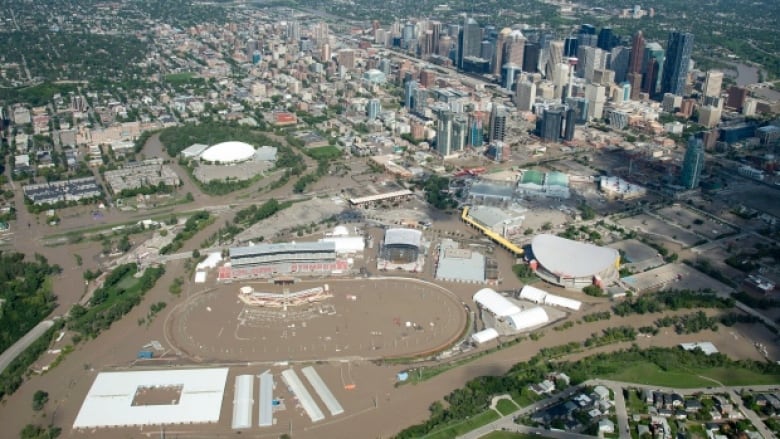
Canada's Changing Climate Report said that, on average, Canada is warming at twice the rate of the rest of the world.
Source https://i.cbc.ca/1.4043413.1490666489!/fileImage/httpImage/image.jpg_gen/derivatives/16x9_780/calgary-flood.jpg

Among some of the other findings were:
Northern Canada is warming at more than three times the global average.
Source:https://i.cbc.ca/1.1404781.1378975296!/httpImage/image.jpg_gen/derivatives/16x9_780/li-labrador-smoke-20130704.jpg


Precipitation is expected to increase across the country though summer rainfall may decrease.


Oceans around the country have warmed, becoming more acidic.Warmer water temperatures may render marine animals such as salmon, capelin, and cod increasingly vulnerable to competitors and parasites. Increased sediment in precipitation runoff may also challenge other commercial fish stocks like crab, lobster, salmon and other fin fish.
Source: https://i.cbc.ca/1.4342502.1507234717!/fileImage/httpImage/image.jpg_gen/derivatives/16x9_780/capelin.jpg

The warming climate will make extreme hot temperatures more frequent and more intense.

Source: https://i.cbc.ca/1.4784958.1534269527!/fileImage/httpImage/image.jpg_gen/derivatives/16x9_780/weather-board-2.jpg
The call to action from the IPCC has two components that will produce significant greenhouse gas reduction. (1) Stop using coal to generate electricity. (2) Stop using gas and diesel for transportation. The transformation of the energy and transportation infrastructure will create many jobs for engineer, technologists, technicians, and tradespeople. The investment in the people and technology to mitigate the effects of climate change comes from a price on carbon. The return on this investment will be in the jobs needed to implement the necessary changes.


References
1 (2019, April 3). 5 lingering questions about newly-released federal government .... Retrieved April 3, 2019, from https://www.cbc.ca/news/technology/climate-report-1.5081643

Tuesday, April 2, 2019

Fiddling, bread and circuses in Government today

The Environment Commissioner Julie Gelfand reports that Canada’s failure to fight climate change is disturbing.
Water level watch
 She says neither Conservative nor Liberal governments have met their own targets to reduce greenhouse-gas emissions, and Canada is not on track to hit its 2030 target, despite policies like the new national price on carbon.
Gelfand's audit today says the Liberals are not keeping a promise to get rid of inefficient fossil-fuel subsidies, which are undermining efforts to combat climate change, encouraging wasteful consumption of fossil fuels and discouraging investments in cleaner energy sources.1
The image that Nero fiddled while Rome burned comes to mind as successive governments neglect to give climate change action the priority it needs.
Moving in Rome
 Secondly, the story may be completely false and Nero may very well not have neglected his duty at all. Nero died four years later, and we should remember that history is written by the victors. The historian Suetonius records the Nero was responsible for the fire and that he watched it from a tower while playing an instrument and singing about the destruction of Troy. Others record this story merely as a rumour.2
The Roman Empire offered bread and circuses to satisfy the immediate demands of the populace.
To the Roman Circus


"Bread and circuses" (or bread and games; from Latin: panem et circenses) is a metonymic phrase critiquing superficial appeasement. It is attributed to Juvenal, a Roman poet active in the late first and early second century AD — and is used commonly in cultural, particularly political, contexts.
In a political context, the phrase means to generate public approval, not by excellence in public service or public policy, but by diversion, distraction or by satisfying the most immediate or base requirements of a populace[1] — by offering a palliative: for example food (bread) or entertainment (circuses).3 

Who is fiddling today in Canada? What political distraction is offered the people to divert our attention from calling government to account to address the real problems?

Beware bread and circuses
The serious issues confronting Canada call for (1) climate change leadership, (2) indigenous reconciliation, and (3) investment in jobs to transform of energy and transportation infrastructure.

References

1
(2019, April 2). Canada's failure to fight climate change 'disturbing ... - CBC.ca. Retrieved April 2, 2019, from https://www.cbc.ca/news/politics/environment-commissioner-julie-gelfand-disturbing-climate-change-1.5081027
2
(n.d.). 'Fiddling while Rome burns' - the meaning and origin of this phrase. Retrieved April 2, 2019, from https://www.phrases.org.uk/meanings/fiddling-while-rome-burns.html
3
(n.d.). Bread and circuses - Wikipedia. Retrieved April 2, 2019, from https://en.wikipedia.org/wiki/Bread_and_circuses

More attention to serious climate and indigenous reconciliation issues

Rex Murphy offers the opinion that the Liberals are burning down their house with the evasions and high-handedness of their mismanagement of the Jody Wilson-Raybould crisis.
Who will work on the issues?
 Mr. Trudeau is week by week shedding one by one each of the shiny, progressive halos — supporter of women, Indigenous friend, open government, doing politics differently, shutting down the old boys’ club — he has polished so assiduously since entering federal politics.1
A town hall hosted by Environment Minister Catherine McKenna was targeted for attention by Ottawa climate change activists.
Kady O'Malley reports on ipolitics that Climate Justice Ottawa is hoping to bring “hundreds of residents of Ottawa Centre” to a public town hall hosted by local Liberal MP Catherine McKenna, who is, of course, also environment minister — an event that, as per the advisory, the organizers see as an “opportunity to draw attention to the Liberal government’s poor track record on climate change and Indigenous rights.”2  
The Environment Commissioner Julie Gelfand reports that Canada’s failure to fight climate change is disturbing.

She says neither Conservative nor Liberal governments have met their own targets to reduce greenhouse-gas emissions, and Canada is not on track to hit its 2030 target, despite policies like the new national price on carbon.
Gelfand's audit today says the Liberals are not keeping a promise to get rid of inefficient fossil-fuel subsidies, which are undermining efforts to combat climate change, encouraging wasteful consumption of fossil fuels and discouraging investments in cleaner energy sources.3 

The serious issues confronting Canada call for (1) climate change leadership, (2) indigenous reconciliation, and (3) investment in jobs to transform our energy and transportation infrastructure.

References

1
(2019, March 22). Rex Murphy: The Liberals are now at the edge of a cliff | National Post. Retrieved March 26, 2019, from https://nationalpost.com/opinion/rex-murphy-the-liberals-are-now-at-the-edge-of-a-cliff
2
(2019, March 28). Ottawa climate change activists target town hall hosted by ... - iPolitics. Retrieved March 28, 2019, from https://ipolitics.ca/2019/03/28/ottawa-climate-change-activists-target-town-hall-hosted-by-environment-minister-catherine-mckenna/
3
(2019, April 2). Canada's failure to fight climate change 'disturbing ... - CBC.ca. Retrieved April 2, 2019, from https://www.cbc.ca/news/politics/environment-commissioner-julie-gelfand-disturbing-climate-change-1.5081027

Monday, April 1, 2019

Migration reports

The Globe and Mail article by Michelle Zilio and Adrian Morrow reports that Canada and the U.S. hope to to redraft a border treaty to cut flow of asylum seekers.
Source: https://www.theglobeandmail.com/resizer/oUn1SrtHG5ktK8LXnep-WUjHsss=/620x0/filters:quality(80)/arc-anglerfish-tgam-prod-tgam.s3.amazonaws.com/public/COUQQERUKNFEPEFBJZYSXR3RI4.jpg

Under the current pact, most refugee claimants who come to Canada from the United States at official points of entry – such as border stations – are immediately sent back to the United States.
 But the pact does not apply between such points of entry, so those who cross between border stations have the right to make a refugee claim. Canada wants this changed so most people coming from the United States – at any point along the border – can be immediately deported. The idea behind the treaty is that refugees do not face a risk of persecution in the United States, so it is safe for them to apply for asylum there – no need to continue on to Canada.1
Pope Francis is recently quoted as saying that you cannot prevent emigration by force but by generosity, education and economic investment.
 From Pope Francis inflight presser: 'He who builds walls will end up imprisoned by them'“Then there is the problem of hunger and thirst. If Europe wants to be mother Europe and not grandmother Europe, it must invest; it must intelligently try to help growth through education, through investment”.
You cannot prevent emigration by force but by generosity, education and economic investment, he said.
And reflecting on how to receive and distribute migrants who come to Europe, the Pope  said that it is true that a single country can't receive everyone, “but there's all of Europe to distribute migrants” and he reiterated that the reception must be with “an open heart, that accompanies, promotes and integrates".2
The action of Caritas Canada on Migration is based on the principle that no one should be forced to flee their homes.
Never have so many people fled war, persecution, natural disasters, extreme poverty, and development megaprojects. This Development and Peace animation encourages us to reflect on forced displacement. The refugee crisis is global and each of us has a role to play. With your support, Development and Peace reaches communities affected by forced migration.3


Today we realize that never have so many people fled war, persecution, natural disasters, extreme poverty, and development megaprojects.

References

1
(2019, April 1). Canada, US move to redraft border treaty to cut flow of asylum seekers. Retrieved April 1, 2019, from https://www.theglobeandmail.com/politics/article-us-moves-to-open-talks-with-canada-on-asylum-seeker-treaty/
2
(2019, March 31). Pope inflight presser: 'He who builds walls will end up ... - Vatican News. Retrieved April 1, 2019, from https://www.vaticannews.va/en/pope/news/2019-03/pope-morocco-inflight-presser-papmar.html
3
(n.d.). Share the Journey- ShareLent | Development and Peace. Retrieved April 1, 2019, from https://www.devp.org/en/lent

Tuesday, March 5, 2019

Common ground in climate change leadership


Climate change leadership and transfer of jobs to the green economy of alternate energy and non carbon transportation are flies that demand progress now. This requires leaders that seek common ground This change is not compatible with authoritarian, “my way or the highway” leadership that results in division and lack of progress.
 Katharine Hayhoe offers very relevant information for Canadians.1
https://youtu.be/Pr1LzjXbqR0


Katharine Hayhoe asks if Canada is so far north, global warming would actually be good for it…right? After all Canada doesn’t have as much to lose as other countries. Katharine Hayhoe offers very relevant information for Canadians. It is in harmony with the IPCC plan to (1) STOP using coal to generate electricity. (2) STOP using gas and diesel in transportation. This transformation of the energy and transportation infrastructure will require many engineers, technologists, technicians, and tradespeople to accomplish.

The Kleinman Center hosted a panel discussion, Pricing Carbon: Lessons from Canada, that welcomed three experts to discuss Alberta’s Climate Leadership Plan. As negotiations leading to the Climate Leadership Plan began, Alberta faced a history of contentious relations between the energy industry, environmentalists, and other stakeholders.
 “We came to the realization, and the environmental community came to the realization at the same time, that we were in an endless shouting match with each other,” said Cenovus’ Mitchell.  “We weren’t getting infrastructure built and access to markets, and they weren’t getting strong carbon policy.”
Given the difficult politics of climate change in the United States, consensus on a climate plan might seem far-fetched here. But in Alberta, conservative and liberal governments held a common agenda on climate change driven by their dual loyalties to economic development and their environment. Alberta’s burden was particularly large, as it had just 11 percent of Canada’s population, but was the source of 37 percent of the country’s greenhouse emissions.2
Kate Aronoff of the Guardian writes that Older politicians are too quick to write off younger climate activists.

Yet realism on climate means something different than it did even a decade or two ago, when a modest carbon tax and a smattering of tax credits might have gotten the job done. As the IPCC noted in its latest report, avoiding climate breakdown at this point will mean a “rapid, far-reaching and unprecedented changes in all aspects of society”, including massive investments in renewable energy and new technology and going to war with the world’s most powerful industry, fossil fuels.
Thankfully, Sunrise, Ocasio-Cortez and other Green New Deal advocates are updating our shared definition of what being realistic in a climate-changed 21st century looks like. The adults in the room would do well to listen.3 

But where are their solutions to the climate crisis?

References

1
(n.d.). Global Weirding with Katharine Hayhoe - YouTube. Retrieved February 22, 2019, from https://www.youtube.com/channel/UCi6RkdaEqgRVKi3AzidF4ow
2
(n.d.). Fighting Global Warming by Finding Common Ground | Kleinman .... Retrieved March 5, 2019, from https://kleinmanenergy.upenn.edu/fighting-global-warming-finding-common-ground
3
(2019, February 25). Don't trust the adults in the room on climate change ... - The Guardian. Retrieved March 5, 2019, from https://www.theguardian.com/commentisfree/2019/feb/25/adults-room-climate-change-dianne-feinstein

Wednesday, January 30, 2019

The Intelligence

In today’s episode of The Intelligence, our daily podcast, we ask how Venezuela’s citizens make ends meet amid the economic misery, American indictment against Chinese tech giant Huawei, and why is it getting easier to get good-quality Indian food in the truck stops of America


The Intelligence: Down and out in “iPhone City”

As trade talks with China continue in Washington, our correspondent takes a trip to China’s “iPhone City” to see how the country’s slowdown is affecting workers. In El Salvador, a social-media darling leads the polls ahead of Sunday’s presidential election—but his policy plans remain unclear. And, a big diamond up for auction in Angola today is a crystal-clear sign of change for the country.


The world’s democracies are right to seek change in Venezuela. The question is how. Plus, why Christian pilgrims are flocking to Abu Dhabi, the joy of missing out, and who really was Wild Bill Hickok? Anne McElvoy hosts


As America’s Senate majority leader pledges a vote on the Green New Deal, a sweeping set of policies around climate and much more, we examine just what the legislation does—and doesn’t—lay out. Following Cyril Ramaphosa’s State of the Nation address, we explore the challenges South Africa’s president faces as an election looms. And our language columnist declares war on misused metaphors. Additional audio courtesy of Sunrise Movement & FDR Presidential Library.


Grand fissures have opened in Britain’s politics; the two main parties’ leaders are struggling to keep control. What does it all mean for Brexit, just a month away? As pharmaceutical companies defend their prices this week, we look at the push to use cheap, existing drugs in new ways. And, in the Democratic Republic of Congo, the desire to adequately mourn the dead opens a market opportunity for paid wailers.


Fresh water is becoming increasingly scarce, as climate change and population growth puts greater pressure on resources. But the problem is one of mismanagement, rather than supply. When Jair Bolsonaro was sworn in as Brazil’s president in January, he spoke of a national effort to fix the country’s economy and to tackle crime and corruption. Can he deliver on those promises? And how a big-budget Chinese film reflects the philosophy of the country’s leader.


Canada’s fresh-faced leader has been a icon for embattled liberals. But now he faces damaging accusations of meddling in a judicial process. Will Justin Trudeau be contrite or fight? And free money sounds like a grand idea. Here’s how universal basic income is being tested in practice. Also, young men in Pakistan grow some very fancy beards.


The second defeat of British Prime Minister’s plan for withdrawal from the EU has weakened her. But what does it mean for the risk of a no-deal outcome? The chances of a Brexit delay are rising by the day. Competition between major powers for influence in Africa is intensifying, as Russia, China, Europe and America all see potential in the continent. And more gender-inclusive language is proving a headache for grammarians.


30 
Wednesday, January 9, 2019

Political platforms missing push for carbon price by oil industry

As 2019 begins, some political storms appear to be developing over carbon pricing. These articles indicate that the political fight is out of step with oil industry direction and long standing scientific and ethical concerns.
Price on Carbon

Deborah Gyapong reports that the political battle in Canada over a price on carbon threatens to disrupt the continuity that Pope Francis declares in Laudato Si is essential because policies related to climate change and environmental protection cannot be altered with every change of government.
 In Laudato Si’, Pope Francis said regardless of which policies governments adopt, “continuity is essential, because policies related to climate change and environmental protection cannot be altered with every change of government. Results take time and demand immediate outlays which may not produce tangible effects within any one government’s term.”
Gunn says the Liberals have adopted the same greenhouse gas emissions target of the previous Conservative government.
“There’s no indication we’ve reduced our emissions yet, and I don’t see them as having a plan that’s going to work,” he said. “Frankly none of the recent governments have brought us close to achieving the promised goals.”
That is unlikely to improve, said Philip Cross, former chief economic analyst with Statistics Canada and a senior fellow with the Macdonald-Laurier Institute, an Ottawa-based think tank.
“If it becomes an election issue, it will be entirely because of symbolism,” he said. “The Liberals are saying, ‘See, we’re taking some action however small and unimportant. It’s hard for the Liberals to pretend they’re being virtuous” when all serious economists say you need a tax of $100 “before you get dramatic meaningful change in people’s behaviour.”
Last July, the CCCB released a joint document with the United Church on climate change. Shaped “profoundly” by Laudato Si’, it affirmed the need to actively promote “a greater reverence for creation and to teach that Earth itself is holy.”1
Monica Ell-Kanayuk connects the work of Inuit for decades on the effects of climate change to the proposals that emerged from Katowice. She notes that ideology is a serious obstacle in making progress.
 Inuit have been bringing this message to the world for decades. This is partly why my reaction to the “emergency debate” in the House of Commons in the fall in reaction to the Intergovernmental Panel on Climate Change’s “Special Report: Global Warming of 1.5 degrees C” was to say, “the debate was 30 years too late.”
If you took note of the news that emerged from Katowice, 11 is the number of years this planet has to avert catastrophic climate change. But tell that to the people who have recently lost their homes to “fires, floods, or hurricanes of the century.” These extreme weather events will become more common as the planet warms. Without radical change in the way we generate and use energy in efforts to reduce the output of carbon dioxide, extreme weather will only get worse.
Radical action means transformational change over the next decade, in an urgent way. To me the use of the word “emergency” by the House of Commons means we are all in an emergency. It’s an emergency that should transcend party lines, and especially ideology. From an Inuit perspective, the ideologies linked to partisan politics is foreign to us in our traditional knowledge, and in modern times we don’t have political parties in our legislatures in Nunavut, Nunatsiavut, and the Northwest Territories.2
Tyler Dawson from the National Post looks at the legal battle for authority over carbon tax in Canada set to start in 2019.
 “There is no free standing federal jurisdiction over the environment or pollution,” says Saskatchewan’s factum.
But the federal government says Saskatchewan, by being intransigent on carbon pricing, risks affecting British Columbia because climate change has global effects.
Lawyers for the Liberal government, a tad opaquely, draw a line between Saskatchewan’s refusal to implement a carbon tax and the fact that, annually, large swaths of British Columbia catch on fire and burn down.
The Saskatchewan government rejects this: “The greenhouse effect of a megaton of emissions from Saskatchewan upon British Columbia, for example, is no different than it is upon Timbuktu.”3
Charles Lane considers California wildfires, intense tropical storms,and increased carbon dioxide emissions as he offers the opinion that the political science of climate change is where the trouble resides.
 This year, California recorded its deadliest wildfire in state history. The combined intensity and duration of the Atlantic and eastern Pacific oceans’ tropical storms and hurricanes reached a new recorded high. A group of researchers reported that worldwide fossil-fuel-related carbon dioxide emissions are projected to hit 37.1 billion tons in 2018, yet another annual record.
It’s time to take a clear-eyed look at the science behind these developments — the political science.
The data show that, for all the evidence that climate change is real, manmade and dangerous, and despite wide public acceptance of those propositions, people in the United States do not necessarily want to stop climate change, in the sense of being willing to pay the cost — which is the only sense that really matters.4
Umair Irfan clarifies the mystery of the support by Exxon for efforts to put a price on carbon.
 But it’s a significant move from a company with a decades-long history of studying climate change, misleading the public about it, and funding organizations that deny climate change even exists.
Exxon has actually endorsed a carbon tax before, but now the company is putting some money behind the policy: a $1 million donation to Americans for Carbon Dividends, a Republican-led lobbying effort for a carbon tax. (Exxon did not respond to a request for comment.)
There’s some debate about whether this is a cynical delay tactic, a show of genuine concern for the environment, or an act of rational self-interest in a changing energy landscape. (Or as the Onion put it, “ExxonMobil CEO Depressed After Realizing Earth Could End Before They Finish Extracting All The Oil.”)
But what’s gone largely unnoticed is that Exxon’s proposal comes with a massive catch: In exchange for a tax, the company wants immunity from all climate lawsuits in the future.
Cities across the United States are currently suing oil companies to make them pay for damages wrought by climate change, which could put companies like Exxon on the hook for billions of dollars in payouts.5
Amy Harder reports after a whirlwind week in Katowice, Poland, where Conoco announced it is also funding a political push for a carbon tax. Conoco is also joining a connected initiative, called the Climate Leadership Council, whose corporate members include Exxon, BP, Royal Dutch Shell and Total.
 The U.S. policy that Conoco, Exxon and several other energy companies back also sends money back to consumers. Supporters say that’s an important distinction. In a Washington state carbon pricing initiative that voters just rejected, the money would have been mostly used to fund clean energy.
With its funding of the tax push, Conoco is also joining a connected initiative, called the Climate Leadership Council, whose corporate members include Exxon, BP, Royal Dutch Shell and Total.6
The political battles that might try to make climate change policy a ballot box issue seem to be out of step with the decisions being taken by the oil industry giants and the ethical guidance from Pope Francis and Inuit leaders.

References

1
(2019, January 9). Climate change caught in political battle over carbon tax. Retrieved January 9, 2019, from https://www.catholicregister.org/item/28738-climate-change-caught-in-political-battle-over-carbon-tax
2
(2019, January 8). Let's remember: climate change is not ideological, it's fact - The Hill .... Retrieved January 9, 2019, from https://www.hilltimes.com/2019/01/07/lets-remember-climate-change-not-ideological-fact/182353
3
(2019, January 2). With legal battle over carbon tax set to start in 2019, here are the major .... Retrieved January 9, 2019, from https://nationalpost.com/news/politics/with-legal-battle-over-carbon-tax-set-to-start-in-2019-here-are-the-major-players-arguments
4
(2018, December 10). Opinion | It's time to look at the (political) science behind climate change. Retrieved January 9, 2019, from https://www.washingtonpost.com/opinions/its-time-to-look-at-the-political-science-behind-climate-change/2018/12/10/f1787070-fc96-11e8-862a-b6a6f3ce8199_story.html
5
(2018, October 18). Exxon is lobbying for a carbon tax. There is, obviously, a catch. - Vox. Retrieved January 9, 2019, from https://www.vox.com/2018/10/18/17983866/climate-change-exxon-carbon-tax-lawsuit
6
(2018, December 17). Axios Generate: ConocoPhillips joins carbon tax push. Retrieved January 9, 2019, from https://www.axios.com/newsletters/axios-generate-bcae2461-6151-4e1c-97bb-29807aac5d68.html