Saturday, April 6, 2019

Common ground and conservatives on carbon tax

A short review of the challenges facing Canada to find a way to encourage reduction in greenhouse gas (GHG) production show that common ground between “green” political strategists and conservatives may be found in some policies that both parties can accept.
Common ground on coastal erosion

Thomas Walkom, National Affairs Columnist for the Star, writes that the climate apocalypse is fast approaching. That’s the word from federal government scientists who issued an alarming report on climate change in Canada. They say that even in the unlikely event that the world meets its global carbon emission targets Canada is at high risk of extreme temperatures, drought and flooding.
The opposition Conservatives, joined by like-minded governments in Saskatchewan, Manitoba, Ontario and New Brunswick, attack Justin Trudeau’s Liberals for imposing a carbon tax to deal with the global warming problem.
But they offer nothing plausible in its stead. Ontario Premier Doug Ford argues that he doesn’t need to do anything to reduce carbon emissions — that the decision of a previous government to shut down the province’s coal-fired electricity generating plants was sufficient.1 
The American Enterprise Institute, a public policy think tank dedicated to defending human dignity, expanding human potential, and building a freer and safer world declares that carbon tax most efficient in tackling climate change.
 A tax on carbon emissions, however, does not suffer from these failings. It is efficient because it puts an explicit price on all carbon emissions, which unlike the hidden cost of regulations, is designed for firms and consumers to avoid. And while this initiates a reduction in emissions, it also raises revenue that can be utilized to counteract any drag on the economy arising from the tax—say, through an offsetting reduction in income tax rates that encourage work and investment.
A carbon tax also creates an unhampered incentive for innovation, which could dramatically lower the cost of reducing carbon emissions in the future. With the cost of emitting carbon uniformly higher, consumers and producers will make a broad set of adjustments. Some changes will occur quickly, such as fewer miles driven, while others will occur over time, such as more energy-efficient homes and buildings. All along, producers will pursue newer technologies to supply our electricity demand in a low-carbon fashion. This is in stark contrast to targeted subsidies or grants that narrowly encourage just one type of technology, research, or innovation.2
 Jim Farney, Associate Professor University of Regina, writes that it is inescapable that the 'what should be done,' if it were to be done by conservatives, would have to look remarkably like a carbon tax.
conservative principles and carbon tax

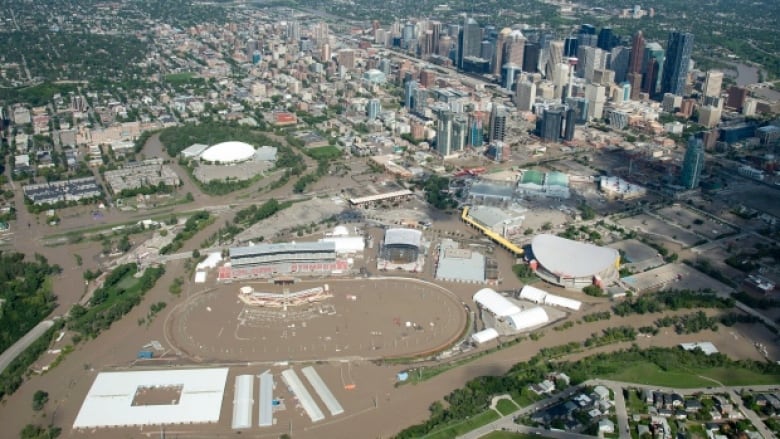
The harmony of a carbon tax to reduce GHG toward IPCC recommended levels with some principles espoused by traditional, religious, populist, and free market conservatives is hopeful as common ground in our efforts to mitigate floods, fires, and coastal erosion in a warmer Canada.

References

1
(2019, April 2). Canadian politicians are obsessed with the wrong crisis | The Star. Retrieved April 2, 2019, from https://www.thestar.com/opinion/star-columnists/2019/04/02/canadian-politicians-are-obsessed-with-the-wrong-crisis.html
2
(2019, March 1). Carbon tax most efficient in tackling climate change - AEI. Retrieved April 4, 2019, from http://www.aei.org/publication/comment-carbon-tax-most-efficient-in-tackling-climate-change/
3
(2018, November 12). Is there a conservative case against the carbon tax? Not really - The .... Retrieved April 6, 2019, from https://www.hilltimes.com/2018/11/12/conservative-case-carbon-tax-not-really/175171

Thursday, April 4, 2019

The Intelligence Canada guns

AFTER TWO decades as Algeria’s president, Abdelaziz Bouteflika has resigned. But the cabal that has been running the country doesn’t want to give up power, and the opposition is disorganised. Will anything change?


Canada's debate over gun ownership is intensifying, with medical professionals staging protests calling for stricter gun laws. And the gender pay gap in many countries is exacerbated by parenthood—you can hear it in the data. Runtime 20 min. 

Wednesday, April 3, 2019

Local concerns about Canada's Changing Climate


Canada's Changing Climate Report said that, on average, Canada is warming at twice the rate of the rest of the world.
Source https://i.cbc.ca/1.4043413.1490666489!/fileImage/httpImage/image.jpg_gen/derivatives/16x9_780/calgary-flood.jpg

Among some of the other findings were:
Northern Canada is warming at more than three times the global average.
Source:https://i.cbc.ca/1.1404781.1378975296!/httpImage/image.jpg_gen/derivatives/16x9_780/li-labrador-smoke-20130704.jpg


Precipitation is expected to increase across the country though summer rainfall may decrease.


Oceans around the country have warmed, becoming more acidic.Warmer water temperatures may render marine animals such as salmon, capelin, and cod increasingly vulnerable to competitors and parasites. Increased sediment in precipitation runoff may also challenge other commercial fish stocks like crab, lobster, salmon and other fin fish.
Source: https://i.cbc.ca/1.4342502.1507234717!/fileImage/httpImage/image.jpg_gen/derivatives/16x9_780/capelin.jpg

The warming climate will make extreme hot temperatures more frequent and more intense.

Source: https://i.cbc.ca/1.4784958.1534269527!/fileImage/httpImage/image.jpg_gen/derivatives/16x9_780/weather-board-2.jpg
The call to action from the IPCC has two components that will produce significant greenhouse gas reduction. (1) Stop using coal to generate electricity. (2) Stop using gas and diesel for transportation. The transformation of the energy and transportation infrastructure will create many jobs for engineer, technologists, technicians, and tradespeople. The investment in the people and technology to mitigate the effects of climate change comes from a price on carbon. The return on this investment will be in the jobs needed to implement the necessary changes.


References
1 (2019, April 3). 5 lingering questions about newly-released federal government .... Retrieved April 3, 2019, from https://www.cbc.ca/news/technology/climate-report-1.5081643

Tuesday, April 2, 2019

Fiddling, bread and circuses in Government today

The Environment Commissioner Julie Gelfand reports that Canada’s failure to fight climate change is disturbing.
Water level watch
 She says neither Conservative nor Liberal governments have met their own targets to reduce greenhouse-gas emissions, and Canada is not on track to hit its 2030 target, despite policies like the new national price on carbon.
Gelfand's audit today says the Liberals are not keeping a promise to get rid of inefficient fossil-fuel subsidies, which are undermining efforts to combat climate change, encouraging wasteful consumption of fossil fuels and discouraging investments in cleaner energy sources.1
The image that Nero fiddled while Rome burned comes to mind as successive governments neglect to give climate change action the priority it needs.
Moving in Rome
 Secondly, the story may be completely false and Nero may very well not have neglected his duty at all. Nero died four years later, and we should remember that history is written by the victors. The historian Suetonius records the Nero was responsible for the fire and that he watched it from a tower while playing an instrument and singing about the destruction of Troy. Others record this story merely as a rumour.2
The Roman Empire offered bread and circuses to satisfy the immediate demands of the populace.
To the Roman Circus


"Bread and circuses" (or bread and games; from Latin: panem et circenses) is a metonymic phrase critiquing superficial appeasement. It is attributed to Juvenal, a Roman poet active in the late first and early second century AD — and is used commonly in cultural, particularly political, contexts.
In a political context, the phrase means to generate public approval, not by excellence in public service or public policy, but by diversion, distraction or by satisfying the most immediate or base requirements of a populace[1] — by offering a palliative: for example food (bread) or entertainment (circuses).3 

Who is fiddling today in Canada? What political distraction is offered the people to divert our attention from calling government to account to address the real problems?

Beware bread and circuses
The serious issues confronting Canada call for (1) climate change leadership, (2) indigenous reconciliation, and (3) investment in jobs to transform of energy and transportation infrastructure.

References

1
(2019, April 2). Canada's failure to fight climate change 'disturbing ... - CBC.ca. Retrieved April 2, 2019, from https://www.cbc.ca/news/politics/environment-commissioner-julie-gelfand-disturbing-climate-change-1.5081027
2
(n.d.). 'Fiddling while Rome burns' - the meaning and origin of this phrase. Retrieved April 2, 2019, from https://www.phrases.org.uk/meanings/fiddling-while-rome-burns.html
3
(n.d.). Bread and circuses - Wikipedia. Retrieved April 2, 2019, from https://en.wikipedia.org/wiki/Bread_and_circuses

More attention to serious climate and indigenous reconciliation issues

Rex Murphy offers the opinion that the Liberals are burning down their house with the evasions and high-handedness of their mismanagement of the Jody Wilson-Raybould crisis.
Who will work on the issues?
 Mr. Trudeau is week by week shedding one by one each of the shiny, progressive halos — supporter of women, Indigenous friend, open government, doing politics differently, shutting down the old boys’ club — he has polished so assiduously since entering federal politics.1
A town hall hosted by Environment Minister Catherine McKenna was targeted for attention by Ottawa climate change activists.
Kady O'Malley reports on ipolitics that Climate Justice Ottawa is hoping to bring “hundreds of residents of Ottawa Centre” to a public town hall hosted by local Liberal MP Catherine McKenna, who is, of course, also environment minister — an event that, as per the advisory, the organizers see as an “opportunity to draw attention to the Liberal government’s poor track record on climate change and Indigenous rights.”2  
The Environment Commissioner Julie Gelfand reports that Canada’s failure to fight climate change is disturbing.

She says neither Conservative nor Liberal governments have met their own targets to reduce greenhouse-gas emissions, and Canada is not on track to hit its 2030 target, despite policies like the new national price on carbon.
Gelfand's audit today says the Liberals are not keeping a promise to get rid of inefficient fossil-fuel subsidies, which are undermining efforts to combat climate change, encouraging wasteful consumption of fossil fuels and discouraging investments in cleaner energy sources.3 

The serious issues confronting Canada call for (1) climate change leadership, (2) indigenous reconciliation, and (3) investment in jobs to transform our energy and transportation infrastructure.

References

1
(2019, March 22). Rex Murphy: The Liberals are now at the edge of a cliff | National Post. Retrieved March 26, 2019, from https://nationalpost.com/opinion/rex-murphy-the-liberals-are-now-at-the-edge-of-a-cliff
2
(2019, March 28). Ottawa climate change activists target town hall hosted by ... - iPolitics. Retrieved March 28, 2019, from https://ipolitics.ca/2019/03/28/ottawa-climate-change-activists-target-town-hall-hosted-by-environment-minister-catherine-mckenna/
3
(2019, April 2). Canada's failure to fight climate change 'disturbing ... - CBC.ca. Retrieved April 2, 2019, from https://www.cbc.ca/news/politics/environment-commissioner-julie-gelfand-disturbing-climate-change-1.5081027

Monday, April 1, 2019

Migration reports

The Globe and Mail article by Michelle Zilio and Adrian Morrow reports that Canada and the U.S. hope to to redraft a border treaty to cut flow of asylum seekers.
Source: https://www.theglobeandmail.com/resizer/oUn1SrtHG5ktK8LXnep-WUjHsss=/620x0/filters:quality(80)/arc-anglerfish-tgam-prod-tgam.s3.amazonaws.com/public/COUQQERUKNFEPEFBJZYSXR3RI4.jpg

Under the current pact, most refugee claimants who come to Canada from the United States at official points of entry – such as border stations – are immediately sent back to the United States.
 But the pact does not apply between such points of entry, so those who cross between border stations have the right to make a refugee claim. Canada wants this changed so most people coming from the United States – at any point along the border – can be immediately deported. The idea behind the treaty is that refugees do not face a risk of persecution in the United States, so it is safe for them to apply for asylum there – no need to continue on to Canada.1
Pope Francis is recently quoted as saying that you cannot prevent emigration by force but by generosity, education and economic investment.
 From Pope Francis inflight presser: 'He who builds walls will end up imprisoned by them'“Then there is the problem of hunger and thirst. If Europe wants to be mother Europe and not grandmother Europe, it must invest; it must intelligently try to help growth through education, through investment”.
You cannot prevent emigration by force but by generosity, education and economic investment, he said.
And reflecting on how to receive and distribute migrants who come to Europe, the Pope  said that it is true that a single country can't receive everyone, “but there's all of Europe to distribute migrants” and he reiterated that the reception must be with “an open heart, that accompanies, promotes and integrates".2
The action of Caritas Canada on Migration is based on the principle that no one should be forced to flee their homes.
Never have so many people fled war, persecution, natural disasters, extreme poverty, and development megaprojects. This Development and Peace animation encourages us to reflect on forced displacement. The refugee crisis is global and each of us has a role to play. With your support, Development and Peace reaches communities affected by forced migration.3


Today we realize that never have so many people fled war, persecution, natural disasters, extreme poverty, and development megaprojects.

References

1
(2019, April 1). Canada, US move to redraft border treaty to cut flow of asylum seekers. Retrieved April 1, 2019, from https://www.theglobeandmail.com/politics/article-us-moves-to-open-talks-with-canada-on-asylum-seeker-treaty/
2
(2019, March 31). Pope inflight presser: 'He who builds walls will end up ... - Vatican News. Retrieved April 1, 2019, from https://www.vaticannews.va/en/pope/news/2019-03/pope-morocco-inflight-presser-papmar.html
3
(n.d.). Share the Journey- ShareLent | Development and Peace. Retrieved April 1, 2019, from https://www.devp.org/en/lent

Tuesday, March 5, 2019

Common ground in climate change leadership


Climate change leadership and transfer of jobs to the green economy of alternate energy and non carbon transportation are flies that demand progress now. This requires leaders that seek common ground This change is not compatible with authoritarian, “my way or the highway” leadership that results in division and lack of progress.
 Katharine Hayhoe offers very relevant information for Canadians.1
https://youtu.be/Pr1LzjXbqR0


Katharine Hayhoe asks if Canada is so far north, global warming would actually be good for it…right? After all Canada doesn’t have as much to lose as other countries. Katharine Hayhoe offers very relevant information for Canadians. It is in harmony with the IPCC plan to (1) STOP using coal to generate electricity. (2) STOP using gas and diesel in transportation. This transformation of the energy and transportation infrastructure will require many engineers, technologists, technicians, and tradespeople to accomplish.

The Kleinman Center hosted a panel discussion, Pricing Carbon: Lessons from Canada, that welcomed three experts to discuss Alberta’s Climate Leadership Plan. As negotiations leading to the Climate Leadership Plan began, Alberta faced a history of contentious relations between the energy industry, environmentalists, and other stakeholders.
 “We came to the realization, and the environmental community came to the realization at the same time, that we were in an endless shouting match with each other,” said Cenovus’ Mitchell.  “We weren’t getting infrastructure built and access to markets, and they weren’t getting strong carbon policy.”
Given the difficult politics of climate change in the United States, consensus on a climate plan might seem far-fetched here. But in Alberta, conservative and liberal governments held a common agenda on climate change driven by their dual loyalties to economic development and their environment. Alberta’s burden was particularly large, as it had just 11 percent of Canada’s population, but was the source of 37 percent of the country’s greenhouse emissions.2
Kate Aronoff of the Guardian writes that Older politicians are too quick to write off younger climate activists.

Yet realism on climate means something different than it did even a decade or two ago, when a modest carbon tax and a smattering of tax credits might have gotten the job done. As the IPCC noted in its latest report, avoiding climate breakdown at this point will mean a “rapid, far-reaching and unprecedented changes in all aspects of society”, including massive investments in renewable energy and new technology and going to war with the world’s most powerful industry, fossil fuels.
Thankfully, Sunrise, Ocasio-Cortez and other Green New Deal advocates are updating our shared definition of what being realistic in a climate-changed 21st century looks like. The adults in the room would do well to listen.3 

But where are their solutions to the climate crisis?

References

1
(n.d.). Global Weirding with Katharine Hayhoe - YouTube. Retrieved February 22, 2019, from https://www.youtube.com/channel/UCi6RkdaEqgRVKi3AzidF4ow
2
(n.d.). Fighting Global Warming by Finding Common Ground | Kleinman .... Retrieved March 5, 2019, from https://kleinmanenergy.upenn.edu/fighting-global-warming-finding-common-ground
3
(2019, February 25). Don't trust the adults in the room on climate change ... - The Guardian. Retrieved March 5, 2019, from https://www.theguardian.com/commentisfree/2019/feb/25/adults-room-climate-change-dianne-feinstein