Showing posts with label socialism. Show all posts

Sunday, December 19, 2021

Climate Priorities for Capitalist and Socialist

Climate mitigation and adaptation strategies will need to be adopted by both capitalist, centrist, and socialist governments in the next decades.
Taking action in our community


Iman Ghosh reports on the Visual Capitalist website that greenhouse gases (GHGs)—chiefly in the form of CO₂ emissions—have risen at unprecedented rates as a result of global growth and resource consumption.

Billions of people rely on petrol and diesel-powered vehicles to get around. As a result, they contribute to almost 12% of global emissions. But this challenge is also an opportunity: the consumer adoption of electric vehicles (EVs) could significantly help shift the world away from fossil fuel use, both for passenger travel and for freight—although there are still speedbumps to overcome. Meanwhile, buildings contribute 17.5% of energy-related emissions overall—which makes sense when you realize the stunning fact that cities use 60-80% of the world’s annual energy needs. With megacities (home to 10+ million people) ballooning every day to house the growing urban population, these shares may rise even further. Agriculture, Forestry & Land Use


Sub-sector

GHG Emissions Share

Further breakdown

Transport

16.2%

• Road 11.9%

• Aviation 1.9%

• Rail 0.4%

• Pipeline 0.3%

• Ship 1.7%

Buildings

17.5%

• Residential 10.9%

• Commercial 6.6%

Industry energy

24.2%

• Iron & Steel 7.2%

• Non-ferrous metals 0.7%

• Machinery 0.5%

• Food and tobacco 1.0%

• Paper, pulp & printing 0.6%

• Chemical & petrochemical (energy) 3.6%

• Other industry 10.6%

Agriculture & Fishing energy

1.7%

-

Unallocated fuel combustion

7.8%

-

Fugitive emissions from energy production

5.8%

• Coal 1.9%

• Oil & Natural Gas 3.9%

Total

73.2%


The second biggest category of emissions is the sector that we rely on daily for the food we eat. Perhaps unsurprisingly, methane from cows and other livestock contribute the most to emissions, at 5.8% total. These foods also have some of the highest carbon footprints, from farm to table.1


Seth Klein, writing for the National Observer, states from the outset that, without question, a truly successful climate plan requires collective action at the political/policy level . Any plan that relies on individual households voluntarily doing what he spells out here will see us fry.
Reducing our carbon footprint


He owns his home, which provides him with privileges, opportunities and obligations to act that do not exist for most renters.

As stated up front, the path to victory on the climate emergency will not be won by encouraging and incentivizing households to voluntarily do what we did. While individual households all have their part to play, confronting the climate crisis requires collective and state-led action. As my family’s conversion journey makes clear, the process can be complicated and it is costly, and if we are hoping everyone will do this on their own, we’re going to lose the climate fight… Under any future scenario, as we confront the climate crisis, energy costs are going up, and thus, issues of energy poverty and cost stress for lower and middle-income households is an issue that needs to be mitigated. And that’s something we can only do together… while all this encouragement and financial assistance is needed (policy carrots), fuel swapping can’t be left to voluntary goodwill. We also need the state to set clear near-term dates by which fuel-swapping will be mandatory (the policy sticks). Tackling the climate crisis and eliminating GHGs from our homes isn’t optional. We need to get this done.2 

Ultimately, however, a comprehensive climate program does require that all our homes cease using fossil fuels.


  • Induction electric stove: $2,000 plus tax
  • Electric hot water heater and tank, including installation: $3,400 plus tax
  • Heat pump system, including installation: $17,000 plus tax (minus $9,000 in rebates)


This article walks us through how that can be done. On twitter, the Earth carer called Angie, user (@lifelearner47) shares some statistics from the Climate Action Tracker on emission reduction goals and projected achievements of the leading industrial countries. The numbers in these reports identify the priority we need to place on transition from fossil fuels as our major source of energy for industry, transportation, and energy in our built environment.


References


1

(2021, December 15). A Global Breakdown of Greenhouse Gas Emissions by Sector. Retrieved December 19, 2021, from https://www.visualcapitalist.com/cp/a-global-breakdown-of-greenhouse-gas-emissions-by-sector/ 

2

(2021, December 10). Getting off gas: A how-to guide to get fossil fuels out of your home. Retrieved December 19, 2021, from https://www.nationalobserver.com/2021/12/10/opinion/getting-gas-how-guide-get-fossil-fuels-out-your-home 

3

Earth carer called Angie. [@lifelearner47]. 18 Dec 2021. Which countries think it's perfectly OK to aim for >4°C extra climate heating ? #Fossilfuel countries! What a surprise.Tweet.[tweetdeck].https://twitter.com/lifelearner47/status/1472504740051361794 


Saturday, August 11, 2018

Temperatures rise and science helps industry and ecology

This small collection of articles on the patterns of discussion about climate change raises questions about capitalists who knew and did not act and ecosocialists who aim high for social and economic justice yet have difficulty engaging the people who they claim will most benefit from their approach.
Mitigate coastal erosion

This seemingly stalling initiatives are set against a background of temperature evidence that is not cool.
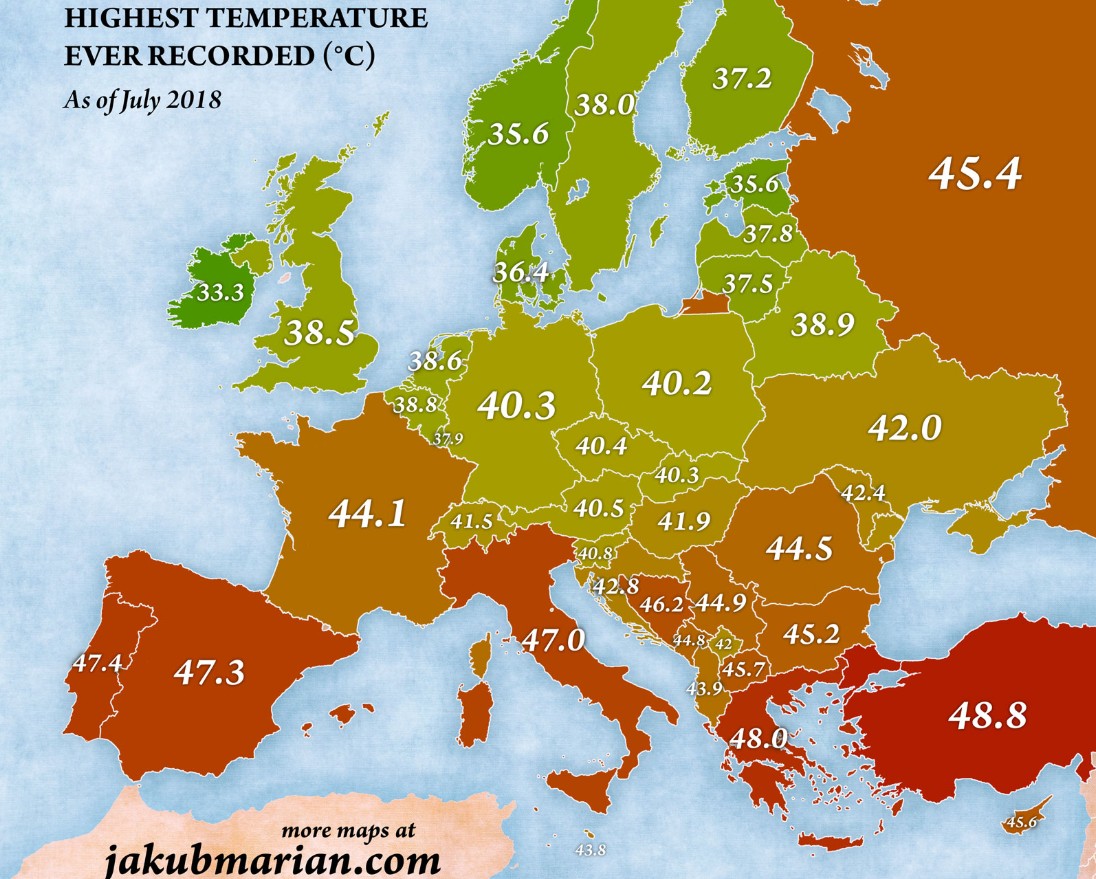
https://www.this-is-italy.com/wp-content/uploads/2018/08/Europe-Temperatues-map.jpg

The CBC Day 6 interview of Nathaniel Rich, who wrote a New York Times Magazine cover story, "Losing Earth: The Decade We Almost Stopped Climate Change." The article traces the efforts of scientists and politicians to tackle climate change between 1979 and 1989. The work of Humble Oil and Exxon scientists was in recognition that there's going to be policy coming down the line on this, and if the oil industry is going to be part of that conversation, it needs to have a strong understanding of the science.
They had a whole carbon dioxide program, as did the American Petroleum Institute, in the early 'Eighties. By 1984, you have the head of Exxon's research division sponsoring a symposium held by James Hansen, the NASA scientist, and he's talking about how Exxon is going... away from fossil fuels to renewable energy and how Exxon has all of these programs set up to do that. They dropped that shortly thereafter. And when they take it up again in '88, there's sort of different people involved. It's more of the business side that starts to get involved and they begin to formulate what will ultimately become a much vaster effort to propagate this denialism campaign.
The Magical Earth web site has collected data that shows the highest officially (not anecdotally) recorded temperature in all European countries.
The highest officially recorded temperature in the world is 56.7 °C (134.1 °F), which occurred on 10 July 1913 in Furnace Creek, California, USA. Other continents also have some really hot places: 55.0 °C in Africa (Tunisia), 53–54 °C in Asia, 50.7 °C in Australia, and 48.9 °C in South America (Argentina). In comparison, the climate in Europe is fairly mild. The highest temperature was recorded in Athens, Greece, on 10 July 1977, with a measly 48.0 °C. This European map below shows the highest officially (not anecdotally) recorded temperature in all European countries…
System Change not Climate Change, an anti-capitalist, ecosocialist network advocates for workers’ power and sustainability; for a society that is free, just, and equitable; that fosters human creativity and productivity while healing the rifts generated by capitalism among people and between human society and the earth’s ecology. The battle against climate change may need a new system to redistribute wealth.
In order to address the environmental crisis, workers will need to create a new system that redistributes wealth and restructure the economy so it prioritizes people and the planet over profit. The scale of this task is such that workers will need to socialize the energy sector and expand renewable energy, expand mass transit, plan production and agriculture within ecological cycles, reduce the workweek with no loss in pay, and defund the US military and much more.
Neither the neo-liberalism that has dominated our economy in the 21st century nor the ideas of socialism from the 19th century seem to fit a problem of raising money to mitigate the effects of the floods, storms, fires, and coastal erosion that comes with rising temperature.


Global News on extreme weather August 2018

Action will need to be based on science, known to industry and independent ecologists, and political cooperation that puts the planet before populism.

References
(2018, August 10). 'Losing Earth': Do we have a collective moral responsibility to fight .... Retrieved August 11, 2018, from https://www.cbc.ca/radio/day6/episode-402-saudi-trolls-vs-canada-alex-jones-s-precarious-empire-losing-earth-pampered-poultry-and-more-1.4777781/losing-earth-do-we-have-a-collective-moral-responsibility-to-fight-climate-change-1.4777798

(2018, August 4). The Highest heatwave Temperatures in Europe (map) | This is Italy. Retrieved August 11, 2018, from https://www.this-is-italy.com/the-highest-heatwave-temperatures-in-europe-map/

(n.d.). Working-class power | System Change Not Climate Change. Retrieved August 11, 2018, from https://systemchangenotclimatechange.org/workingclass