Showing posts with label religion. Show all posts

Wednesday, February 25, 2026

State of the Truth Address

FactCheck, a nonpartisan, nonprofit “consumer advocate” for voters that aims to reduce the level of deception and confusion in U.S. politics, has monitored the factual accuracy of what was said by President Donald Trump in the State of the Union Address on February 24 2026. Their goal is to apply the best practices of both journalism and scholarship, and to increase public knowledge and understanding.


Fact Finding the State of the Union Address


Trump SOTU Fact Check Full story here: https://www.factcheck.org/2026/02/factchecking-trumps-state-of-the-union-address/ 


Trump’s State of the Union Address 

Fact Checking the SOTU Address

1

Trump falsely claimed that he inherited “a stagnant economy” with “inflation at record levels.”

Annual growth in real GDP was 2.5% or higher each year under former President Joe Biden, and the annual inflation rate was down to 3% from its peak of 9.1% peak when Trump took office.


2

The president went on to claim that the economy “is roaring like never before,”

Real GDP growth in 2025 was down to 2.2%, according to a federal estimate. Also, the unemployment rate has increased slightly under Trump.


3

He misleadingly claimed that prices are “plummeting downward” because of his policies. 

The annual rate of inflation has declined, but prices overall are still increasing.


4

Trump’s claim that “more Americans are working today than at any time in the history of our country,” 

while accurate, doesn’t account for population growth. Job growth slowed a bit last year.


5

The president misleadingly claimed that Americans “will now pay the lowest price anywhere in the world for drugs.” 

The administration’s negotiations with drug companies may have lowered prices for some specific drugs in certain situations, but there is no evidence of a widespread decline in prices.


6

The president continued to exaggerate the decline in gasoline prices, saying they are “now below $2.36 a gallon in most states.” 

In no state was the average that low. And the nationwide average is $2.94.


7

He claimed to have presided over a “tremendous renewal” of religion in America, 

Recent polling has found the opposite.


8

Trump claimed that $1,776 “warrior dividend” bonus checks paid to military personnel came from tariff revenue.

It was actually a reallocation of funds initially earmarked for an increased housing allowance.


9

The president repeated his unsupported claim that many immigrants came from “prisons” and “mental institutions,” 

He wrongly claimed that the Biden administration allowed in “11,888 murderers.”


10

Trump boasted about stock market gains since his election 

The gains were less than each of the last two years under Biden.


11

He exaggerated when he said his signature legislation eliminated tax on tips, overtime and Social Security benefits for seniors.

The tax breaks are substantial but do not apply to all individuals.


12

As he has for years, Trump insisted, without evidence, that “cheating is rampant in our elections.” 

He claimed legislation was needed “to stop illegal aliens” from voting, though evidence suggests that’s rare.

13

Trump claimed that the federal budget could be balanced “if we’re able to find enough of that fraud.”

The most recent budget deficit was $1.8 trillion, more than three times higher than the highest federal estimate of government money lost annually to fraud.

14

Trump claimed that he inherited “rampant crime at home” and later boasted that “last year, the murder rate saw its single largest decline in recorded history.”

Crime and murder was down last year, continuing a trend that began in 2022.

15

Trump made the dubious claim that his increased tariffs would one day replace income taxes, 

Something many economists say doesn’t add up.

16

Trump claimed that the U.S. “obliterated Iran’s nuclear weapons program” last year. 

Experts have said the program was damaged but not destroyed, and Trump is now considering military action over Iran’s nuclear program.


17

Trump said “American oil production is up by more than 600,000 barrels a day,” 

Crude oil production increased by 334,600 barrels per day in his first full 10 months in office.


18

He also claimed that U.S. natural gas production increased to “an all-time high” because he “kept” his “promise to drill, baby, drill.” 

Production of natural gas was already at record levels before he took office.

Fact Finding the State of the Truth Address February 24, 2026


Trump’s Feb. 24 address was longer than any prior SOTU, clocking in at over 1 hour and 47 minutes, as measured by the American Presidency Project at the University of California, Santa Barbara.


References

By Robert Farley, D'Angelo Gore, Lori Robertson, Jessica McDonald, Kate Yandell, Saranac Hale Spencer, Sanjana Juvvadi, Andrew Noh and Ashley Wang. (n.d.). FactChecking Trump’s State of the Union Address. FactCheck.org - A Project of The Annenberg Public Policy Center. Retrieved February 25, 2026, from https://www.factcheck.org/2026/02/factchecking-trumps-state-of-the-union-address/ 


Saturday, April 17, 2021

Checkup on Cry of the Earth and the Poor


The G20 Interfaith Forum works to achieve G20 sustainable goals through community values. Belief empowers people and people achieve change. How are religious leaders uniquely placed to help combat Climate Change? Lauren Williams offers her thoughts.


Katharine Hayhoe looks beyond science to our moral values.


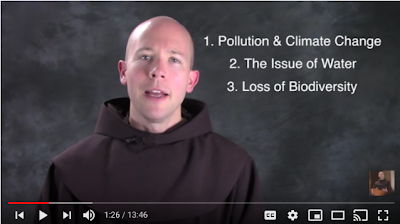
In this third episode of "Understanding Laudato Si," Fr. Daniel P. Horan, OFM, explores the first half of Chapter One. The three subheadings of Chapter One examined here include these themes.


The three concerns of Pope Francis in his encyclical “Laudato Si


are reference points to assess our progress in answering the cry of earth and the cry of the poor.

Friday, April 10, 2020

Economists and the Pope advocate change in Covid crisis

Experts in economics and human relations are thinking about changes that are likely to support our “new normal” lives after our journey through the Covid-19 crisis.
Journey through Covid-19

Alex Hemingway, an economist and public finance policy analyst at the Canadian Centre for Policy Alternatives BC Office, writes that an excess profits tax is needed to prevent profiteering amid COVID-19. People and businesses all over the country and the world are hurting as large parts of the economy have shut down to help stop the spread of COVID-19. But a subset of businesses will see a spike in profits, including in big tech, e-commerce and logistics, and cleaning products, as well as vendors of scarce goods who engage in price gouging. No one should make windfall profits from a crisis causing so much suffering, particularly when billions in public dollars are flowing to keep businesses afloat.
 Two leading economists in the United States are now calling for an excess profits tax of the type previously imposed during World War I and II in countries including Canada, the US and Britain. A wartime-style excess profits tax would help prevent profiteering amid COVID-19, discourage abuse of government support programs for business, tamp down on price gouging, and raise public revenues from large, profitable corporations that are booming during the crisis. As US President Wilson declared in 1918, “The profiteering that cannot be got at the restraints of conscience and love of country can be got at by taxation.”1
Austen Ivereigh, writing for the Tablet, was curious to know if Pope Francis saw the crisis and the economic devastation it is wreaking as a chance for an ecological conversion, for reassessing priorities and lifestyles. Ivereigh asked him concretely whether it was possible that we might see in the future an economy that – to use his words – was more “human” and less “liquid”.
 You ask me about conversion. Every crisis contains both danger and opportunity: the opportunity to move out from the danger. Today I believe we have to slow down our rate of production and consumption (Laudato Si’, 191) and to learn to understand and contemplate the natural world. We need to reconnect with our real surroundings. This is the opportunity for conversion.Yes, I see early signs of an economy that is less liquid, more human. But let us not lose our memory once all this is past, let us not file it away and go back to where we were. This is the time to take the decisive step, to move from using and misusing nature to contemplating it. We have lost the contemplative dimension; we have to get it back at this time.2
Our economy and our attitude to production and consumption are likely to change as we move through the Covid crisis. Contemplation of necessary change now may lead to significant action in the months ahead.

References

1
(2020, April 9). Excess profits tax needed to prevent profiteering amid COVID-19. Retrieved April 10, 2020, from https://www.policynote.ca/profits-tax/ 
2
(2020, April 8). Pope Francis says pandemic can be a 'place of ... - The Tablet. Retrieved April 10, 2020, from https://www.thetablet.co.uk/features/2/17845/pope-francis-says-pandemic-can-be-a-place-of-conversion- 

Thursday, March 26, 2020

Workers machines and life of the elderly

These articles about the response of people to the coronavirus epidemic also reflect on larger issues of life ethics, social solidarity, and preparedness for events like this.
https://www.macleans.ca/wp-content/uploads/2020/03/MAHER1-749x562.jpeg

Stephen Maher reflects on his 2,400-km drive back to the sanity of Canada from Florida, where the beaches were open, people filled bars, and many just couldn't seem to grasp 'why everyone is panicking'.
 Canadians are divided, politically and geographically, but compared with our neighbours, our divisions are trifling. I have been impressed with the way governments of different political stripes have handled this crisis in this country. There are disagreements, as is proper in a democracy, about the best course to take, but the virus has not been turned into a political weapon, as it has in the United States, where attitudes about the illness sharply diverge on partisan lines.
I am afraid that partisan division, fuelled by a narcissistic, attention-seeking president, is going to cost the Americans dearly..I think social solidarity is why the curve is so flat in traditionally collectivist East Asian societies, and rising so sharply in the United States...
In South Korea, Taiwan and Japan—modern, free-market democracies—governments and populations quickly pivoted to change behaviour. (Cultural norms around mask wearing and lower levels of obesity are likely also important factors in reducing infection and death rates in Asia.).1
Mr. Russell Moore is the president of the Ethics and Religious Liberty Commission of the Southern Baptist Convention. He reminds us that Christianity teaches that every single human life is valuable, even during a pandemic and God doesn’t want us to sacrifice the old. He picks up a concern from a generation ago expressed by essayist and novelist Wendell Berry about treating people like machines.
 Vulnerability is not a diminishment of the human experience, but is part of that experience. Those of us in the Christian tradition believe that God molded us from dust and breathed into us the breath of life. Moreover, we bear witness that every human life is fragile. We are, all of us, creatures and not gods. We are in need of air and water and one another.
A generation ago, the essayist and novelist Wendell Berry told us that the great challenge of our time would be whether we would see life as a machine or as a miracle. The same is true now. The value of a human life is not determined on a balance sheet. We cannot coldly make decisions as to how many people we are willing to lose since “we are all going to die of something.”2
Catholic Social Teaching in this century and the last is in agreement with the concept that the object of work is the worker.
Threat to human treatment in the workplace

Maher observes that we are lucky to call this country home, and that we ought to do what we can to make sure it remains the kind of place where people look out for one another.

Saturday, June 15, 2019

Scope of eco-justice activity on climate change

Below are a collection of three information videos to help clarify the scope of eco-justice activity and address some misconceptions and misinterpretations of the science of climate change. Andrea Cohen B. asks Did you ever notice that the same leaders denying climate change are the ones drumming up fear and hatred against migrants? Check out this short explainer video on why the climate movement must fight for migrant justice to win the world we need. Voiceover by Thandie Newton. Special thanks to Migrant Workers Alliance for Change and Harsha Walia for advice and guidance. Learn more: http://theleap.org/climate-migration/ (Creative Producer @Andrea Cohen B. Produced by Meta4Films Inc.)


The AST Podcast on Climate Catastrophe Catastrophic climate change is here. People are being displaced, many species are becoming extinct. And this situation will get worse. This podcast begins to explore what Ethics, Law, and Theology have to say to this world, a world in crisis due to ecological catastrophe. It discusses some things you may have heard discussed before – such as why and how Christians need to change. It also explores questions that, as the 21st-century proceeds, will become more and more relevant such as - would acts of ecological terrorism, such as blowing up a pipeline, be morally justified? How should criminal law evolve in response to the unprecedented challenges climate-driven social catastrophe poses? And what lenses can Theology and Ethics bring to a new dark age of climate-driven social breakdown? In this conversation, AST David Deane is joined by Professor Cathy Driscoll and Professor Rob Currie. Cathy is a Professor in the Sobey School of Business at Saint Mary’s University and Chair of the Halifax-Yarmouth Diocesan Council for Development and Peace – Caritas Canada. She is a certified Laudato Si’ Animator with the Global Catholic Climate Movement. Rob is a Professor in the Schulich School of Law at Dalhousie University. He is a leading expert on criminal law whose work is regularly cited by the Supreme Court of Canada. His seminal, International and Transnational Criminal Law, was shortlisted for the Walter Owen Book Prize for Outstanding Legal Literature in 2011


Global Weirding: Climate, Politics, and Religion with Katharine Hayhoe is produced by KTTZ Texas Tech Public ... What's the Big Deal With a Few Degrees​?