Showing posts with label refugees. Show all posts

Tuesday, May 7, 2024

Avoiding Humanitarian Atrocity in Rafah

Jake Johnson reports in Salon, one of the first entirely digital major media outlets, with journalism distributed across Salon.com, Salon TV, social media, news platforms, email newsletters and mobile apps, that the United States, Israel's top arms supplier, has said it would oppose a Rafah assault without a credible plan to evacuate civilians from the city. Humanitarian groups and analysts have said such a plan is impossible because there is no genuinely safe place for Gazans to go. Israeli forces have repeatedly attacked so-called "safe zones" and designated routes Palestinians have used to flee in compliance with past IDF orders.
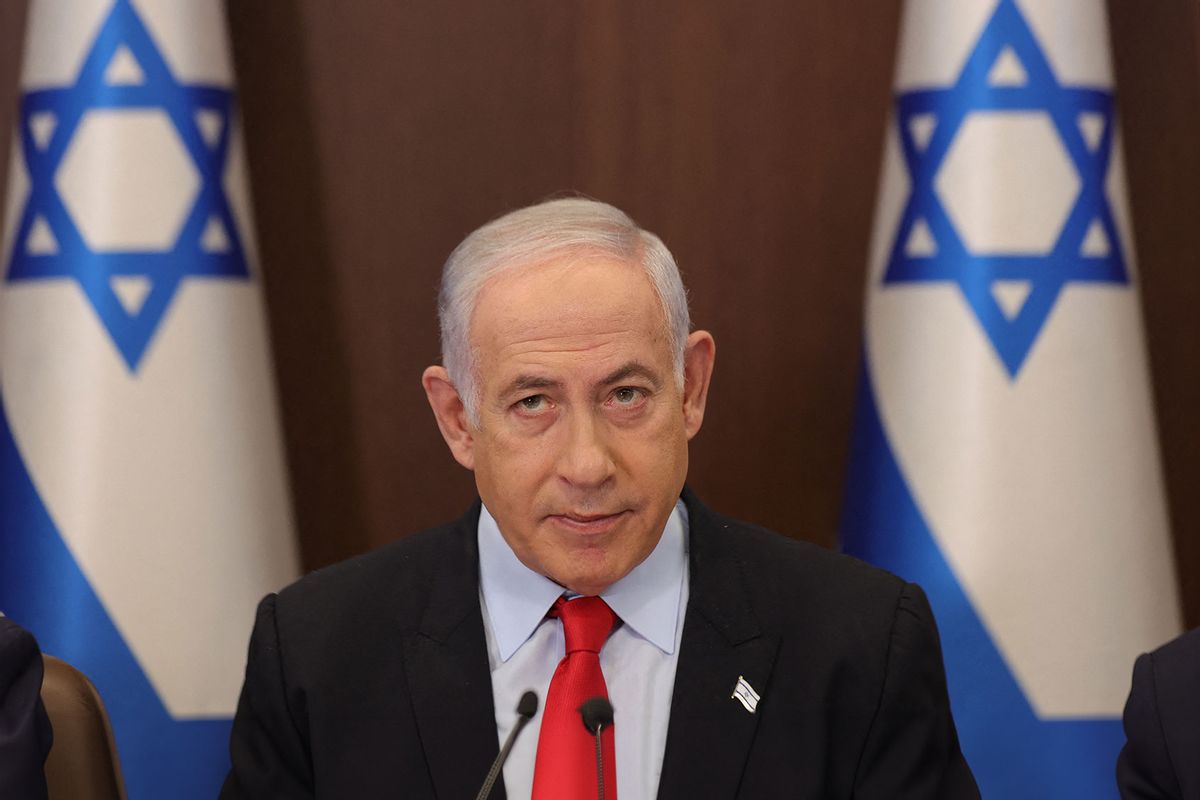

Israeli Prime Minister Benjamin Netanyahu (ABIR SULTAN/POOL/AFP via Getty Images)


Jan Egeland, secretary-general of the Norwegian Refugee Council, comments on Israel's military offensive in Rafah.


"Israel's military offensive in Rafah could lead to the deadliest phase of this conflict, inflicting horrific suffering on approximately 1.4 million displaced civilians in the area," 


"The relocation orders issued by Israel today to thousands of Gazans, directing them to move to Al-Mawasi, are beyond alarming. The area is already overstretched and devoid of vital services. It lacks the capacity to house the number of people currently seeking refuge in Rafah, with no assurances of safety, proper accommodation, or return once hostilities end for those forced to relocate."


"The absence of these fundamental guarantees of safety and return, as required by international humanitarian law, qualifies Israel's relocation directives as forcible transfer, amounting to a serious violation of international law," Egeland said. "Any Israeli military operation in Rafah—which has become the largest cluster of displacement camps in the world—will cause potential mass atrocities." (Johnson, n.d.)


An article in the Economist raises questions of war crimes that may be committed by Israel in areas of discrimination between civilians and combatants and the proportionate use of force.


Those appalled by the suffering in Gaza may argue that genocide was the only charge that could be brought, because the ICJ has no jurisdiction over other war crimes. Yet the focus on an implausible crime diverts attention from the possibility that Israel is breaching the laws of war. These require Israel to distinguish between civilians and combatants and to minimise civilian casualties by being proportionate in the use of force.


The death toll of women and children raises grave doubts over whether Israel is meeting these obligations. It may also be failing to meet its duty under the Geneva Convention to provide medicine and food to civilians in the areas it occupies. As Gaza nears famine, its people do not need grandstanding, they need food. Israel’s leaders need to realise that if they block supplies, they will be held accountable by the court of public opinion—the only court available. (Charging Israel With Genocide Makes a Mockery of the ICJ, 2024)


Alexander Ward, Lara Seligman, and Erin Banco report for Politico that the US fears Israel is speeding up the Rafah invasion timeline.


The events present a precarious moment for Biden, who has repeatedly urged Israel to refrain from a full-scale invasion of Rafah without a comprehensive civilian protection plan in place. He faces the possibility of having to more openly break with Netanyahu, which would involve insisting he pull back from sending thousands of Israeli soldiers into a treacherous war zone where about 3,000 Hamas fighters hide in a sprawling tunnel network.


Defense Secretary Lloyd Austin spoke with his Israeli counterpart, Minister of Defense Yoav Gallant, on Sunday after Hamas fired 10 projectiles from the area adjacent to the Rafah crossing, toward the Kerem Shalom humanitarian crossing, according to an Israeli readout of the call.


President Joe Biden spoke with Prime Minister Benjamin Netanyahu on Monday in a quickly scheduled call, National Security Council spokesperson Adrienne Watson confirmed, a sign the White House moved swiftly to get a grasp of the situation.


“We continue to believe that a hostage deal is the best way to preserve the lives of the hostages, and avoid an invasion of Rafah, where more than a million people are sheltering. Those talks are ongoing now,” NSC spokesperson Watson said.


Prime Minister Benjamin Netanyahu delivered a fiery address Sunday marking Israel’s Holocaust memorial day, vowing that his nation would move forward with plans to militarily defeat Hamas with or without international support: “If Israel is forced to stand alone, Israel will stand alone.” (Ward et al., n.d.)


If Israel is dangerously close to violations of humanitarian law and demonstrations in the United States, in an election year, raise concerns about Biden’s policy on the war, the restriction of military and financial aid to Israel may be a necessary political and humanitarian option especially if the Rafah incursion risks allied support for Israel.


References


Charging Israel with genocide makes a mockery of the ICJ. (2024, January 18). The Economist. Retrieved May 6, 2024, from https://www.economist.com/leaders/2024/01/18/charging-israel-with-genocide-makes-a-mockery-of-the-icj 


Johnson, J. (n.d.). Israel defies US, begins forced evacuation of Rafah as advocates warn there’s “nowhere safe to go”. Salon. Retrieved May 7, 2024, from https://www.salon.com/2024/05/06/israel-defies-us-begins-forced-evacuation-of-rafah-as-advocates-warn-theres-nowhere-safe-to-go_partner/ 


Ward, A., Seligman, L., & Banoc, E. (n.d.). US fears Israel speeding up Rafah invasion timeline after deadly Hamas attack. Politico. Retrieved May 7, 2024, from https://www.politico.com/news/2024/05/06/us-israel-rafah-invasion-hamas-attack-00156256 


Friday, February 2, 2024

Israel-Palestine conflict History with UNRWA

The recent intention expressed by the United States and many of it’s allies, including Canada, to suspend funding for the United Nations’ Relief and Works Agency (UNRWA) may lead to increased suffering and death of Palestinians. A review of the history of the relationships involving Israel, the Palestinians, and Hamas may help our understanding of some of the backstory to this crisis.


Palestinian refugees queue for food distributed by the UN Relief and Work Agency for Palestinian refugees at a camp in Gaza, 9 November 1956 (Rene Jarland/AFP)


Jonathan Cook, an award-winning British journalist based in Nazareth, Israel, for 20 years, is the author of three books on the Israel-Palestine conflict.


Cook reports in his blog that leading western states, the UK among them, have decided to freeze funding to the United Nations’ Relief and Works Agency (UNRWA), the main channel by which the UN disseminates food and welfare services to the most desperate and destitute Palestinians. The funding cut – which has been also adopted by Germany, France, Japan, Switzerland, Canada, Netherlands, Italy, Australia and Finland – was imposed even though the International Court of Justice (ICJ) ruled on Friday that Israel may be committing genocide in Gaza.


The UN immediately sacked all the accused staff, seemingly without due process. We can assume that was because the refugee agency was afraid its already threadbare lifeline to the people of Gaza, as well as millions of other Palestinian refugees across the region – in the West Bank, Lebanon, Jordan and Syria – would be further threatened. It need not have worried. Western donor states cut their funding anyway, plunging Gaza deeper into calamity.


They did so without regard to the fact their decision amounts to collective punishment: some 2.3 million Palestinians in Gaza face starvation and the spread of lethal disease, while another 4 million Palestinian refugees across the region are at imminent risk of losing food, health care and schooling. (Cook, 2024)


Ironically, Cook presents history that points to the UNRWA being Israel’s creature: it was set up to keep the Palestinians a case apart, an anomaly.


UNRWA is separate from the UN’s main refugee agency, the UNHCR, and deals only with Palestinian refugees. Although Israel does not want you to know it, the reason for there being two UN refugee agencies is because Israel and its western backers insisted on the division back in 1948. Why? Because Israel was afraid of the Palestinians falling under the responsibility of the UNHCR’s forerunner, the International Refugee Organisation. The IRO was established in the immediate wake of the Second World War in large part to cope with the millions of European Jews fleeing Nazi atrocities.


Israel did not want the two cases treated as comparable, because it was pushing hard for Jewish refugees to be settled on lands from which it had just expelled Palestinians. Part of the IRO’s mission was to seek the repatriation of European Jews. Israel was worried that very principle might be used both to deny it the Jews it wanted to colonise Palestinian land and to force it to allow the Palestinian refugees to return to their former homes. So in a real sense, UNRWA is Israel’s creature: it was set up to keep the Palestinians a case apart, an anomaly. (Cook, 2024)


Cook makes the case that Israel’s efforts to get rid of UNRWA are not new.


They date back many years. For a number of reasons, the UN refugee agency is a thorn in Israel’s side – and all the more so in Gaza. Not least, it has provided a lifeline to Palestinians there, keeping them fed and cared for, and providing jobs to many thousands of local people in a place where unemployment rates are among the highest in the world. It has invested in infrastructure like hospitals and schools that make life in Gaza more bearable, when Israel’s goal has long been to make the enclave uninhabitable. UNRWA’s well-run schools, staffed by local Palestinians, teach the children their own history, about where their grandparents once lived, and of Israel’s campaign of dispossession and ethnic cleansing against them. That runs directly counter to the infamous Zionist slogan about the Palestinians’ identity-less future: “The old will die and the young forget.” (Cook, 2024)


As a number of Israel's allies cut funding to the refugee body, Alex MacDonald reporting for the Middle East Eye (MEE) looks at its turbulent history with the international community.


In 2018, Prime Minister Benjamin Netanyahu called for responsibility for Palestinian refugees to fall under the UNHCR, claiming that Unrwa "perpetuates the Palestinian refugee problem" by giving refugee status to Palestinians with citizenship of other countries.


The move would see millions of the roughly 5.7 million Palestinians stripped of their refugee status, undermining the right of return - enshrined by United Nations General Assembly Resolution 194 - by Palestinian refugees and their descendants to the homes they were expelled from in 1948.


Despite the allegations of ties to Hamas in Gaza, the relationship between Unrwa and the Palestinian group has often been strained - although officials have repeatedly stressed that coordination between the two is necessary by virtue of practicality, Hamas has at times intervened in the education curriculum and shut down activities it sees as conflicting with its conservative agenda. 


There have also been repeated accusations that Hamas requisitioned vehicles and facilities from UNRWA for its own purposes. (MacDonald, 2024)


The history of tension between UNRWA and Israel and the strained relations between UNRWA and Hamas indicates that rushing to suspend the work of this agency will inflict collective punishment on Palestinian non-combatants who are in emergency need of food and medical supplies.


References

Cook, J. (2024, January 30). In waging war on the UN refugee agency, the West is openly siding with Israeli genocide. Jonathan Cook. Retrieved February 2, 2024, from https://www.jonathan-cook.net/blog/2024-01-30/war-un-refugee-israel-genocide/ 

MacDonald, A. (2024, January 29). Israel, Unrwa and the West: A history of claims and cuts. Middle East Eye. Retrieved February 2, 2024, from https://www.middleeasteye.net/news/unrwa-budget-cuts-history-israel-west 


Thursday, January 12, 2023

Healthcare in Nova Scotia and Kenya

As Nova Scotia prepares to welcome continuing care assistant health care professionals from Kenya to increase the number of primary care workers in our Province, at a time when we are in serious need of more support for our residents, we may, at the same time, be reducing the ability of the healthcare system in Kenya to respond to health needs in that country.


Help for Health Care


The World Population Review website has published rankings of the world’s health care systems by Lisa Brown writing in CEOWORLD magazine, a highly-respected business publication covering everything important to ​CEOs, senior executives, business leaders, and high net worth individuals, from business to finance, politics to economics, lifestyle to travel, both at home in the United States and globally.


Rank

Country

Health Care Index (Overall)

Infrastructure

Professionals

Cost

Medicine Availability

Readiness

1

South Korea

78.72

87.16

14.23

83.59

82.3

87.89

2

Taiwan

77.7

79.05

13.06

78.39

78.99

65.09

3

Denmark

74.11

90.75

30.01

82.59

92.06

96.3

23

Canada

48.64

62.39

16.89

55.73

52.91

89.75

70

Kenya

35.16

69.92

16.86

53.1

51.23

89.62

71

Kuwait

35.09

89.14

15.32

70.55

89.2

88.98

72

Dominican Republic

34.97

66.12

21.08

51.05

62.85

92.5

89

Venezuela

32.42

71.39

17.16

52.53

53.7

89.84


Partial list from Countries With The Best Health Care Systems


Canada is rated at number 23 in this list and Kenya is number 70. Professionals in health care are rated at just below 17 for both countries. (Brown, 2021)


These numbers beg the question about the effect on Kenya by the immigration of skilled and capable health professionals to Nova Scotia.


Lara Yacoub and Solomon Johnson writing for Spheres of Influence, a non-profit digital publication dedicated to highlighting underreported stories in global affairs and amplifying marginalized voices, report on what the closure of the Dadaab and Kakuma refugee camps means for residents.


Health Care, for example, is an area of particular concern due to the loss of services that many refugees rely on. According to Médecins Sans Frontières (MSF), in Dagahaley alone, one of the three divisions of the ​​Dadaab refugee complex, over 300 people require regular medication for “chronic diseases such as HIV/AIDS, tuberculosis, and a variety of cancers, as well as neurological disorders.” 


Additionally in Dagahaley, about 50 people “require continued care for diabetes,” including the supply of insulin, a medication many are likely to not have access to after the closure of these camps. MSF also carries out about 700 “life-saving surgeries per year in this area of the camp, such as vital cesarean sections for mothers. (Yacoub & Johnson, 2022)


The Nova Scotia Office of Healthcare Professionals Recruitment / Labour, Skills and Immigration

has announced that more continuing care assistants will soon be moving to Nova Scotia to work, the result of a recent recruiting trip to Kenya. 


“One of the biggest challenges we face is finding the right healthcare professionals to fill the vacancies we have across Nova Scotia,” said Health and Wellness Minister Michelle Thompson, the Minister responsible for the Office of Healthcare Professionals Recruitment. “There are talented and skilled people around the world who would love to come here, and we would love to have them.”


The Province led the trip to a Kenyan refugee camp in partnership with the United Nations High Commission for Refugees, Health Association of Nova Scotia, and MacLeod Group, which provides senior care across Atlantic Canada, as well as refugee-focused charities The Shapiro Foundation and RefugePoint.


The new continuing care assistants are expected to start arriving in mid-2023 and will work in the continuing care sector in communities across the province. (Healthcare Workers Coming to Nova Scotia From Kenya, 2023)


The details of the possibility of refugee health care personnel to find work in Kenya, the possibility of education and experience in Canada for the refugees to return to Kenya better equipped to serve that country, and the degree to which we value the choice of these refugees to choose life in Canada even if they are in greater need in East Africa, are some of the ethical and moral aspects of this emigration that helps first world Canada and may disadvantage people of the Global South.


References

Brown, L. (2021, April 27). Revealed: Countries With The Best Health Care Systems, 2021. CEOWORLD magazine. Retrieved January 12, 2023, from https://ceoworld.biz/2021/04/27/revealed-countries-with-the-best-health-care-systems-2021/ 

Healthcare Workers Coming to Nova Scotia from Kenya. (2023, January 4). Government of Nova Scotia. Retrieved January 12, 2023, from https://novascotia.ca/news/release/?id=20230104001 

Yacoub, L., & Johnson, S. (2022, February 10). What the Closure of the Dadaab and Kakuma Refugee Camps Means for Residents. Spheres of Influence. Retrieved January 12, 2023, from https://spheresofinfluence.ca/what-the-closure-of-the-dadaab-and-kakuma-refugee-camps-means-for-residents/