Showing posts with label experts. Show all posts

Tuesday, March 30, 2021

Planet care by the Church with environmental experts


This article explores the role of members of Church communities to support the common good in the challenge of living sustainably as we respond to the developing climate emergency.


Knox United Church Lower Sackville

Kevin Moynihan of KM Productions, a Halifax based fully equipped production company, shares “Laudato Si’ + 5: See, Judge, Act”. This review of our progress engaging with the 2015 Encyclical of Pope Francis, “Laudato Si”,under the Catholic Social Teaching tradition of See, Judge, and Act offers a reminder of the need for action on Water Shortage, Climate Change, and Loss of Biodiversity and hope in sharing the work of individuals and organizations involved in taking action today.1


Dr Lorna Gold shares a talk on Pope Francis & Ecology - "Laudato Si': We have only one heart", It was hosted by the Edinburgh Jesuit Centre.
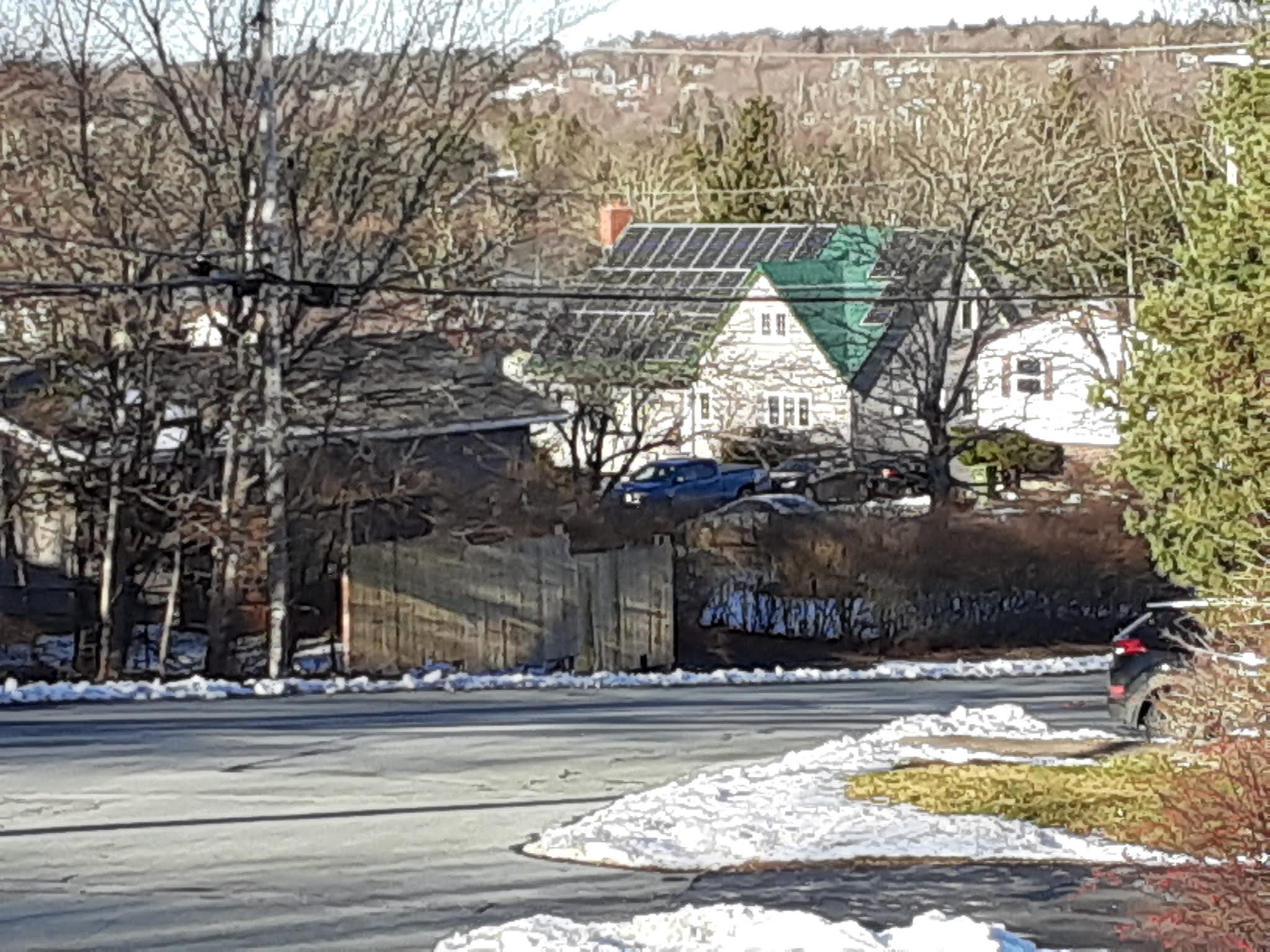
Residence installation in Lower Sackville 


Solar Nova Scotia Discussion, a public group on Facebook, has recorded several installations of solar panels on church buildings.


St. Luke's United Church Tantallon


Rockingham United Church

Young economists and entrepreneurs are gearing up for “The Economy of Francesco” event.


Anna Maria Geogy, a teacher in India, says the event hopes to give a soul to the global economy by inspiring younger generations to put human dignity in first place.2

The Professional Engineers of Ontario have published the Engineers Canada publication on National guideline on sustainable development and environmental stewardship for professional engineers.


The practice of engineering continues to evolve over time through a process of continuous improvement as illustrated in Figure 1. This includes not only the technology but also the human aspects. Pursuit of the idea of “public good” through sustainable development contributes to the long-term benefit of society, the economy and the environment. Government provides some guidance under various pieces of legislation that helps with continuous improvement and the pursuit of “public good”. As subject matter experts, engineers can have considerable influence on how an issue is dealt with on behalf of their clients. There are few unambiguous standards to guide them and it is here where the role of engineering judgement comes into play. Engineering and related disciplines also need to utilize expertise from other professions such as planning, economics, the social sciences, finance and law. Collectively these professions will be instrumental in realizing sustainable development and environmental stewardship.3

Guideline #5 involves costing and Economic Evaluation. It recommends that engineers should assess the costs and benefits of environmental protection, eco-system components, and sustainability in evaluating the economic viability of the work.


The engineering objective is to secure the most sustainable solution that can be cost-effectively obtained. In practice the profession is competitive and subject to many competing interests that constrain system wide and life-cycle thinking. When engineers undertake work, a balance between doing a thorough job against pressures to control costs and meet deadlines must be achieved. Engineers are responsible for the technical detail that will form the basis for costing developments, even if the overall decisions about proceeding with a development are the responsibility of others. Consideration of the full scope of environmental costs at the earliest possible stage of project development can often provide considerable cost savings, compared to retrofitting or Envision™ (USA) provides a holistic framework for evaluating and rating the community, environmental and economic benefits of all types and sizes of infrastructure projects to assess the sustainability indicators over the course of the project's life cycle.3

Church communities have moved to support the common good and subject matter experts in economics and engineering are prepared to use science and mathematics to guide decisions in this work.


References


1

(n.d.). KM Productions. Retrieved February 24, 2021, from http://www.kmproductions.ca/ 

2

(2020, November 16). Economy of Francesco: 'A better global system starts with each of us .... Retrieved March 29, 2021, from https://www.vaticannews.va/en/vatican-city/news/2020-11/economy-francesco-interview-india-anna-maria-geogy.html 

3

(n.d.). Guideline on Sustainable Development and Environmental ... - PEO. Retrieved March 30, 2021, from https://www.peo.on.ca/sites/default/files/2020-03/Guideline-Sustainable-Development-And-Environmental-Stewardship.pdf 

Wednesday, October 2, 2019

Adjusting the numbers

The current election campaign suffers, like the climate emergency itself, from information from sources that is not in agreement with the facts prepared by scientific and economic experts.
Checking an error


According to an Ipsos poll reported by Global News, Canadians want to stop climate change — but half don’t want to pay an extra cent.
“There’s a big difference here between intent and behaviour,” said Sean Simpson, vice president of Ipsos...Ipsos also looked at how much all average voters who identify with one of the main parties are willing to pay, and it was voters who identify as Green supporters who were willing to pay the most with an average of $701. NDP voters on average said they would be willing to pay $375, while Liberal supporters said they would be willing to pay an extra $326. Bloc Quebecois and Conservative voters had the lowest averages of $254 and $206, respectively.1
Shawn McCarthy provides the actual numbers for the claim that “we can shut down our economy tomorrow morning and within a matter of weeks China would replace all of our emissions.”
In 2017, China added 4,614 megatonnes of annual carbon emissions to reach 10,877 MT. That’s an annual average growth of 384 MT. Canada’s accounted for 716 MT of GHGs in 2017. So China’s recent growth represents two years of Canadian emission, not weeks worth.2 
The CBC checks with experts on the claim that British Columbia's carbon tax hasn't worked.
Between 2005 and 2017, British Columbia's population and economy grew significantly. In that respect, it is notable that B.C.'s emissions didn't also rise. (Over the same period, Alberta's emissions rose by 18 per cent.)
But to properly assess the impact of the carbon tax, you have to consider a counterfactual scenario in which the carbon tax was not in place.
Multiple studies have considered that question and those studies found the carbon tax was responsible for a decrease in fuel consumption and emissions. A study in 2016 linked the carbon tax with the purchase of more fuel-efficient vehicles.
"The primary objective of the B.C. carbon tax is to reduce GHG emissions and essentially all studies show it is doing just that, with reductions 5–15 per cent below the counterfactual reference level," concluded a 2015 survey of published research.
A reduction of five to 15 per cent is not enough, on its own, to achieve Canada's international target, but it would be a significant contribution. The federal price is currently scheduled to reach $50 per tonne.
In their own defence, the Conservatives point to a study which observed that demand for diesel fuel was inelastic — that is, it is less likely to be impacted by changes in price. But even that study estimated that the carbon tax in British Columbia had reduced the per capita use of diesel.3 
It seems that political pronouncements will be made based on inaccurate numbers. Our role as critical thinking Canadians is to seek the numbers from experts who can “show their work” in coming to their conclusions.

References

1
(2019, September 26). Canadians want to stop climate change - Global News. Retrieved September 27, 2019, from https://globalnews.ca/news/5948758/canadians-climate-change-ipsos-poll/ 
2
(2019, September 30). In confronting climate change, Canada needs responsibility .... Retrieved October 1, 2019, from https://ipolitics.ca/2019/09/30/in-confronting-climate-change-canada-needs-responsibility-and-leadership/ 
(2019, October 2). Scheer says British Columbia's carbon tax hasn't worked .... Retrieved October 2, 2019, from https://www.cbc.ca/news/politics/scheer-british-columbia-carbon-tax-analysis-wherry-1.5304364