An article in the Economist comments that ON MAY 14TH 1948, in its Declaration of Independence, Israel embraced universal human rights “irrespective of religion, race or sex”.

(https://ponderpatterns.blogspot.com/2024/05/numbers-propaganda.html)
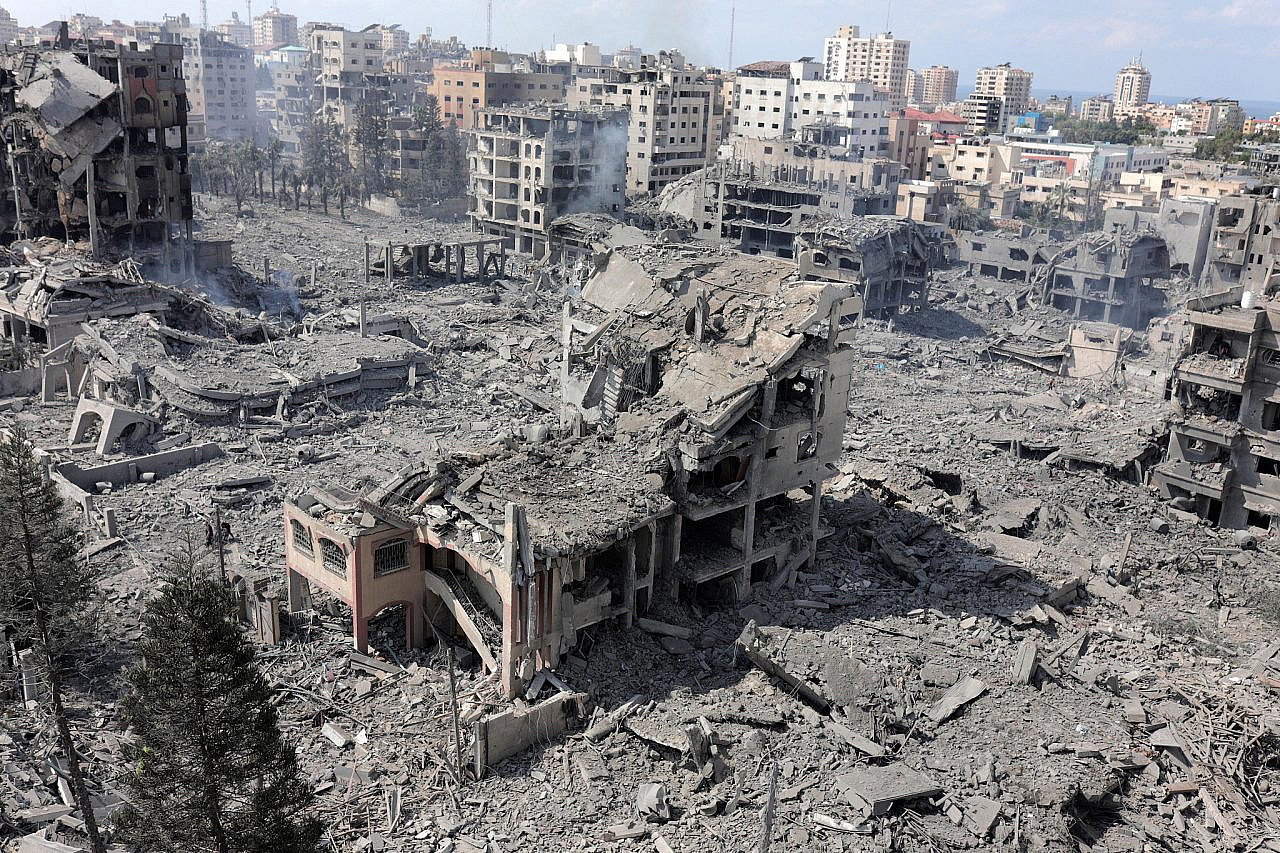
The Economist Leaders article on the War in Gaza explains “Why Israel must hold itself to account.” The founding vision of Israel and the laws of war are under attack in Gaza. In its bombed and barren landscape the fate of both lies in the balance.
Gaza shows how this vision is failing. The laws of war are being broken and the system for upholding them is not working. However, that failure does not exonerate Israel from having to answer for its actions in Gaza, including war crimes and crimes against humanity. Indeed, its foundations as a liberal democracy demand that it must.
Worse, Israel’s government, despite its duties as an occupying power, has used the distribution of food to civilians as a weapon against Hamas. It continued even when, as predicted, that led to starvation and the death of desperate people queuing for survival rations. By corralling civilians in pockets as it systematically bulldozes their homes, Israel is also practising ethnic cleansing.
It is not too late. The urgent test is whether Israel floods Gaza with food and medicine in order to stop the incipient famine. It should also agree on a ceasefire, which will enable it to recover its hostages. The second, longer-term test will be whether it sets up a truly independent commission of inquiry after the war ends, probably under a new prime minister. (The Economist Leaders Article, 2025)
David Gritten in London and Imogen Foulkes in Geneva reporting for the BBC comment that a United Nations commission of inquiry says Israel has committed genocide against Palestinians in Gaza.
The Israeli military launched a campaign in Gaza in response to the unprecedented Hamas-led attack on southern Israel on 7 October 2023, in which about 1,200 people were killed and 251 were taken hostage. At least 64,905 people have been killed in Israeli attacks in Gaza since then, according to the territory's Hamas-run health ministry.
Most of the population has also been repeatedly displaced; more than 90% of homes are estimated to be damaged or destroyed; the healthcare, water, sanitation and hygiene systems have collapsed; and UN-backed food security experts have declared a famine in Gaza City.
The 72-page document alleges that Israeli authorities and Israeli security forces have committed and are continuing to commit four of the five acts of genocide defined under the 1948 Genocide Convention against a national, ethnic, racial or religious group - in this case, Palestinians in Gaza:
Killing members of the group through attacks on protected objects; targeting civilians and other protected persons; and the deliberate infliction of conditions causing deaths
Causing serious bodily or mental harm to members of the group through direct attacks on civilians and protected objects; severe mistreatment of detainees; forced displacement; and environmental destruction
Deliberately inflicting conditions of life calculated to bring about the destruction of the group in whole or in part through destruction of structures and land essential to Palestinians; destruction and denial of access to medical services; forced displacement; blocking essential aid, water, electricity and fuel from reaching Palestinians; reproductive violence; and specific conditions impacting children
Imposing measures intended to prevent births through the December 2023 attack on Gaza's largest fertility clinic, reportedly destroying around 4,000 embryos and 1,000 sperm samples and unfertilised eggs (Gritten & Foulkes, n.d.)
William Christou in Beirut and agency reporters for the Guardian reveal that the US secretary of state, Marco Rubio, said sanctions were imposed on the rights monitors for having “directly engaged in efforts by the International Criminal Court to investigate, arrest, detain or prosecute Israeli nationals, without Israel’s consent”.
Days earlier, the world’s leading genocide scholars’ association said Israel’s actions in Gaza met the legal definition of genocide, an accusation Israel has denied.
The groups asked the ICC in November 2023 to investigate Israeli airstrikes on densely populated civilian areas of Gaza, the siege of the territory and displacement of the population.
Since filing the lawsuit, the humanitarian conditions in Gaza have worsened significantly, with the territory facing a starvation crisis and more than 80% of its infrastructure destroyed by Israeli bombing. At that point, nearly 10,000 Palestinians had been killed in Gaza – the number of dead is now more than 64,000.
Two weeks ago, an Israeli strike on Nasser hospital in southern Gaza that killed 22 people, including five journalists, raised further questions about Israel’s conduct in the strip.
An investigation released by the Associated Press on Friday cast doubt on Israel’s explanation that its forces had struck a position that was well known as a journalists’ gathering point because they believed a camera on the roof was being used by Hamas to observe troops. The AP said it had gathered new evidence indicating the camera in question actually belonged to a Reuters video journalist who was killed in the initial strike.
The agency noted it had repeatedly informed the army its journalists were stationed there, and that its investigation showed that troops used high-explosive tank shells to strike the hospital, instead of more precise guided weapons that might have resulted in fewer casualties.
It said that soon after the first strike, Israeli forces had hit the same position again, after medical and emergency workers had reached the scene to treat the injured. The timing was reminiscent of the “double-tap” technique used by al-Qaida and by forces of the former Syrian president Bashar al-Assad, and others.
The three rights organisations released a joint statement condemning the sanctions, which they described as “immoral, illegal and undemocratic”. (Christou, 2025)
Anna Ahronheim, in an article for the Jerusalem Post, interviewed a former IDF senior officer. After years of silence, the officer, once a key architect of the IDF’s digital transformation, explained how the IDF rewired the battlefield for the first AI war.
Seven years ago, the IDF was still shackled to legacy systems, using fax machines, outdated servers, and siloed intelligence.
Lt.-Gen. (ret.) Aviv Kohavi, the chief of staff at the time, envisioned something radically different: a battlefield where cyber, air, sea, and ground forces operated as one, connected by real-time data and precision targeting. The digital transformation of the IDF was one of Kohavi’s top priorities when he began his term – not only to further strengthen the military but to provide the most advanced capabilities for its troops.
Citing the Yom Kippur War, the former senior officer said troops “fought pretty much alone, with support being slow to arrive.” But with the digital transformation, he said, ground troops can call in the target, and it would be struck by the platform best suited to take it out a short time later.
“We implemented AI in order to differentiate between civilians and terrorists,” he said. “We harness AI and technology to focus on the hostile forces.”
Critics also say the use of AI to reduce civilian deaths is highly contested, with several investigations finding that AI systems have wrongly identified targets after using faulty data and flawed algorithms.
But the former senior officer pushed back hard on that, calling it “a lie.”
“AI and technology allow you to be more moral,” he said. “Intelligence and precision together allow for a different moral standard. We are implementing and incorporating AI in order to differentiate between civilians and terrorists, and the main rule in international law is the principle of differentiation between fighters and noncombatants.” (Ahronheim, 2025)
Yuval Abraham, a journalist and filmmaker based in Jerusalem, in an article for +972 magazine, in partnership with Local Call, reports that the Israeli army has marked tens of thousands of Gazans as suspects for assassination, using an AI targeting system with little human oversight and a permissive policy for casualties.
A new investigation by +972 Magazine and Local Call reveals that the Israeli army has developed an artificial intelligence-based program known as “Lavender.”
Formally, the Lavender system is designed to mark all suspected operatives in the military wings of Hamas and Palestinian Islamic Jihad (PIJ), including low-ranking ones, as potential bombing targets. The sources told +972 and Local Call that, during the first weeks of the war, the army almost completely relied on Lavender, which clocked as many as 37,000 Palestinians as suspected militants — and their homes — for possible air strikes.
“We were not interested in killing [Hamas] operatives only when they were in a military building or engaged in a military activity,” A., an intelligence officer, told +972 and Local Call. “On the contrary, the IDF bombed them in homes without hesitation, as a first option. It’s much easier to bomb a family’s home. The system is built to look for them in these situations.”
The Lavender machine joins another AI system, “The Gospel,” about which information was revealed in a previous investigation by +972 and Local Call in November 2023, as well as in the Israeli military’s own publications. A fundamental difference between the two systems is in the definition of the target: whereas The Gospel marks buildings and structures that the army claims militants operate from, Lavender marks people — and puts them on a kill list.
In addition, according to the sources, when it came to targeting alleged junior militants marked by Lavender, the army preferred to only use unguided missiles, commonly known as “dumb” bombs (in contrast to “smart” precision bombs), which can destroy entire buildings on top of their occupants and cause significant casualties. “You don’t want to waste expensive bombs on unimportant people — it’s very expensive for the country and there’s a shortage [of those bombs],” said C., one of the intelligence officers. Another source said that they had personally authorized the bombing of “hundreds” of private homes of alleged junior operatives marked by Lavender, with many of these attacks killing civilians and entire families as “collateral damage.”
B., a senior officer who used Lavender, echoed to +972 and Local Call that in the current war, officers were not required to independently review the AI system’s assessments, in order to save time and enable the mass production of human targets without hindrances.
“Everything was statistical, everything was neat — it was very dry,” B. said. He noted that this lack of supervision was permitted despite internal checks showing that Lavender’s calculations were considered accurate only 90 percent of the time; in other words, it was known in advance that 10 percent of the human targets slated for assassination were not members of the Hamas military wing at all. (Abraham, n.d.)
The superior technology of the IDF has probably contributed to a reduced casualty count for the Israeli forces in the war in Gaza. The horrendous death toll in the Palestinian community raises serious concerns about the possible lack of attention to Discrimination and Proportionality that is a requirement under International Humanitarian Law (IHL). Armed Forces with sophisticated tools that could be used to reduce collateral casualties are more accountable for war crimes that result when techniques to reduce civilian harm are ignored.
References
Abraham, Y. (2024, April 3). 'Lavender': The AI machine directing Israel's bombing spree in Gaza. +972 Magazine. Retrieved September 17, 2025, from https://www.972mag.com/lavender-ai-israeli-army-gaza/
Ahronheim, A. (2025, September 17). How the IDF rewired the battlefield for the first AI war - interview. The Jerusalem Post - All News from the Middle East, Israel, and the Jewish World. Retrieved September 17, 2025, from https://www.jpost.com/
Christou, W. (2025, September 4). US imposes sanctions on Palestinians for requesting war crimes inquiry. The Guardian. Retrieved September 17, 2025, from https://www.theguardian.com/world/2025/sep/04/us-sanctions-palestinian-human-rights
The Economist Leaders Article. (2025, August 7). Why Israel must hold itself to account. The Economist. Retrieved September 17, 2025, from https://www.economist.com/leaders/2025/08/07/why-israel-must-hold-itself-to-account
Gritten, D., & Foulkes, I. (n.d.). BBC News - Breaking news, video and the latest top stories from the U.S. and around the world. BBC. Retrieved September 17, 2025, from https://www.bbc.com/news/