Showing posts with label ACORN. Show all posts

Tuesday, November 26, 2024

Tenants in Transition

A walk through many neighbourhoods of Halifax Regional Municipality will show construction of housing underway in new multi unit buildings that have capacity for hundreds of people to live. The target residents for this new construction are not likely to be those most in need of adequate shelter. Fixed term leases have become more common and rent increases have not been capped at levels needed to ensure tenants can expect to be able to continue to finance housing which should be a right for all in Canada.


Transition to Adequate Housing


ACORN Canada news and events presents an article by Brendyn Creamer written for The Coast that reports the NSNDP promises to scrap fixed-term leases and lower rent cap if elected.


In a press release on Oct 31, party leader Claudia Chender said if the NDP form the next government, they would ban fixed-term leases. This practice allows landlords to boot tenants after their lease is up and increase the rent of units, effectively bypassing the 5% annual rent cap enacted by premier Tim Houston’s government.


Chender also said she would cut the cap in half, meaning yearly increases to rent would not be more than 2.5% of what tenants are already paying. She says she would do this immediately.


The release notes that rent increased 18% last year on average, and that the typical one-bedroom apartment costs $2,000 per month in Nova Scotia. They also said the vacancy rate is 1%. The CMHC’s 2023 rental market report shows that the vacancy rate in Halifax last year was 1%, and noted that the average two-bedroom apartment rent is $1,628—up from 11% the previous year, although other sources claim that it has only become worse in 2024. (ACORN Canada, n.d.)


Social Housing & Human Rights, a coalition of organizations and individuals advocating for more federal investment in social housing in Canada, reports that more than 2.68 million Canadians are in core housing need – unable to find a home that meets the acceptable housing standards of adequacy, suitability and affordability.


Adequate

Housing is considered adequate if it is not in need of major repairs.


Suitable

Housing is considered suitable if there are enough bedrooms for the size and make-up of the resident household.


Affordable

Housing is considered affordable if it costs less than 30% of before-tax household income.


Some groups are harder hit than others. Women-led single parent households, racialized and newcomer families, people with disabilities, and First Nations, Metis, and Inuit households are over-represented in core housing need. (Social Housing and Human Rights, n.d.)


Andrew Lam  of CBC News reveals that Killam, one of Canada’s largest residential landlords, reports 'largest rental gains' on new leases in the company's history in the most recent update. Rents increased the most on new leases in Halifax, Saint John and Moncton.

Like other landlords, Killam boosts rents to the market rate when new tenants sign a lease, pushing the reported average rent increase above Nova Scotia's five per cent cap. The cap only applies to lease renewals.


Killam's financial results are an example of the overall trends we've been seeing in recent years in rental markets where there's been inadequate housing supply, said Neil Lovitt, a vice-president with Turner Drake, a real estate consulting company.


"That creates an opportunity for for-profit housing providers to raise rents to market prices when they have an opportunity to do so," Lovitt said. "They're … doing what any market participant really can do." (Lam, n.d.)


Andrew Lam of  CBC News reports that Killam Apartment REIT, based in Halifax, is one of Canada’s largest residential landlords, owning, operating, managing and developing a diverse portfolio of apartments, manufactured homes and seasonal properties.


The Killiamreit website presents information about their Affordable Housing.


We’re committed to providing clean, safe, accessible housing for everyone, regardless of age, background or income level. That’s why Killam partners with many non-profit housing and government agencies to offer over 800 subsidized units in our communities. (Killam Apartment REIT, n.d.)


Subsidized units in Nova Scotia may be a good long term solution to our housing needs. The work to date to provide “pallet homes” has begun a transition from living rough and tent communities to more adequate housing.


Pallet Home Community


Michael Tutton of the Canadian Press reports for CBC News on a $630,000 installation in Lower Sackville that includes 19 sleeping units, separate washrooms and a laundry facility. Jim Gunn, a board member of Beacon House Shelter, describes the boxy 70-square-foot Pallet shelters — carrying the name of the U.S. company that makes them — as a temporary solution.


"Our greatest concern is that these should never become and be seen as permanent, but there's no affordable housing," the retired educator said during a recent tour of the property in Lower Sackville, about three weeks after it opened. "These shelters will stay here until we find someplace else people can go." (Tutton, 2024)


Cassidy McMackon, of the Canadian Press, writing for Global News reports that a village of tiny homes is set to open next month in a Halifax suburb, the latest project by the provincial government to address homelessness.


A Village of Tiny Homes


Located in Lower Sackville, N.S., the tiny home community will house up to 34 people when the first 26 units open Nov. 4.


Another 35 people are scheduled to move in when construction on another 29 units should be complete in December, under a partnership between the province, the Halifax Regional Municipality, United Way Halifax, The Shaw Group and Dexter Construction.


The province invested $9.4 million to build the village and will contribute $935,000 annually for operating costs.


Residents have been chosen from a list of people experiencing homelessness maintained by the Affordable Housing Association of Nova Scotia, the community entity of the federal Reaching Home program for Halifax and rural Nova Scotia. The main objective of Reaching Home is to streamline access to housing and supports for people who are experiencing homelessness or at risk of homelessness, by coordinating local services to achieve community-wide outcomes using real-time data. 


They will pay rent that is tied to their income for a unit that is fully furnished with a private bathroom, shower and a kitchen equipped with a cooktop, small fridge and microwave. (McMackon, 2024)


The work to address homelessness in Nova Scotia is not complete.


The Right to Adequate Housing


The right to housing is honoured when people can transition from “pallet homes” and a Tiny home village to subsidized accommodation like that just across Cobequid Road in a modern apartment building.


Transition from “pallet homes” and a Tiny home village to adequate accomodation


References

ACORN Canada. (n.d.). The Coast: NSNDP promises to scrap fixed-term leases and lower rent cap if elected. ACORN Canada News and Events. https://acorncanada.org/news/the-coast-nsndp-promises-to-scrap-fixed-term-leases-and-lower-rent-cap-if-elected/ 

Killam Apartment REIT. (n.d.). KIlliam's Approach. Home | killam. Retrieved November 26, 2024, from https://killamreit.com/killams-approach 

Lam, A. (n.d.). Killam reports 'largest rental gains' on new leases in company's history in most recent update. CBC News. https://www.cbc.ca/news/canada/nova-scotia/killam-reit-2024-q3-financial-results-1.7390918?cmp=rss 

McMackon, C. (2024, October 24). Homelessness: Tiny home village to open next week in Halifax suburb - Halifax | Globalnews.ca. Global News. Retrieved November 26, 2024, from https://globalnews.ca/news/10828781/tiny-home-village-halifax-suburb/ 

Social Housing and Human Rights. (n.d.). Housing is a human right. https://www.moresocialhousing.ca/ 

Tutton, M. (2024, March 18). Tiny shelter community in Halifax suburb up and running, as province seeks new sites. CBC. Retrieved November 26, 2024, from https://www.cbc.ca/news/canada/nova-scotia/pallet-shelters-halifax-nova-scotia-installed-1.7147652 


Wednesday, November 16, 2022

Affordable housing in Nova Scotia.

In a time of inflation and rising rents, the cost of housing has forced more people in our community into homelessness. Deeply affordable housing is badly needed.


Housing Need in Our Community


Halifax Councillor Waye Mason has expressed that in this time of likely global housing price collapse, high interest rates, and recession we are in need of the government to help preserve our labour force by funding affordable housing construction. His concerns have been expressed in a letter to Nova Scotia Municipal Affairs and Housing Minister, John Lohr.


Finally and most importantly, you are responsible for affordable housing construction in Nova Scotia.  In the election, Premier Houston promised to deliver the Affordable Housing Commission report.  That report talks extensively about the need for social or below-market housing.   I say again to you Minister, the market will not produce below-market housing.


You need to have a massive plan to build affordable housing, and you needed it a year ago.  With the coming global housing price collapse, high-interest rates and recession, there has never been a better time for the government to help preserve our labour force by funding affordable housing construction. (Mason, 2022)


ACORN Canada, an independent national organization of low and moderate income people with 160,000+ members in 20+ neighbourhood chapters across 9 cities, advocates to make housing a right in Canada. 


Housing is a Right!

The Federal Government should enact legislation that clearly establishes the right to secure, adequate and affordable housing:


Affordability:

Ensure that all people pay less than 30% of household income on housing, without risk of eviction.


Multi-jurisdictional leadership from federal government:

Our current housing challenge requires responsibility and action from all levels, bringing to bear the collective set of policy and financial tools at our disposal. This will require leadership at the federal level and a new set of arrangements between federal, provincial, territorial, municipal and First Nations governments.


Full rent control by all provinces.


Federal Government to support municipal implementation of mandatory inclusive zoning in high pressure development.


Minimum standards of maintenance:

It is important that the policy environment encourages re-investment in substandard housing in a way that preserves quality while maintaining affordability. Energy retrofits are win-win, as energy efficiency equals lower costs. This cost reduction needs strong policies to ensure the savings are being passed on to the tenants.

We need the federal government to implement a federal minimum standard of housing, covering the livability of housing for many low-income families across the country. It should include basic standards of maintenance, health standards related to mold and pests, and a minimum enforcement regime for any level of government responsible for housing conditions. Included in this should be support for landlord licensing policies at municipal or provincial levels to enforce the standards created at the federal level. (Gaga & Cooper, 2022)


ACORN on housing

Nova Scotia Municipal Affairs and Housing Minister, John Lohr, announced that the Province provided a low-interest $5.6-million mortgage to the Housing Trust of Nova Scotia to help purchase five existing rental properties. The investment will prevent the potential loss of 295 existing affordable housing units across Halifax Regional Municipality.


“We heard about some of the challenges non-profits face when they see an opportunity to invest in affordable housing, and this new lending program will help preserve and increase affordable housing stock for people and families in need,” said Minister Lohr. “We have seen rental properties purchased by investors and heard the stories of rents being increased out of reach for existing tenants. This program not only prevents further gentrification and loss of affordable housing but also ensures tenants can continue to live in their homes.” (New Lending Program Supports Affordable Housing, 2022)


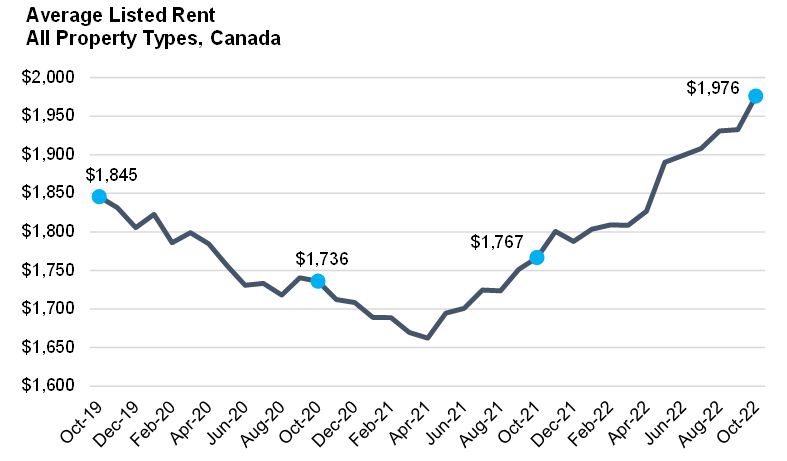
The challenge to reduce the suffering of the homeless in our community requires action that creates homes for people in the most expeditious way.


Source: https://images.rentals.ca/images/image4.width-800.png


The market is not likely to be able to provide units quickly enough that are deeply affordable.


References

Gaga, L., & Cooper, B. (2022, January 17). ACORN’s National Housing Demands. ACORN Canada Housing. Retrieved November 16, 2022, from https://acorncanada.org/housing/ 

Mason, W. (2022, November 15). Correspondence from Councillor Mason to Minister Lohr Regarding Housing. Waye Mason, Councillor. Retrieved November 15, 2022, from https://wayemason.ca/2022/11/15/correspondence-from-councillor-mason-to-minister-lohr-regarding-housing/ 

New Lending Program Supports Affordable Housing. (2022, July 13). Government of Nova Scotia. Retrieved November 16, 2022, from https://novascotia.ca/news/release/?id=20220713002 


Wednesday, February 3, 2021

Concern about the REIT way of housing development

Discussion, political action, and cooperation is required now to implement an Affordable Housing Work Plan for our region.
Affordable housing emergency


Waye Mason, HRM councillor, has expressed the opinion that the market alone will not solve the housing crisis.

 The 2015 Halifax Housing and Homelessness Partnership study showed 20 per cent of residents cannot afford market price rental housing. Halifax’s population has grown nine per cent over the last five years. The number of people who need below-market housing continues to grow with the population, and the number of affordable units has not grown with demand. The market will not solve this problem. Unlike many municipalities in much of the rest of the country, housing in Nova Scotia is delivered by the province. Many other provinces chose to fund municipalities to deliver housing, but that has not been the case in Nova Scotia since 1996. As a result, the Metro Regional Housing Authority is a provincial entity and new affordable units are almost exclusively built at the direction of the province while most federal money goes to the province, not to Halifax1


Affordable housing policy

Housing is increasingly becoming a commodity or a financialized asset. One of the main factors leading to commodification of housing is the growing role of finance in traditionally non- financial sectors such as real estate where housing becomes a publicly traded commodity. In Canada, this phenomenon has resulted in what is known as Real Estate Investment Trusts or REITs. REITs pool the capital of multiple investors to own, operate or finance income-generating real estate. Investors can receive returns on their investments without needing the expertise to buy or manage any properties themselves.
Investment opportunity?


A policy paper by ACORN Canada, a multi-issue, membership-based community union of low- and moderate-income people, reports the rapid growth of REITs is creating and fueling the existing housing crisis.

ACORN recently conducted research[4] to investigate the business practices adopted by CAPREIT - Canadian Apartment Properties Real Estate Investment Trust - the largest REIT in Canada. The report shows that CAPREIT is making 14,216 units of their most affordable housing stock each year way less affordable by flipping the unit, essentially making it no longer affordable to many[5]. As compared to this, the National Co-Investment fund as part of the National Housing Strategy is investing $13.2 billion over 10 years to create 60,000 affordable housing units. This means that federal taxpayer money, through the National CoInvestment fund, will spend $13.2 billion to build 60,000 units of affordable housing in Canada, or $220,000 to create each unit. Each year the co-investment fund builds 6000 units and CAPREIT alone flips approximately 14,000 units to get the maximum rent possible, pulling them away from affordability2 

The direction suggested by Councillor Mason for non market housing development and consideration of the effects of REITs in the housing market are urgent areas of investigation to bring justice and equity to our housing emergency.


References


1

(2020, November 28). WAYE MASON: Market alone will not solve the housing crisis .... Retrieved November 28, 2020, from https://www.thechronicleherald.ca/opinion/local-perspectives/waye-mason-market-alone-will-not-solve-the-housing-crisis-524670/ 

2

(2021, February 2). Rein in the REITs | ACORN Canada. Retrieved February 3, 2021, from https://acorncanada.org/resource/rein-reits