Tuesday, September 1, 2020

World Day of Prayer for the Care of Creation


Today is the World Day of Prayer for the Care of Creation and it is an opportunity to review some recent articles to update citizens about bringing climate change to the forefront of our concerns.
Sea level rise


Phil Kingston writes that an ongoing plea of Pope Francis is that we listen to both "the cry of the Earth and the cry of the poor". These two cries are incorporated in Catholic Social Teaching as care of the Earth and the common good. He notes Pope Francis' critique of the Global Market Economy.

 I draw particularly upon 'Evangelii Gaudium' (EG) and 'Laudate Si' (LS). Francis describes the global economy in this way: ''The worship of the ancient golden calf (cf. Ex 32:1-35) has returned in a new and ruthless guise in the idolatry of money and the dictatorship of an impersonal economy lacking a truly human purpose''. (EG para 55). He is particularly concerned about the effects of the economy upon poor, exploited and marginalised people: ''We have to state, without mincing words, that there is an inseparable bond between our faith and the poor.'' (EG para 48).1

In Canada, Alan Andrews suggests that Canada's COVID-19 response may be a blueprint for climate action. He notes that we are all familiar with the Covid -19 infection curve and the part we each must play to flatten it. He hopes our leaders learn from this experience and apply the same principles of speed and science when it comes to countering the climate crisis. To date, Canadian politicians have simply not done enough to protect Canadians from climate change. 

Canada has missed every greenhouse gas reduction target it has set. We are warming twice as fast as the global rate. Last year, 11,000 scientists from around the world published a letter making a stark assessment – climate change is threatening the very fate of humanity. Meanwhile, the UN Intergovernmental Panel on Climate Change (IPCC) made a stark warning: We have just a decade to keep global warming under two degrees or else we face a climate catastrophe.2

Reuters reports that investors are wary of energy shares, as the S&P 500 Energy sector .SPNY is down 40% this year even as the U.S. stock market touched new highs this month.


Oil companies such as BP Plc (BP.L), Occidental Petroleum Corp (OXY.N) and Exxon Mobil Corp (XOM.N) made highly publicized purchases that have lost substantial value. BP, Royal Dutch Shell (RDSa.L) and others have cut the assumed value of those assets, conceding big wagers on shale will not pay off.3

An opinion article in the National Post urges us not to use religion as an excuse not to take the Covid-19 pandemic seriously. Unfortunately, religion has also been used to encourage people to not give climate change the attention it needs.

 Ordinary Americans have also invoked God, claiming masks interfere with His divinely designed human breathing apparatus. A study released in late June suggested that white American evangelicals’ attitudes toward the coronavirus pandemic are considerably more relaxed than those of other religious groups.4

Pope Francis is very pleased that the theme chosen by the ecumenical family for the celebration of the 2020 Season of Creation is Jubilee for the Earth, precisely in this year that marks the fiftieth anniversary of Earth Day. In the Holy Scriptures, a Jubilee is a sacred time to remember, return, rest, restore, and rejoice.


The Jubilee season calls us to think once again of our fellow human beings, especially the poor and the most vulnerable. We are asked to re-appropriate God’s original and loving plan of creation as a common heritage, a banquet which all of our brothers and sisters share in a spirit of conviviality, not in competitive scramble but in joyful fellowship, supporting and protecting one another. A Jubilee is a time for setting free the oppressed and all those shackled in the fetters of various forms of modern slavery, including trafficking in persons and child labour. We also need once more to listen to the land itself, which Scripture calls adamah, the soil from which man, Adam, was made. Today we hear the voice of creation admonishing us to return to our rightful place in the natural created order – to remember that we are part of this interconnected web of life, not its masters. The disintegration of biodiversity, spiralling climate disasters, and unjust impact of the current pandemic on the poor and vulnerable: all these are a wakeup call in the face of our rampant greed and consumption.5

We are invited, today, to consider urging government action on biodiversity, climate disasters, and the unjust impact of climate change and the current pandemic on the poor and vulnerable.


References


1

(2020, August 30). Bringing climate change to the forefront of public and .... Retrieved August 30, 2020, from https://www.indcatholicnews.com/news/40345 

2

(2020, April 21). Canada's COVID-19 response a blueprint for climate action. Retrieved August 31, 2020, from https://ecojustice.ca/canadas-covid-19-response-a-blueprint-for-climate-action/ 

3

(2020, August 31). Second U.S. shale boom's legacy: Overpriced deals ... - Reuters. Retrieved August 31, 2020, from https://www.reuters.com/article/us-global-oil-shale-investments/second-u-s-shale-booms-legacy-overpriced-deals-unwanted-assets-idUSKBN25R1GG 

4

(2020, August 31). Opinion: Don't use religion as an excuse not to ... - National Post. Retrieved August 31, 2020, from https://nationalpost.com/opinion/opinion-dont-use-religion-as-an-excuse-not-to-take-the-pandemic-seriously 

5

(2020, September 1). Pope Francis message for World Day of Prayer for the Care of .... Retrieved September 1, 2020, from https://www.romereports.com/en/2020/09/01/pope-francis-message-for-world-day-of-prayer-for-the-care-of-creation/ 

Friday, August 7, 2020

Canada an environmental outlier


In an opinion piece in Macleans, Tom Mulcair details how Canada became an environmental outlier.

Need to Act

He comments that  Justin Trudeau and Peter MacKay represent the same generation—one that has failed on the environment. He gives the last word to McGill Ph.D. student Christopher Orr, who does represent the next generation.

 The last word to McGill Ph.D. student Christopher Orr, who does represent the next generation. “The global ecological crisis, characterized by climate change, sea level rise, ocean acidification, a sixth mass extinction, promises an even more deeply unsettled time than previous periods,” he wrote in his thesis. “These changes threaten to destabilize global and local systems through mass displacement and migration, conflict and war, and disruption of agriculture, food and water provisioning, energy systems, transportation, and supply chains. The current situation presents a unique opportunity to deal with underlying tensions and trade-offs between the economy and the environment, and to bring about a better world.”1

Moira Warburton writing for Reuters, reports that the last fully intact ice shelf in Canadian Arctic has collapsed.

 “This was the largest remaining intact ice shelf, and it’s disintegrated, basically,” Luke Copland, a glaciologist at the University of Ottawa who was part of the research team studying the Milne Ice Shelf, said.


The Arctic has been warming at twice the global rate for the last 30 years, due to a process known as Arctic amplification. But this year, temperatures in the polar region have been intense. The polar sea ice hit its lowest extent for July in 40 years. Record heat and wildfires have scorched Siberian Russia.


Summer in the Canadian Arctic this year in particular has been 5 degrees Celsius above the 30-year average, Copland said.2

David Suzuki, with contributions from Senior Editor and Writer Ian Hanington, comments that a four-day workweek can spur necessary transformation in society. Life isn’t about making more money so we can keep buying more stuff; it’s about having time to do things that enrich our lives. In the face of multiple crises — pandemic, climate and biodiversity — we need to consider new societal and economic ideas that promote human well-being and help us live within Earth’s limits, rather than endlessly chasing a consumerist dream based on the illusory premise that a finite planet can support endless growth.

Sea level rise 

It shouldn’t be that difficult this time, as advantages to business and industry are as great as those to individuals and society. And the need for change has never been more evident. Let’s take the first step to new ways of working by adopting a four-day workweek now!


Transforming work-life balance through a well-being lens can lead to significant health benefits, contribute to gender equality, improve work redistribution and have important environmental benefits. Rethinking how we work is crucial, and a four-day workweek, guaranteed sick days, minimum vacation time and greater flexibility are good steps toward making work better for people and the planet.


The four-day week is becoming especially popular as people consider a post-pandemic world. That’s because it works. Utah gave its government workers a four-day workweek from 2007 to 2011 (it ended with a change in government), and concluded it saved $1.8 million in energy costs within the first 10 months and reduced greenhouse gas emissions by about 10,900 tonnes a year.


A University of Liverpool brief on how the city can respond to the COVID-19 crisis confirmed the benefits of working four days, in part by looking at European nations that have reduced work hours. The researchers caution that governments and unions must help ensure that overall wages and living standards aren’t reduced, and that “productivity gains from advances in fields like automation are distributed amongst the workforce rather than amassed by the owners of machines.”3

Our recent history has been one of slow acceptance of the need to change our approach to the environment and the challenge of climate change. A four day work week is one adaptation that promises to reduce the frequency of events like the collapse of ice shelves in the Arctic.


References


1

(2020, August 5). How Canada became an environmental outlier - Macleans.ca. Retrieved August 6, 2020, from https://www.macleans.ca/opinion/how-canada-became-an-environmental-outlier/ 

2

(2020, August 7). Last fully intact ice shelf in Canadian Arctic collapses .... Retrieved August 7, 2020, from https://globalnews.ca/news/7256706/canadian-arctic-ice-shelf-collapse/ 

3

(2020, August 4). Four-day workweek can spur necessary transformation .... Retrieved August 7, 2020, from https://davidsuzuki.org/story/four-day-workweek-can-spur-necessary-transformation/ 


Thursday, June 11, 2020

Davis Day History

June 11 is marked as Davis Day in the mining communities of Nova Scotia.
Family Mining Heritage

To understand the origin of this day, I turn to historian David Frank who writes about the 1920’s in Cape Breton and poster artist Karen Jeane Mills who presents some of the story of “standing the gaff” in Cape Breton in the 1920’s.
https://149400379.v2.pressablecdn.com/wp-content/uploads/2018/06/RRR15-CoalStrikes-Web.jpg

 Coal was still the main source of industrial energy in Canada, as it would be into the 1950s, but markets fell apart at the end of the First World War when industries in Central Canada turned to suppliers in the United States. For the British Empire Steel Corporation, wage cuts were the preferred solution to their ongoing crisis of corporate survival. But to succeed, they would have to break the union...
When the wage cuts came, the coal miners went on strike, repeatedly showing the effectiveness of workers’ control in the industrial workplace. In the 1922 “strike on the job,” they cut production by one-third to match the wage cut. Later, in “100 per cent” strikes, maintenance workers joined the walkouts, putting company property at risk. In 1925, miners took control of the power plant at Waterford Lake, where a confrontation with provincial police on 11 June led to the shooting of William Davis.1
Our family connection with coal mining goes back to the beginning of the 19th Century in Pictou County. My ancestors followed the coal from Pictou County to Springhill and finally to Cape Breton at the turn of the 20th Century where my grandfather found employment outside the coal mines with the steel plant in Sydney.

I grew up in Glace Bay where my Dad was an electrical engineer working in the coal mining industry of Nova Scotia.

It is important to remember the origins of Davis Day, when today, we remember the miners who have lost their lives in the industry in Nova Scotia.

The struggle of the labour unions in this province to increase wages, limit the working day, and insist on safety measures has improved the working lives of all Nova Scotians. “Stand the gaff” is defined in the Dictionary of Cape Breton English as “to survive severe hardship or privation.”

Today, we may need the fortitude of our mining ancestors and labour unions to “stand the gaff” of neoliberal capitalism that puts shareholder profit before the welfare of working people thereby increasing inequality and suffering in our society.

References
1(2020, February 13). Poster #15: Cape Breton Coal Strikes, 1920s | Graphic History .... Retrieved June 11, 2020, from https://graphichistorycollective.com/project/poster-15-cape-breton-coal-strikes-1920s  
 

Monday, June 8, 2020

Optimism and Opportunity for Climate Change Action

Christiana Figueres, head of the UN climate change convention that achieved the Paris agreement in 2015, writes in The Guardian that lockdown won’t save the world from warming, but the pandemic is an opportunity to pursue a green economic recovery.
Effects of warming ocean

The scale of the recovery package stimulus will shape the contours of the global economy over the next decade, if not longer. Climate scientists have warned global emissions will need to be cut by half, in the next decade, in order to reach a sustainable trajectory. Rescue packages should not recover the high carbon economy of yesterday, but help us build a healthier economy that is low on carbon, high in resilience and centred on human wellbeing.
 The case for rebuilding our economies in line with environmental targets has broad public support. A recent poll from Ipsos Mori shows that 71% of the global population understands that climate change is as at least as serious a crisis as Covid-19, and 65% think the former should be prioritised in the economic recovery. This is not only in industrialised countries that can more easily afford to green their economies; 81% of the citizens in India and 80% of people from Mexico were also strongly in favour of a green and healthy economic recovery. 
One of the first institutions to call for this dual approach was the International Energy Agency, which will publish a report this month detailing policies that governments could adopt to chart the course of recovery while decarbonising their economies. Meanwhile the International Monetary Fund is not only advising that fiscal stimulus packages should be based on green measures, but going as far as recommending scrapping fossil fuel subsidies and taxing carbon.1
The Ted Radio Hour Podcast observes that in the past few months, human beings have come together to fight a global threat. In this podcast, TED speakers explore how our response can be the catalyst to fight another global crisis: climate change.
 Guests include political strategist Tom Rivett-Carnac, diplomat Christiana Figueres, climate justice activist Xiye Bastida, and writer, illustrator, and artist Oliver Jeffers.2


A video on the website of Clean Energy Canada is a discussion with Christiana Figueres on Canada's position in the global clean energy transition. In conversation with Clean Energy Canada’s Merran Smith, Figueres—widely recognized as an authority on the global clean energy transition—shared her perspective on Canada’s standing and future prospects in that transition.
 She acknowledged that Canada’s historic reliance on fossil fuel exports represents a unique hurdle in building a clean economy.3


This TED talk by Christiana Figueres looks at the inside story of the Paris climate agreement. What would you do if your job was to save the planet?
 When Christiana Figueres was tapped by the UN to lead the Paris climate conference (COP 21) in December 2015, she reacted the way many people would: she thought it would be impossible to bring the leaders of 195 countries into agreement on how to slow climate change.4


The opportunity to pause and reflect on the world situation offered by the slowdown of the Covid-19 lockdown allows the optimism of many of those concerned about the effects of climate change on the planet, we leave to children and grandchildren, to inspire us to act to drive political policy to a “new normal” of care for people and the planet.

References

1
(2020, June 1). Covid-19 has given us the chance to build a low-carbon future .... Retrieved June 8, 2020, from https://www.theguardian.com/commentisfree/2020/jun/01/covid-low-carbon-future-lockdown-pandemic-green-economy 
2
(2020, May 22). Climate Mindset : NPR. Retrieved June 8, 2020, from https://www.npr.org/2020/05/21/860307097/climate-mindset 
3
(n.d.). Video: Christiana Figueres on Canada's position in the global .... Retrieved June 8, 2020, from https://cleanenergycanada.org/video-christiana-figueres-cem8/ 
4
(2017, April 14). Christiana Figueres: The inside story of the Paris climate .... Retrieved June 8, 2020, from https://www.ted.com/talks/christiana_figueres_the_inside_story_of_the_paris_climate_agreement/discussion 

Saturday, June 6, 2020

Covid-19 and Prudent Politicians


David Cloutier reminds us that the common good, as defined in Gaudium et spes (26), is not an aggregate; rather, it is a set of conditions for shared flourishing.
Dan Horan, OFM, explains Laudato Si https://youtu.be/TzyYPJLhZjc?t=18 

His article is subtitled “In the Face of Uncertainty, Our Leaders Need Prudence”.

Margaret Atkins OSA has connected the classical virtues of Thomas Aquinas to related virtues that may help with ethical decisions connected to climate change.
 Her table of related virtues can be applied to political decisions that impact the common good1


Margaret Atkins OSA Related virtues
Connection to Climate Change
temperantia
moderation, frugality and abstinence.
moderate use of material goods to include the consumption of energy
justice
generosity, compassion, respectfulness, peaceableness and humility.
Effect of GHG gas production by wealthy nations on the large populations of the poor nations
prudentia, or practical wisdom
attentiveness, good judgement, studiousness, thoughtfulness, creativity, independence of thought and honesty
an effort to understand the basic issues of climate change
Courage (fortitude)
determination, hopefulness, industriousness and patience
Promote virtuous approach to climate change in conflict with policy that puts profit before people.

 Political prudence would recognize that any aggregate numbers—about health or economics—cannot capture what the common good really is. We have a bad habit of equating the common good with a simple aggregation of individual goods. Our choices are thus framed as individual conflicts: the economic survival of the small business owner versus the actual survival of potential victims of the virus.2
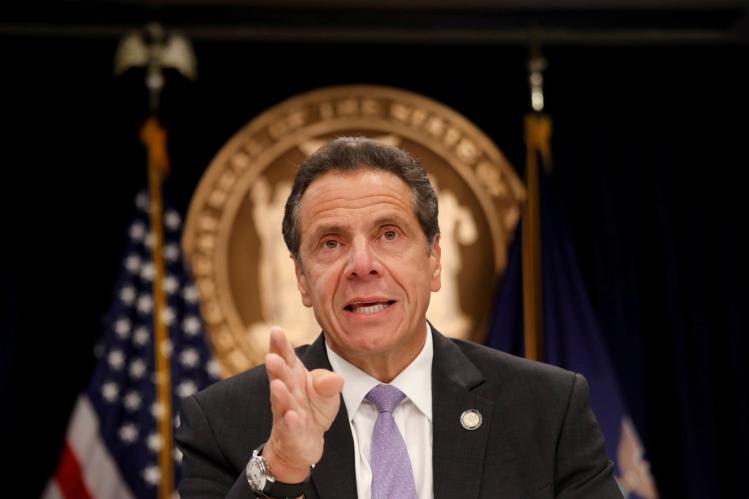
Cloutier writes about the response of the New York Governor, Andrew Cuomo, to Trump’s “aspirational” announcement that the country might reopen in time for Easter.
https://www.commonwealmagazine.org/sites/default/files/styles/article_full/public/20190903T1223-2047-CNS-ABUSE-PREVENTION-NY-SCHOOLS.jpg?itok=GjX_DTTl

Gov. Cuomo rejected the simplistic deaths-versus-dollars framework in favor of fine-grained judgments about how to balance various public goods. This was a step forward.
 Cuomo paid attention to the data, starting his presentation with numbers and charts, but he also made it clear by the nuances of his discussion that this was about more than data. At another press conference, he acknowledged a consideration that cannot be quantified: how we are living now does not promote flourishing. “This is not the human condition,” he said, “this is all unnatural.” These are the social and psychological realities of the shutdown, and they too need to be taken into account. The costs of stay-at-home orders are not only economic.2
Prudent politicians listen with all due humility to those who have spent their lives studying infectious disease and public health. They learn as much as they can about the facts, and then, with all due caution, they make decisions for the common good. The application of the ethics of Thomas Aquinas to the existential challenge of climate change is discussed in this blog article.

References

1
(2008, January 28). Passenger pigeons and polar bears: the ethics of global .... Retrieved January 28, 2020, from https://www.thinkingfaith.org/articles/20080128_1.htm 
2
(2020, May 28). What the Experts Can't Tell Us | Commonweal Magazine. Retrieved June 6, 2020, from https://www.commonwealmagazine.org/what-experts-cant-tell-us 

Friday, June 5, 2020

Initiatives from Laudato Si and Covid 19


Cardinal Michael Czerny SJ urges us to let the Laudato Si encyclical of Pope Francis shape the way we think about the coronavirus crisis and find solutions to the fault lines it is highlighting.
Action points

How might Laudato si’ help us in a post-pandemic rebuilding?

First, let’s be clear – our objective should not be to go back to ‘business as usual’, reverting to the self-destructive, inhumane, unjust and unsustainable practices that used to be ‘normal’ until early 2020. Instead, Pope Francis says, let us regenerate new relationships, a new economy, a new society.
 Laudato si’ challenges the core drivers of unhealthy and destructive growth, proposing instead an inclusive, sustainable development that deserves the name ‘integral’. As for how to go about it, Laudato si’ gave enormous attention to dialogue as the utterly necessary foundation of positive action. The only approach to post-pandemic regeneration is dialogue, which means honestly involving all those who are concerned. 1
Young people are perhaps the ones who feel most affected by the environmental crisis...
Change required

Young people are right to feel totally outraged by the flagrant irresponsibility of all ‘those responsible’.
 These are not only decision-makers in commerce and politics, but also consumers and citizens who live a lifestyle based on the unsustainable exploitation of both people and the planet. Young people now see the planet as their essential locus of reverence and concern… The environmental crisis is getting worse every day; it is certainly even more serious now than it was five years ago, when Laudato si’ was published.1
Everyone, Christians and others, can try to improve our relationship with nature via the path of contemplation.
During the coronavirus pandemic, many are discovering that we can live on less. So we can continue consuming less, or choosing less-polluting products, or avoiding unnecessary, non-recyclable packaging. Instead of shopping without thinking about the moral and environmental consequences, our Catholic parishes, schools and centres can accept that ‘purchasing is always a moral – and not simply economic – act’ (Laudato si’ §206, quoting Caritas in Veritate).1 
We cannot love what we don’t even see; contemplative seeing can launch the journey of ecological conversion.
New relationships

Let us regenerate new relationships, a new economy, a new society through dialogue, involve young people, contemplate our relationship with nature and consume less.

References
1(2020, May 21). Co-creators of a better world | Thinking Faith: The online .... Retrieved June 5, 2020, from https://www.thinkingfaith.org/articles/co-creators-better-world  

Wednesday, June 3, 2020

Clear cutting and more rain storms


A study calling for a large change in forestry management and another study predicting increasing rainfall intersect in warning Maritimers about expensive damage that may result from climate change.
Healthy Maritime forest

Michael Tutton, writing for the Canadian Press notes that global warming is likely to drastically reduce regrowth of key softwood species in the Maritimes. Lois Corbett, executive director of the Conservation Council of New Brunswick, said the study should serve as a wake-up call to the provincial regulators that existing forestry practices must begin changing rapidly in recognition of the reality of climate change.
 "It shows the old way of managing forests, especially Crown forests, isn't going to work over the longer term. Not only is the profit of large corporations at risk, but the sustainability of the forest itself, the species the forests protects and the jobs and the economy the forest creates are affected," she said. "It's a cry for a large change in forestry management."1
Anthony Taylor, a forest ecologist with Natural Resources Canada, is lead author of a study that suggests partial cutting, rather than clear cutting, increases the regeneration of species like balsam fir, which do better when shaded by a canopy of trees left standing.

Emily Chung, Alice Hopton, and Tashauna Reid of CBC News report on a new study from researchers at Environment and Climate Change Canada found that climate change has made: (1) Rainfall more extreme; and (2) Storms with extreme rainfall more frequent.
More frequent rain storms

Megan Kirchmeier-Young is a research scientist at Environment and Climate Change Canada and lead author of the study published this week in Proceedings of the National Academy of Sciences.
 "We're finding that in North America, we have seen an increase in the frequency and severity of heavy rainfall events. And this is largely due to global warming,"… Already, the resulting flooding has destroyed homes and belongings, leading to billions in damage. And the study projects it will get worse. "And as we continue to see warming, we will continue to see increases in the frequency and severity of extreme rainfall," Kirchmeier-Young said. "And heavy rainfall is one of the major factors in flash flooding, particularly in urban areas."2
Natalia Moudrak, director of climate resilience at the University of Waterloo Intact Centre on Climate Adaptation noted that catastrophic losses due to extreme weather events have risen sharply. In the early 1980s, they averaged less than $500 million a year. But from 2009 onward, they exceeded a billion dollars every year except 2015.

The level of flooding is not the only factor affecting losses. Other factors such as property values, paving over natural areas that can absorb rainfall and other kinds of disasters can also contribute. But, Moudrak said, "flooding is by far the No. 1 driver. Water damages are rising in Canada, and it's the elephant in the room."2
The warming climate is allowing the atmosphere to hold more moisture that creates larger and more frequent rain events, especially in Eastern Canada,
Coastal erosion

that will cause severe erosion in clear cut forests and heavy damage from flooding in urban areas.

References

1
(2020, February 21). Global warming to drastically reduce regrowth of key softwood .... Retrieved February 21, 2020, from https://www.theglobeandmail.com/canada/article-global-warming-to-drastically-reduce-regrowth-of-key-softwood-species-2/ 
2
(2020, June 3). Yes, we're getting more extreme rainfall, and it's due to climate .... Retrieved June 3, 2020, from https://www.cbc.ca/news/technology/extreme-rainfall-climate-change-1.5595396